Showing posts with label Provisioning. Show all posts

Sunday, February 18, 2018

Rice Wine for "Out There" Cruisers

This is for our friends cruising in the Bahamas, central South Pacific, Indonesia, and any other cruising grounds in remote places without reasonably priced stocks of wine.

Another cruising boat we met last year, Gaia, from Holland, gave us this recipe, which they passed on from another cruising boat. I include below the original recipe, and then what we did that worked for us.

I had previously looked into "making wine" a bunch of times over the past 10 years of cruising. But the instructions always seemed so complicated. For example...there was a huge debate on the forums about which esoteric wine yeast to use. It always put me off. And who had wine yeast aboard when you got desperate for some wine? And, didn't it take 2-3 years before the wine was drinkable?

This recipe is diffent--so simple--and 2-3 weeks to yield drinkable wine. For a bottom-shelf wine drinker, with no other recourse to wine, it's a pretty good solution--extremely affordable, and the ingredients are probably already on your boat.

Why would we make our own wine? When we were in Tonga, a TERRIBLE bottle of white wine was $25 USD! (if you could find one). In Indonesia, at least in the outer islands, you can't find wine, at all. In the Bahamas, liquor is not bad, price wise, but beer and wine is outrageously priced. So here goes.. original "sailor's wine" recipe, and exactly how we brewed on Soggy Paws last year in Indonesia.

Sailors rice wine recipe (original recipe)


Rice wine recipe makes 10 litres
1 kg white rice, washed and skim off the bugs
2.6 kg sugar
12 litres water
2 teaspoons yeast

Add options:
2 handfuls of raisins
2 lemons thinly sliced

Other add options:
Cranberries instead of raisins
Cherries instead of raisins
Oranges instead of lemons
Pomelo (sweet grapefruit)

You have to find out the quantities and flavours you like best.

Stir daily.
Cover with cloth or wrapping plastic with an elastic. So air can go out if necessary, but not in. Fermentation takes +/- 2 weeks.
Siphon into sterilized bottles. Let sediment settle for several days till the liquid is clear. Siphon into serving bottles.

To sterilize the bottles:
Just 1 or 2 drops of Betadine(Iodine)in a cup of water. Just let it in the bottles and container till you start using them. Use more water and Betadine for your container.
--------------

Here is what we did on Soggy Paws last year in Indonesia.

--------------------------------------------
For a gallon jug (US Measures)
--------------------------------------------
1 cup rice
4 1/3 cup sugar
water to fill gallon jug
2-3 tsp plain old bread yeast (I use a 10-11g package, which is a little more)
1-2 slices lemon or lime (or a tsp or 2 of some bottled lime or lemon juice)
A small handful of cranberries or raisins mixed

Don't cook the rice, just rinse it enough to get the bugs out (if necessary), and throw all the ingredients together in your brewing container.

I brew in a 1 gallon apple juice container, with the cap on very loose, and sitting in the sink in the head. WARNING: Big problems if you tighten the cap too much--it definitely needs to be able to off-gas! I did have a one gallon jug that we tightened up the cap, and it got a little too excited and sort of exploded and made a mess in the head. The jug and fermentation is much more volatile early on, and then tapers off. So if you are sitting for a week, good time to start a new jug.

I brewed in my jug for 2 weeks exactly (I tape a piece of blue tape with the due date). A little longer (3 weeks) tends reduce the sweetness. I tighten the cap, shake the jug well, and then loosend the cap again, at least once or twice a day.
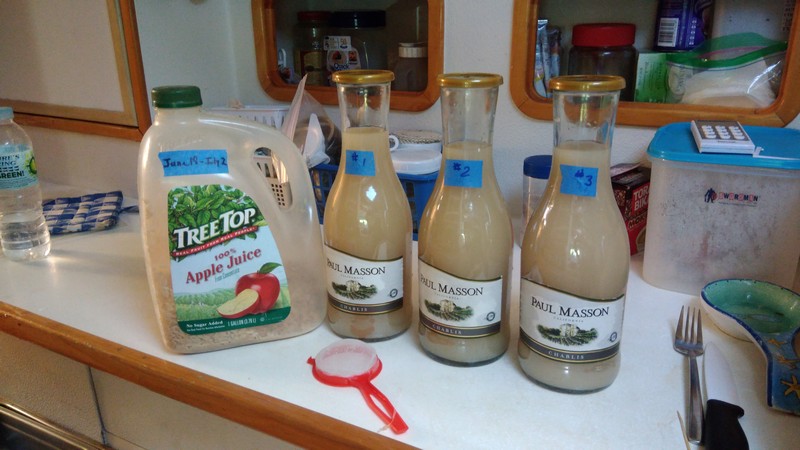
My Rice Wine Brewing Kit


When it came to "siphoning off" to bottles, I did that one time with a proper siphon hose and decided that was too much trouble. I ended up just pouring my 2-week-old fermented rice wine from the gallon jug into the "clarifying" bottles, gently, using a funnel, and leaving the sludge in the bottom of the jug. I did filter what I poured off through a fine-mesh plastic filter (a plastic filter, a little cotton cloth, or a paper coffee filter might work also). What I used is the red "filter" in the foreground in the picture. I labeled my clarifying bottles 1, 2, 3 because the first one was easier to keep the sludge out than the last one. The #1 clarifying bottle generally had a little less "sediment" in it, and took less time to clear up. (In the end, for a thirsty person, it didn't matter).

Once the very fine sediment falls to the bottom of the clarifying bottle, the wine looks clear, and looks very much like white wine. Then siphon or pour gently off to your serving bottles. It takes at least 3-4 days for the stuff to settle to the bottom of the clarifying bottles, and the milky wine to turn clear. But if desperate, you don't have to wait that long! Chill well, and it's a decent substitute for that evening glass of white wine.

I have found that I have quite a bit of left over rice in the gallon jug. I tried re-using the rice (just adding a little more), but the brew ended up too sweet for some reason, so now I throw out the used rice and start new.

It was totally drinkable, and certainly better than paying $25/bottle for terrible wine. I sometimes use it to stretch my existing (cheap boxed) wine by mixing half and half.

Once I ran out of the wine I brought with me, I started making a 1 gallon jug every week or two. By the time I decanted it the gallon jug into "clarifying bottles", this turned into three 1 liter Paul Masson clarifying bottles. Once decanted to 750 ml "serving bottles" (leaving sludge in the bottom), it would make about 4 standard 750 ml wine bottles. With 2 1-gallon Jugs, and 3-4 Paul Masson bottles, I always had enough to share with my (also desperate) friends.

I never bothered testing the alcohol level--it was a good enough facsimile to wine that I wasn't worried about perfection.

I did use the Betadine method to sterilize the jugs and bottles.

Try it, and see how it works for you!

Thursday, April 18, 2013

Almost Ready to Leave Fiji

We had a nice weekend in Namena 10 days ago, and a beautiful sail back (another beam reach in 12 knots of wind).

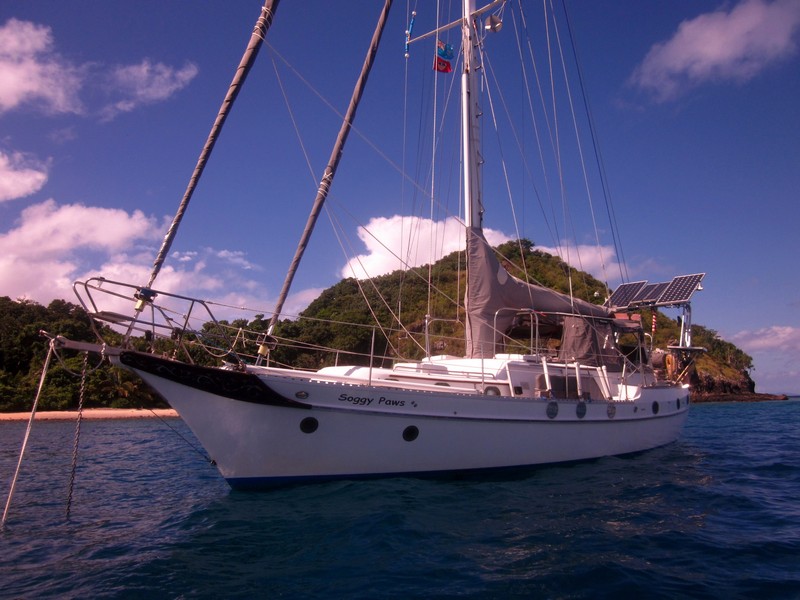
Soggy Paws at Namena

Since then we've been working furiously to get ready to leave Fiji. Dave has been (as usual) completing "projects"... new Bebi Electronics anchor light mounted. New "from the cockpit" mainsail reefing system. Finishing filling holes and painting the deck where we removed the old arch.

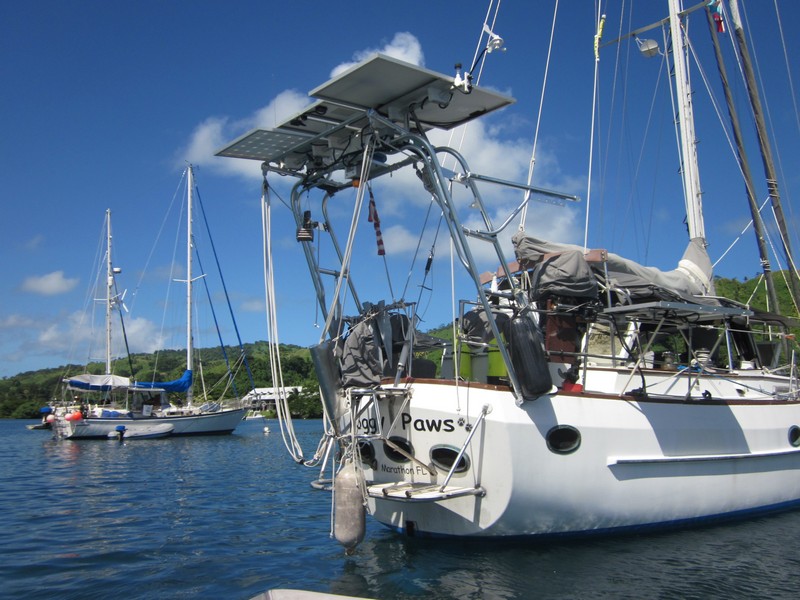
The New Arch Finished

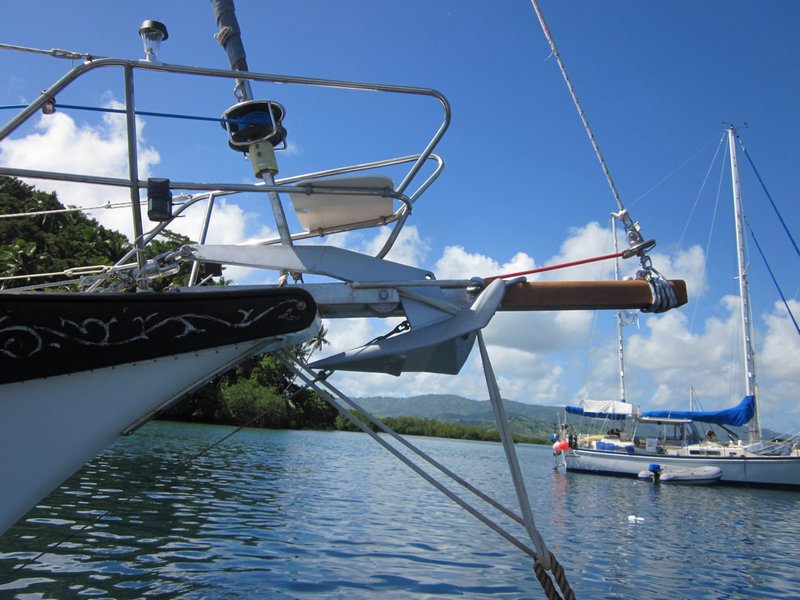
The New (Removable) Bow Sprit

Mounting a 2-foot "bow sprit" out the anchor roller tray, to try to get our roller furling Code Zero sail out further away from the Genoa so we can keep them both mounted and use whichever one is appropriate for the winds. (If they are too close together, then tend to bind on each other when furling, which can be a bad thing if you're trying to get the sail in in a hurry because of high winds).

I have (as usual) been working on the computer... getting ready for "almost no internet" for the next 3-4 weeks while we are in transit (and poor overall internet in the Marshall Islands), trying to get our rental condo booked up for the summer, etc.

I have also spent a lot of time researching about the trip through Tuvalu (Funafuti) and Kiribati (Tarawa), and in the Marshall Islands. I have completed a good first draft of "The Fiji to Marshalls Compendium", and am working on a first edition of "The Marshalls Compendium" (see all our Compendiums here) I have also completed a fairly complete set of Google Earth Charts for the Fiji-to-Marshalls trip and the beginnings of the Marshalls charts.

And of course, there's the provisioning... making sure Dave won't go hungry (and I won't go thirsty) for the next 3 weeks is quite a big job. We expect to catch some fish, but our freezer is stocked, we've got tons of tomatoes and other veggies. Plus a bunch of meals pre-cooked for meals underway.

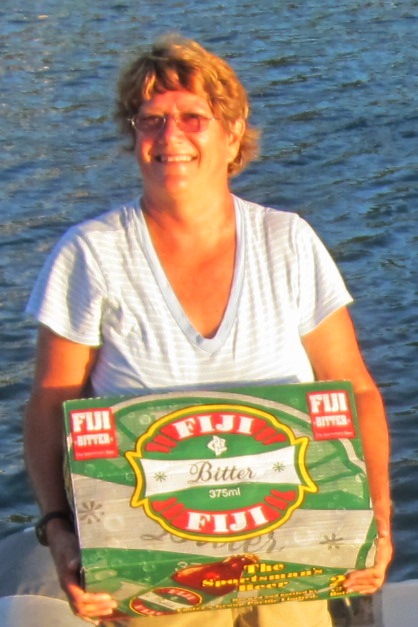
Provisioning the Important Stuff!
We are going to rush a bit through the islands on the 1500 miles to the Marshalls. We have gotten word of a possible dive trip to Bikini Lagoon that some friends based at Kwajalein are arranging. It is possible to visit Bikini on your own boat, but without difficult and expensive arrangements, you can't dive the wrecks there. We are hoping that this expedition friends have arranged will allow us to dive the wrecks. But we have to make it all the way to Bikini by about May 25. So our plan is to make quick stops only in Funifuti and Tarawa and blast on up to Majuro by about May 10. Then we'll have a week in Majuro to get organized and get our "out island" permits before heading out to Bikini (with a planned stop in Kwajalein on the way).

Whoosh!!! here we go again...

Saturday, January 12, 2013

The Great Spider War

When we got back to the boat, I anticipated a big clean-up due to mold. You just can't leave a boat closed up in a tropical environment and not have mold develop. Heck, it develops in the boat even when we're aboard.

Icky Spiders in My Cupboard

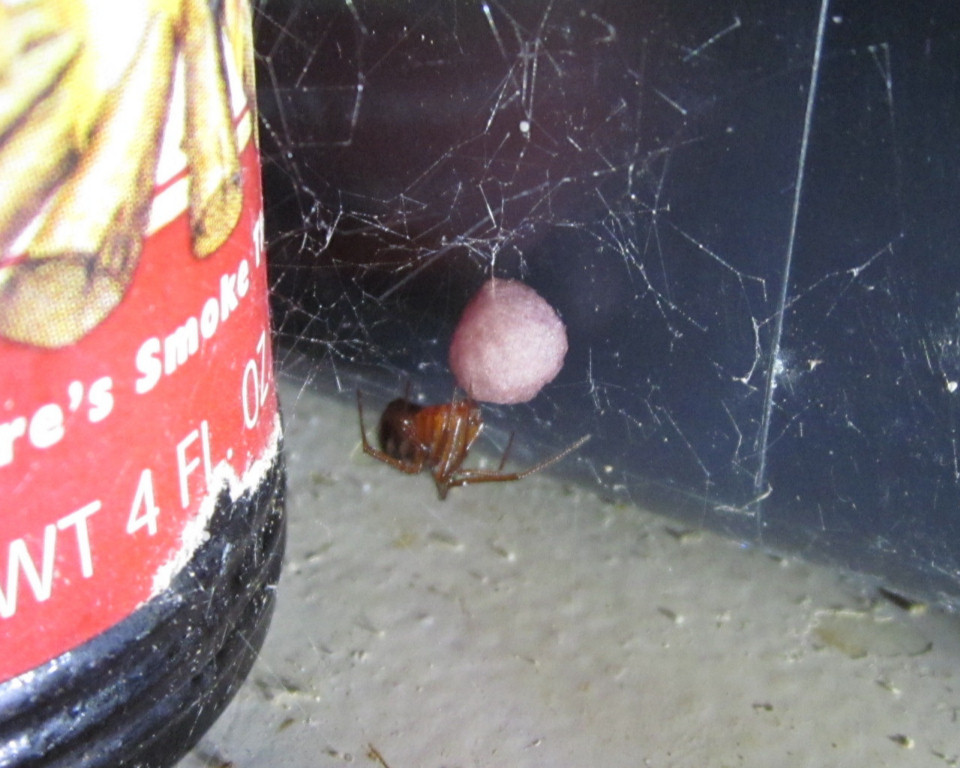
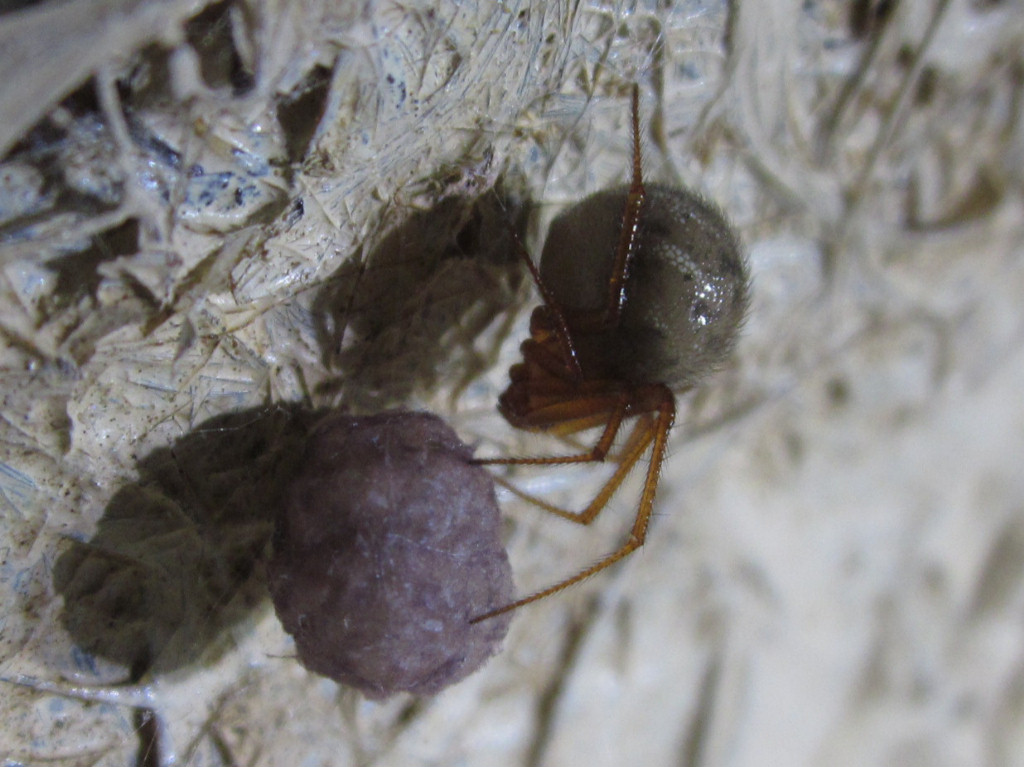
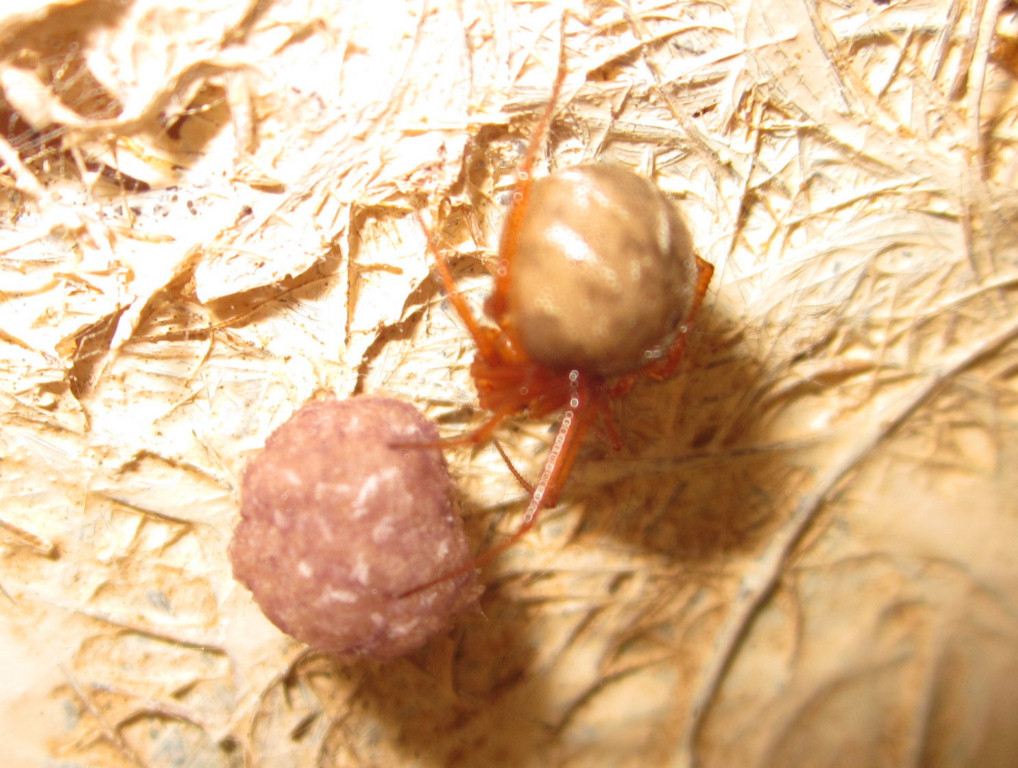
Amazingly, the mold was not too bad. What I didn't expect was that the spiders would move in while we were gone. Every cupboard had several spider webs. And each web had a large female with an egg sac and a smaller male hanging about. Yuck!!

Mommy Spider Is Very Protective of Her Egg Sac


(Size perspective--the female's body is about the size of a pencil eraser, so they are not huge. Just icky).

It appears that they have been feasting on the small "pantry moths" I already had in my cupboards. Every louvered door had a pile of moth bodies underneath the louvers.

So I spent the last 2 weeks emptying all the stuff out of each cupboard, checking expiration dates, throwing out old or contaminated stuff, cleaning things up, killing the spiders, wiping up the moth bodies, and laying down a light film of RAID. I also bought a few more plastic storage boxes in town, to keep all my dry goods from becoming a moth feeding/breeding ground. Ziplock bags don't seem to keep them completely out of the things they like.

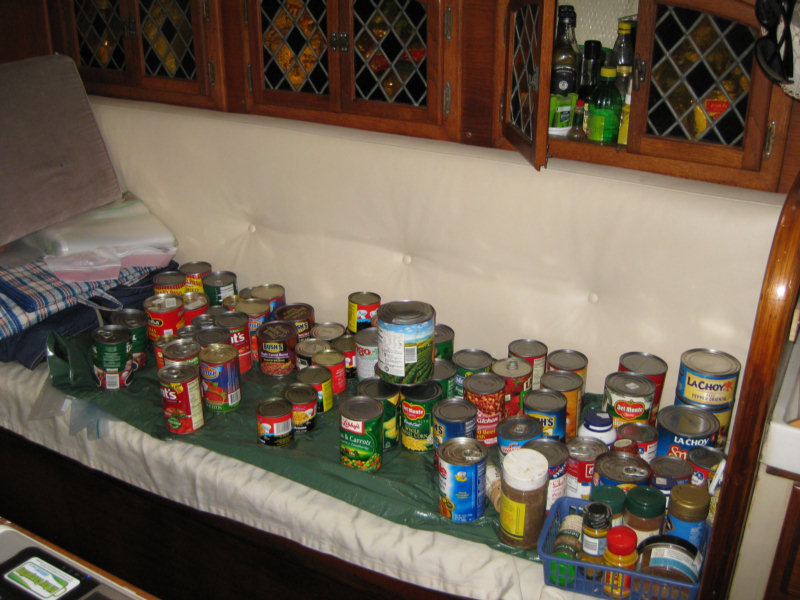
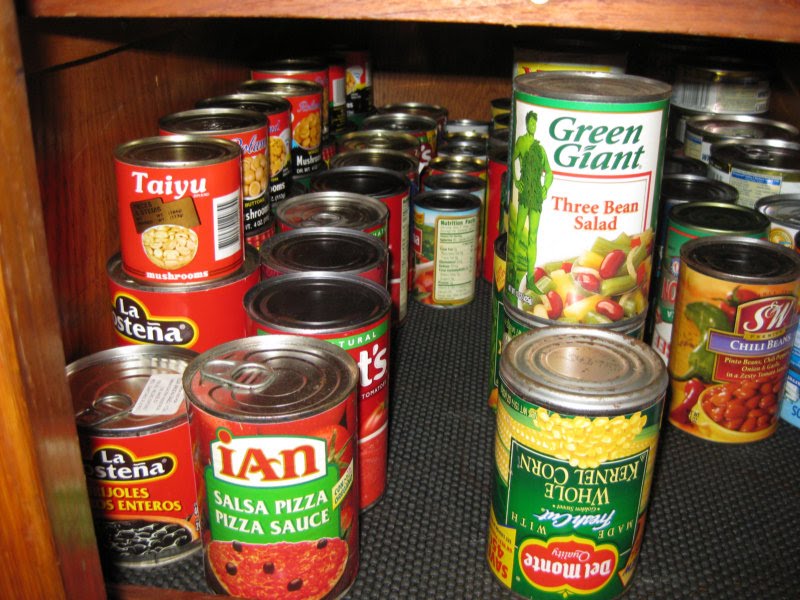
I marked all the cans in Magic Marker with the expiration year on the top of the can, so it's easy to see the oldest cans. And then re-loaded them into the can cupboard with the oldest ones--only a little expired--in the front. We'll use these up in the next couple of months before we reprovision for our trip through Kiribati to the Marshall Islands.

THEN I attacked the mold with a rag and a spray bottle of white vinegar. I am just about finished, and the boat looks pretty good. This has reminded me how much I hate housework!! (My motto: Dust if you must, but don't let life pass you by while you're doing it).

I'm not sure we've totally eradicated the bugs, but we've made a big dent in them. We do a "moth patrol" inside the boat every night with an electric mosquito-zapper (looks like a racketball racket). We get a satisfying sizzle out of every moth we kill.

Wednesday, February 16, 2011

Sailing the Farm

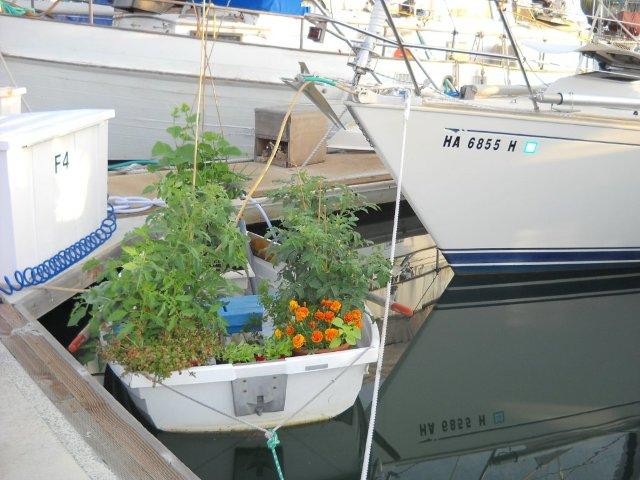
One Creative Way to Grow Things On a Sailboat!

We went to Sunday breakfast at the Wright Brothers Cafe on the water with Mike and Mon from Windy City, and Rob and Claudia from Sea Host. We had a great time talking about a range of subjects from living in Hawaii to cruising in the Caribbean.

One of the topics of conversation was that Mon was unhappy about leaving Hawaii in April because she likes to grow things. Mon has set up a little garden inside the Rainbow Bay Marina... some in available planters, and some out in the 'back 40' beyond the parking lot. Fresh basil, tomatoes, peppers, mint, etc, plus her favorite purple flower with which she makes tea.

So Claudia suggested that Mon take her garden with her. And later sent this picture of one of her neighbors in Ke'ehi Lagoon.

She also reminded me of the book we have onboard called "Sailing the Farm". It's pretty old, but still a great reference for sailors. You can still find used copies on Amazon.com (see link)

Sailing the Farm: A Survival Guide to Homesteading on the Ocean

I also went back in my archives to find some old plans I had researched for a hydroponic garden you can make onboard. This probably isn't practical for voyaging, but would make a decent garden for sitting in a marina, where you have plenty of water and electricity available.

Hydroponic Plant Garden for the Boat


Here's the link to the plans for this Hydroponic Garden
http://www.hydroponicsonline.com/11plantJPG.htm

Friday, November 13, 2009

Epoxying Is Done, Getting Ready to Bottom Paint

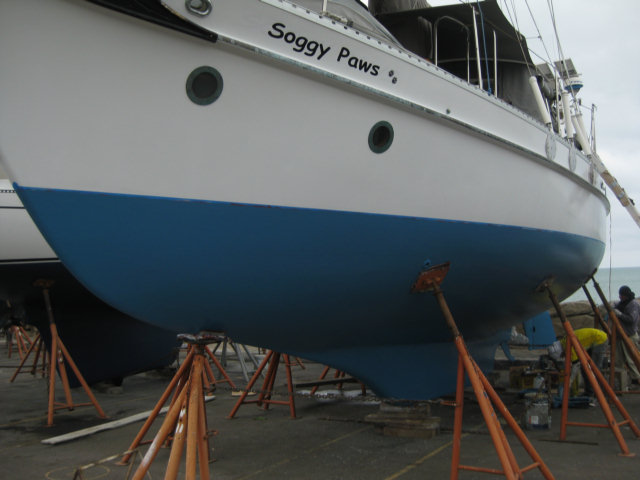
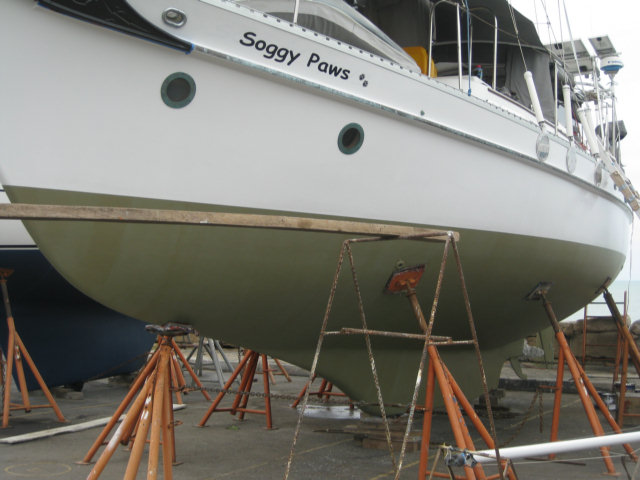
Well, all umpteen coats of epoxy are done on the bottom. We purposely used different colors as we applied layers. It makes it easy to see where you've missed a spot.


We've been white, red, blue, black, and now cammo-green.


Today we have them come lift us and move the blocks and stands around, so we can epoxy the places where they were. We're giving the epoxy time to dry really hard, and on Monday and Tuesday we'll put 4 coats of bottom paint on.

We couldn't get black bottom paint (our preferred color). I kind of liked the red, but I think we'll end up blue. Dave says he read that was the best color to keep from getting sunk by whales.


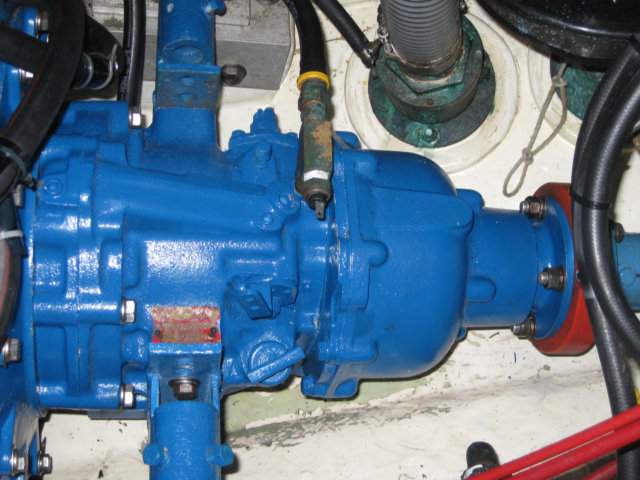
While the Stewart Yacht Services guys have been applying the epoxy, Dave has been putting the engine back together...bell housing on, the flywheel, pressure plate, transmission, and shaft coupling. He also worked on our starter, which has been a little cranky when trying to start the engine when it was hot.


Dave is also responsible for painting all the underwater bronze bits.


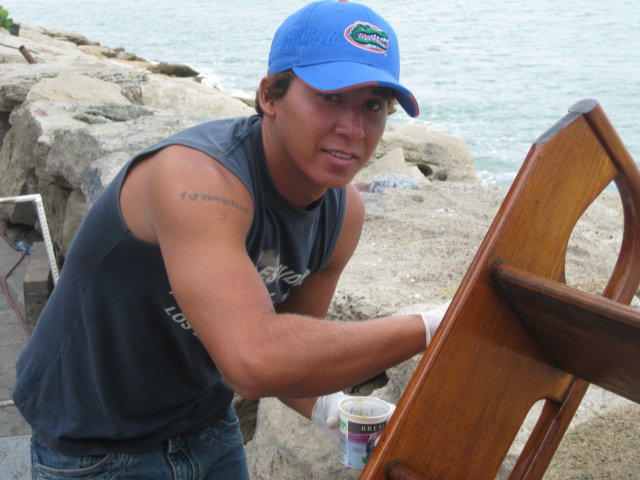
We have had Ignacio working on more varnishing, and he's now painting the 'trailboards'... the wooden (black) trim pieces on the bow, and our second spinnaker pole. (Note the Gator hat we brought back from the U.S. for him). We couldn't find any polyurethane paint at the local Ace Hardware, so we're using enamel. It should hold up for a couple of years.


And I have been working on finances... trying to get everything set so our financial lives will run pretty much on autopilot next year. We WILL be able to get internet in some places in French Polynesia, but it will be slow and expensive, and I don't want to have to spend all my shore time sitting at a computer.

I've also been provisioning... I've made 3 $250 trips to the grocery store so far. We generally spend $300-$400/month on groceries, and I'm trying to buy a year's worth of groceries!! Of course we won't be able to really carry a year's worth, so it's strategically buying and then carefully stowing.

Thursday, August 27, 2009

Provisioning for the Pacific - Phase 1


One of the things I (Sherry) have been doing while Dave is working on his projects, is getting ready for our big Pacific Crossing provisioning. We will be 9 months getting from Ecuador to Hawaii, in very remote areas. Where we will find provisions, they will be very expensive.

The first step was to inventory all the stores currently on board, and eat up, or throw out old expired stuff.

That included the Shake n Pour pancake mix that EXPIRED in 2005! (We tried one package, it turned out lead pancakes that tasted musty. We dumped them and had cold cereal instead). We checked all the cans, and took out the ones starting to rust or were well expired. These went into the 'eat or trash' stack. The rest were cleaned of roach poop and put back, with the oldest ones in front.


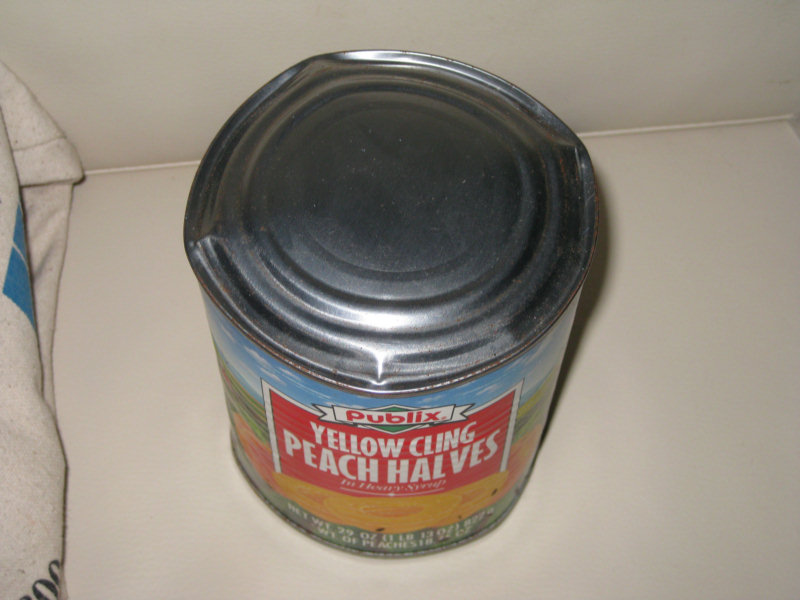
One can, a big can of peaches was obviously bad... exploded looking. That one definitely was trashed. Another can had too much rust on the can seam, and looked like it might be breached, so I trashed it. I carefully scruitinize ALL the cans we open... make sure they don't look 'puffy', look at the contents carefully and give it the 'nose' test. So far, we've managed to avoid any problems, even with stuff that is 'a little' expired.

Once each locker was unloaded, it was carefully cleaned, and fumigated. We bought 2 spray cans of RAID in Costa Rica that is absolutely lethal to the roaches, if you get it anywhere near them. (on the other hand, I have drowned a roach in a competing product, and it walked away).

So the locker first got RAID-ed and closed for awhile. Then when everything was dry, we sprinkled some Roach Pruf (powdered Boric Acid) in the nether reaches.

Then I loaded everything back into the locker, recording quantities and locations in my 'Where Stuff Is' spreadsheet.


I've also been combing the aisles at the local supermarket... trying new stuff, and seeing what's where. It's important to make sure we don't buy 20 cans of some Ecuadorian brand of something, and find out it tastes horrible.

I have also been reading other peoples 'Provisioning Tips for the Pacific' info on websites. One particularly good website was from s/v Ocelot

Ocelot Polynesia Provisioning Advice

This account is from 2004/2005, so the prices won't be exactly accurate, but the rest of the advice should be pretty golden.

So now I'm ready to start thinking about loading up for 9 months in the Pacific. We'll take advantage of the convenience of the local supermarket here in Salinas, before we leave in November. And do a final provisioning from Bahia de Caraquez, at the local fresh food market, and a 1 hr bus ride into the supermakets in the city of Manta) just before we leave.

Sunday, March 8, 2009

Saturday Morning Market in Bahia


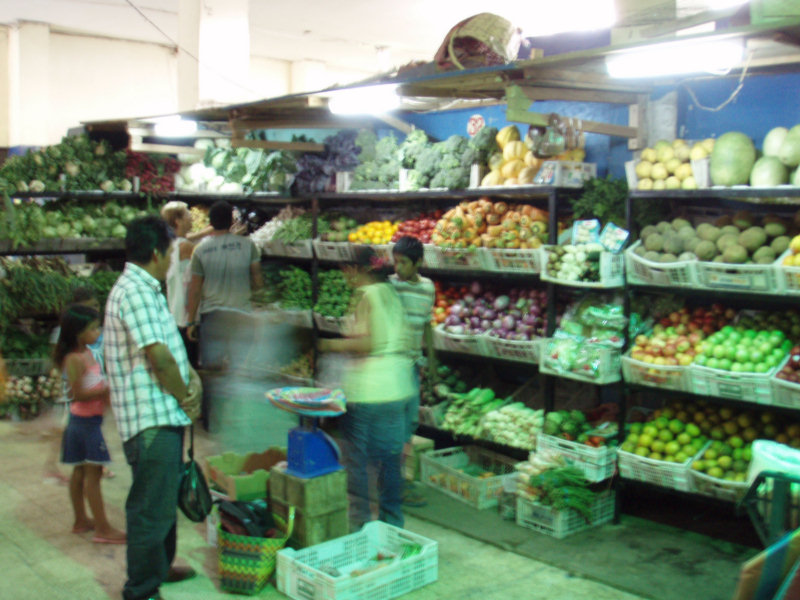
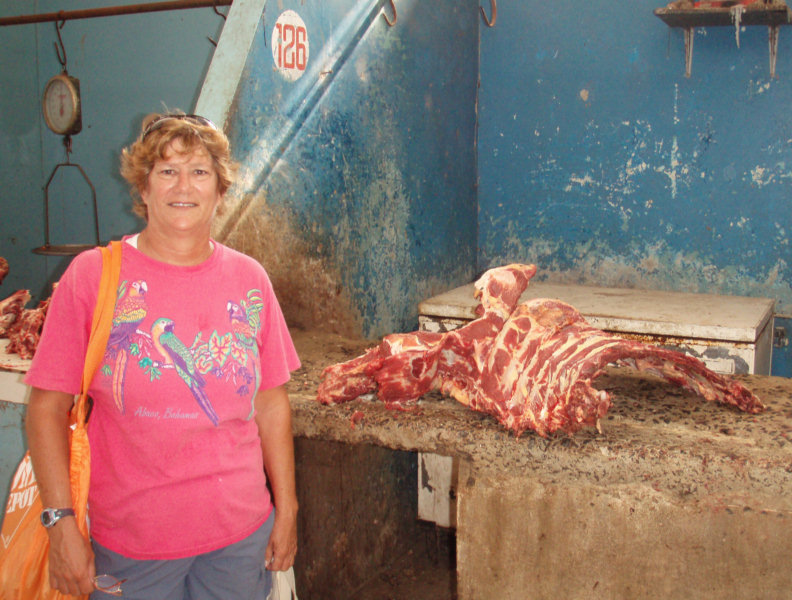
Saturday morning we went out to explore the local market. In Bahia de Caraquez, it is 'downtown', and is a combined veggie, seafood, and meat market, with a few 'dry goods' shops thrown in.


After the relatively poor veggie situation in Golfito, Costa Rica, we are delighted to find plentiful and inexpensive veggies here. We bought a lot of veggies for just a few dollars. We checked out the meat and seafood markets, but didn't buy anything... we are still trying to 'eat down' our freezer, to get ready to go traveling inland.

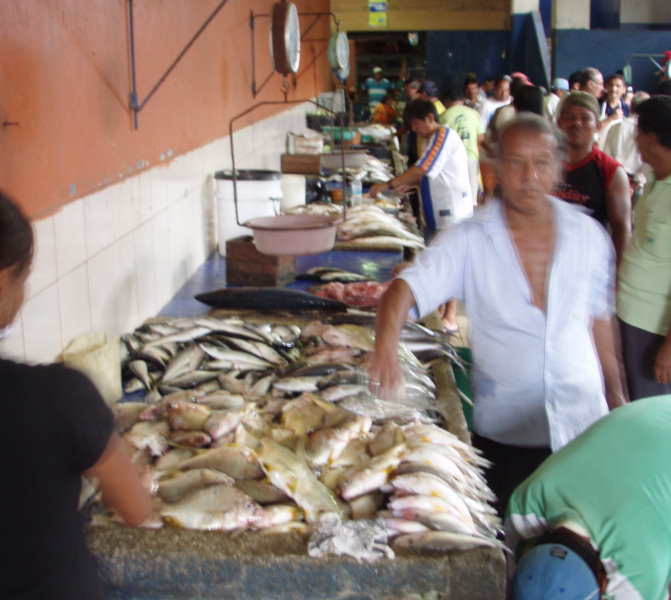
The Seafood Market (Fish, Shrimp, Octopus, Crab)

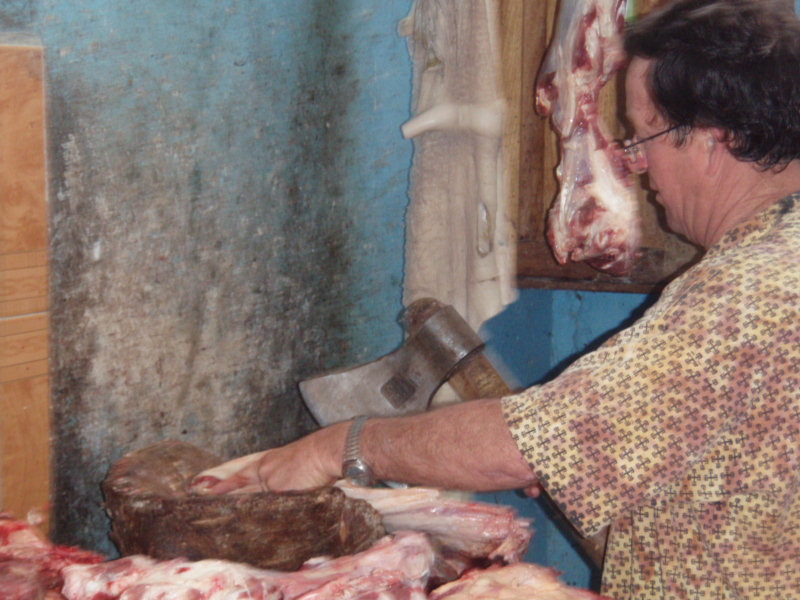
Carving Meat


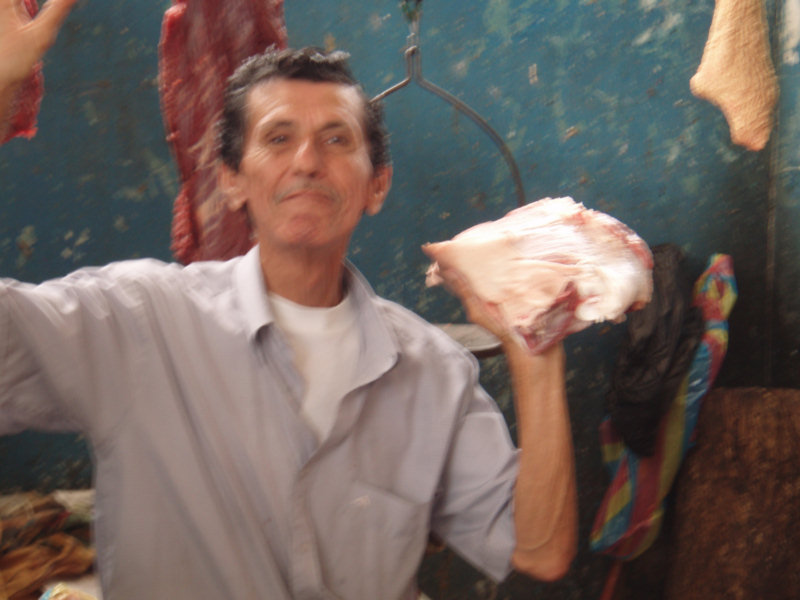
Ribs Anyone?

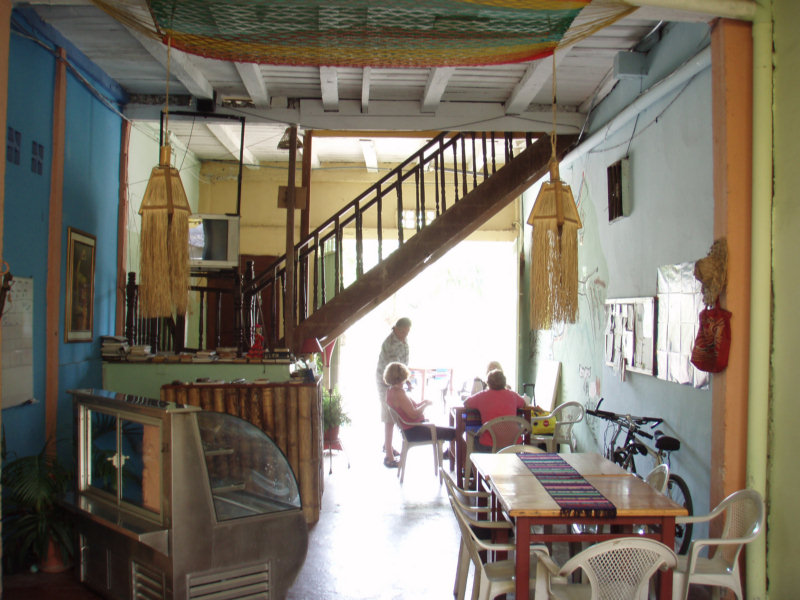
After we got through with our shopping, we found the Coco Bongo Hostel, a few blocks away. A friend had recommended their breakfast to us. So we ordered up a great breakfast (juice, fruit, eggs, fresh bread, coffee) for $2. We enjoyed chatting with the proprietors, Suzanne and Nick (an American and an Aussie) who gave us a lot of tips on touring in Ecuador. Their rooms look nice and are reasonably priced--we'd definitely stay here if we were land traveling thru Bahia.

Friday, September 12, 2008

Stocking Up

We are not sure when we are going to have as easy access to such a great variety of reasonably priced stuff. So we've been stocking up.

In the past week, we have bought 5 cases of rum in liter bottles and 3 cases of wine in liter boxes. And another $300 worth of groceries (that's on top of the $500 we bought 3 weeks ago).


And yesterday we did a final shopping, with friends Jim Yates and Dorothy Sheridan along. Everyone got a chance to see what a good Panamanian grocery store is like, and pick out their favorite brand of cereal, etc. (Meanwhile Dave and Ron were back at the boat swapping water maker pumps).

Stowing all that stuff has been fun, especially with Dave and Ron still with their heads in the engine room, and all the 'stuff' that normally lives in V-berth out in the salon.

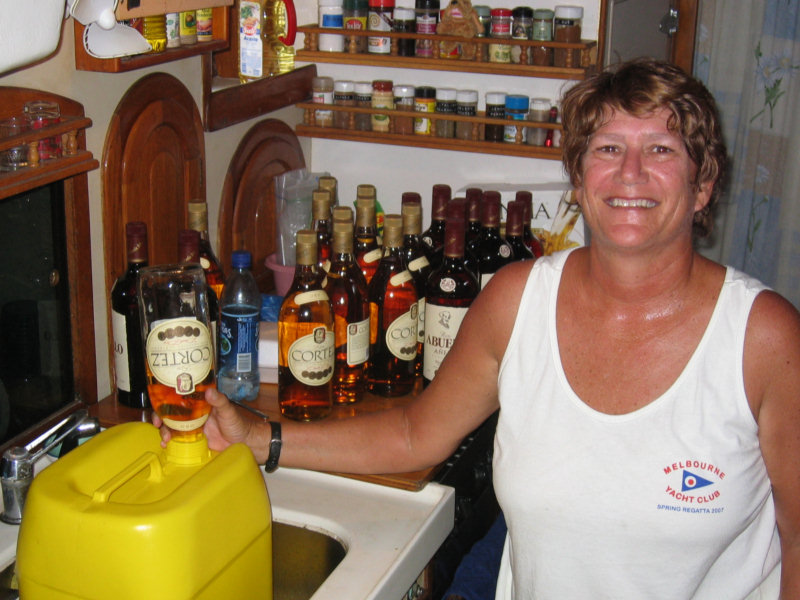
On advice of some friends who have preceded us across the Pacific, we decanted 36 liters of rum into 2 5-gallon water containers. This makes a very space-efficient storage location, no glass, no cucaracha-laden cardboard boxes, only the weight of the rum itself. It also makes the rum less visible and therefore less likely to be taxed or confiscated by a Customs guy. The rest of the rum was 'socked' (each bottle put in 2 old socks for protection) and stored in nether lockers.

We bought our rum from a local guy who came out to the marina with a brochure, and he delivered it 4 hours later. (Umberto 6706-1015). We paid cash on delivery, $60/case for the good stuff and $45/per case for the mixing rum. Plus a $10 delivery fee. He has lots of other liquor in his brochures, and will sell individual bottles.

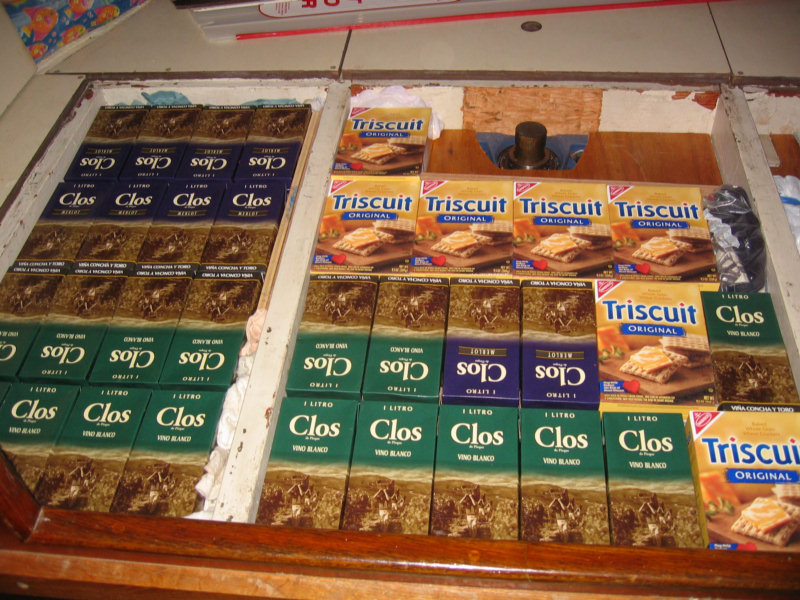
The boxed Clos brand wine (from Chile) we just bought at the grocery store for $2.09 per liter. That's a heckuva deal. There are better wines, but if you stop drinking 'the good stuff', the Clos is very drinkable, and the price is right. And this stuff is so much more convenient than wine in bottles. No bottle to break, less weight, much better storage form factor and much easier stowage. We put most of the wine under our bed. Dorothy did a great job of packing things around in there (while I was stowing stuff in the fridge).


Note the boxes of Triscuits... Jim Yates brought a case with him from the States. That is one of the few items we have been unable to find in Panama.

So we are well stocked, with plenty of food for the 5 of us for the next 10 days, and then enough staples to last Dave and I quite a long while.

Monday, April 28, 2008

Chicken Entero


We had a visit today from the 'Tienda Eide' launcha. They come out every couple of weeks to deliver a standing order from Runner (a boat hanging out here). And they bring some extra stuff for others, and make the rounds of the anchorage.

We had called them yesterday on the VHF and asked them to bring us some stuff. About half of what we asked for they said "No Hay" (we don't have it). Dave was bummed that they had no potato chips. We are completely out, including the stale chicken-flavored ones that neither of us wanted to eat.

One of the things we thought we'd ordered was chicken leg quarters. Later we realized that Dave was out of chicken breasts for lunch meat. So when they came by, we asked for 'pollo piernas y pechugas' (chicken thighs and breasts). They said 'no, solo entero' (only whole). So, well, yep, I guess we'll take it whole, if that's all you've got.

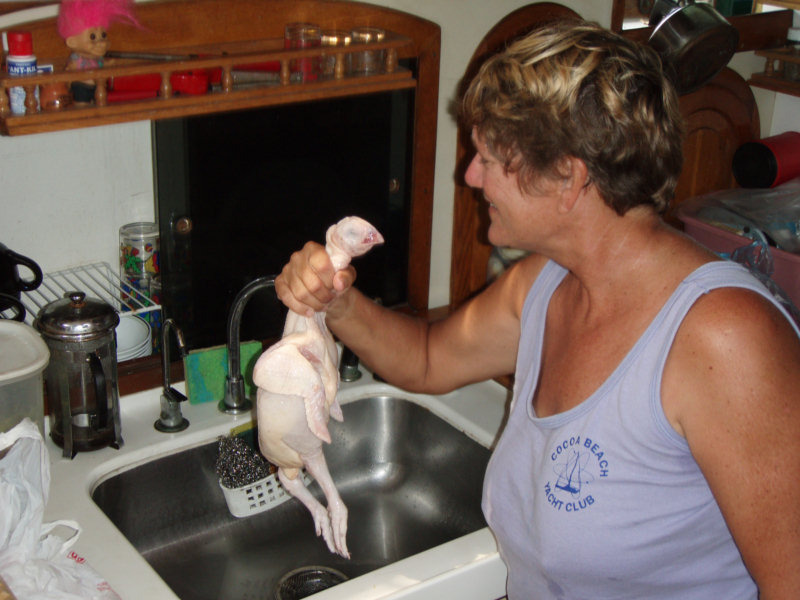
Well, 'whole' was correct...this chicken still had it's feet and head! When we bought whole chickens in Trinidad, they came with the head and feet cut off, stuck in the body cavity (which was, fortunately, empty). But this whole chicken still had his head AND his feet! Oh my god! I hope I don't have to gut it, too!!

Fortunately, they had gutted it at least (that's a health issue, I imagine).

Hmmm, wonder if any of my cruising books talk about how to cut up a whole chicken?

I set to work with a knife and was able to make some 'pechugas sin huesos' (boneless chicken breast) for Dave. And the leg quarters didn't look too bad--they went into a ziplock and into the freezer for a future meal. The rest of the pieces parts, neck, feet, wings, spine, etc, went into another bag for 'chicken stew'. I did throw the head and a lot of skin and fat overboard. So, my friends, next time you swoop into Publix for 5 minutes and buy a nice shrink-wrapped package of boneless chicken breast, think of us poor folks down here in the San Blas.

We'll let you know how the 'chicken feet stew' turns out.

We were also delighted to also find a couple of boxes of white wine in the launcha. We thought that $3 liter for boxed Chilean table wine is still a pretty good buy. No wonder some boats in our anchorage have become semi-perminent residents here.

Monday, January 14, 2008

Provisioning Done

It took me another 2 days (between other projects) to re-inventory all the stuff I'd already stowed, but I finally have a complete and accurate inventory of everything in all the 'deep storage' closets. I've opted not to bother inventorying the stuff in the 'ready storage' closets, because they are small enough to see the entire contents without unloading the whole thing, and the contents change too often. Stuff in these closets are stored by category (breakfast food, snacks, sauces and seasonings, etc), so when I'm looking for something, I know where to go.


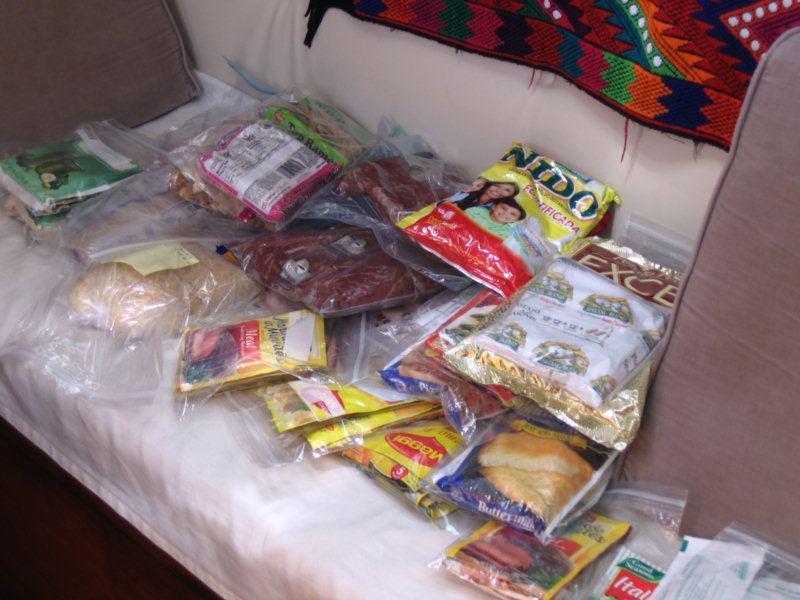
All the small stuff in bags have been grouped and bagged in ziplocks. This makes it less likely for packages to get rubbed through as the boat moves, and make a big mess. And, hopefully (but not always), keeps the bugs out.


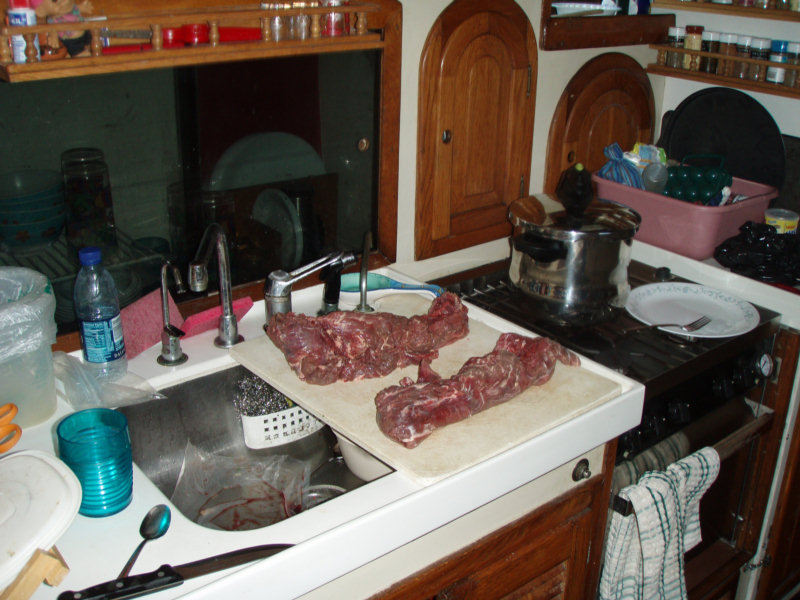
I've also gotten all the meat bought, packaged, and frozen in meal-sized packages (sans all the styrofoam packaging, etc). Here in the Rio, we get most of our meat from 'Casa Guatemala', which is a combination orphanage and working farm. They have some of the nicest 'Lomo de Cerdo' (pork loin) that we've found even in the States. Completely boneless and wrapped in small packages and pre-frozen, it's perfect for us. They even sell chicken filets (boneless chicken breasts), sometimes a tough commodity to find down here.

We also bought some beef 'lomito' (loin) from our favorite restaurant Brunos (who buys Argentinian beef in Guatemala City). We expected this to come as steaks in 1-pound slices, but we got 2 whole lomitos frozen together. I had to thaw the whole 5 lbs partially to get the two hunks of meat apart, and chop them up into something like meal-sized portions.


Also note the Pressure Cooker on the stove. I bought a bunch of chicken quarters and cooked them down in the pressure cooker, and de-boned them. A meal's worth of chicken quarters cook down into a small ziplock bag. We then package 4-6 of the meal-sized ziplocks of a similar type into a big ziplock bag, and then layer the big bags into the freezer (so there's always a beef, chicken, ground beef, etc bag laying on top). It also means that everything is double-bagged, so keeps better in the long run, and less of a chance of a stinky mess if your freezer stops freezing.

Friday, January 11, 2008

Provisioning Again

When we were getting ready to leave Florida, and I was provisioning, there wasn't really time to do it right.

To do it right, you need to make a plan, understand how much space you have, how long you are going to be 'out', and plan how much food to buy.

As you buy it and store it, you have to keep track of what's where. When you buy 2 months worth of food at a time, it's pretty important to do proper planning, as well as have a 'stowage plan'.

At that time, I was really rusty, and not very familiar with Soggy Paws. And we were kind of pinched for time. So I just sorta winged it... I went to the Commissary at Patrick every day for about 5 days, and bought a piled-high cart load. And I just crammed it in the lockers that Dave pointed out to me, pretty much 'willy nilly'. I just kept buying, seat of the pants, until there wasn't any more room aboard. (I did have a little experience, from cruising before).

Dave also had a bunch of stuff in boxes from his storage area that either came his way from his Boy Scout Charter days or bought in 2005 when he last thought he was leaving soon for parts unknown. So that added to the 'mystery mix' aboard. (I'm still finding stuff I didn't buy, and probably won't use, in fairly large quantities).

So, bottom line, there WAS no storage plan on Soggy Paws when we left in May.

This time, I wanted to do it properly. No excuses now, time-wise. I'm retired, right?

So I started by pulling every last thing out of every deep dark locker, inventorying it, and starting from scratch. Soggy Paws has a lot more, deeper, storage space than I had on Island Time.

I put my inventory directly in an Excel spreadsheet. It took me about 4 days to get thru all the food lockers, write everything down, and make a list of what more to buy.

I was nearly done...buying and stowing... and keeping track of it all... until last night... when I was trying to clean junk off Dave's computer... to install something new.

I guess I accidentally deleted my 'What's Where' spreadsheet.

When I couldn't find it this morning, I tried in vain to recover it. I tried 2 different 'undelete' programs, but since I'd installed a bunch of stuff after deleting it, it is apparently gone forever.

*(&^%$!!

I hadn't gotten around to backing it up to another commputer or a thumb drive. :p

*Sigh*

So I have to go back thru the lockers and re-inventory everything AGAIN.

I COULD just go back to 'willy nilly' mode, but I found so much stuff that I didn't remember I had, when I was inventorying lockers, that I really want some kind of record of what's where.

I probably won't keep it up over time, but when I'm trying to figure out where that package of Brownie Mix is, at least I'll have some idea of where to start looking.

Friday, August 3, 2007

Galley Comments

We are still eating mostly food we brought from Florida. After 10 weeks that's pretty good, so I guess I get a gold star for 'provisioning'.

What I did for provisioning was to make a '4 week menu', listing the foods we liked to eat in a rough rotation. You can get very detailed with this, or not so detailed. Mine was in between. Spaghetti, Chicken Parmesan, Shrimp Scampi, Beef Stew, etc. Some things you eat every week, some are a once every couple of weeks. You need to consider breakfast and lunch, too, and the side-dishes. And figure what you're going to do about things like bread. (more on bread later).

Once I had a menu laid out (and approved by Dave), then next to each day, I listed the general ingredients/quantities for that day. For Chicken Parmesan, it is "Chicken Thighs, 1 Jar Spaghetti Sauce, 1 can mushrooms". The Parmesan Cheese went on the Spices list, and the green peppers, onions, and garlic went on the veggies list.

The next pass through the menu I counted up all the stuff by food type, and ended up with a grocery shopping list. 4 Pkgs Chicken Thighs, 4 Jars Spagetti Sauce, etc. There are some recipe programs that will do all this for you, but I had it all done from cruising before on a couple of Excel spreadsheets. By the time I got finished cruising in '97, I could put in the number of weeks I was trying to provision for and it would make the buy list for me. I just had to adjust my list for Dave's tastes instead of Lenny's and Nicki's.

On making up the menu, I made sure that I mixed things up... type of food, complexity of fixing, type of dish (traditional vs one-pot meals). I also left one day a week for either eating out or 'caught from the reef'.

Once we got underway, we didn't follow the menu exactly, but I knew that we had plenty of food aboard in the right quantities. We ended up just posting the list of the meat we had next to the freezer, and when we took something out, we marked it off. The list of what's left in the freezer is our 'what can we have for dinner list'. I made sure to save the 'easy to fix' meals for nights when we were on passage or had just finished a long day. And I always keep a can of Chicken Chow Mein (includes meat and veggies) for an instant dinner if we're REALLY tired and hungry.

Bread: Store bought white bread in the tropics gets green very fast. Putting bread in the fridge or freezer extends the life considerably, though if you're provisioning for an extended trip, there's usually not much space in the fridge for bread. Whole wheat and rye bread lasts longer without refrigeration.

If you're planning on baking bread, you need to know approximately how often you need to bake, and make sure you have enough flour and yeast to cover it. At home, without baking bread, a small bag of flour lasts a year. On the boat, baking bread, we went through something like 2 bags a week. How much you need to bake depends a lot on the eating habits of your crew. I'm not big on sandwiches, but Dave really feels he needs a sandwich for lunch every day. That means a small loaf of bread every few days. Don't forget to check the expiration date when buying yeast. It does make a difference. Nothing's worse than bread that doesn't rise.

Many cruisers have breadmaking machines that you pour in ingredients and out pops a loaf of bread awhile later. In the States you can buy pre-mixed pre-measured bread machine ingredients in box, that you just dump in and add water. Dave originally had a breadmaker aboard, but I chose not to take it along. They are usually large, and I couldn't justify that much space for something I wouldn't use that often. They require lots of 110v power to run. When we are far enough from civilization that I need to bake bread, we usually don't have an abundance of power, and we do have the time to make it the old fashioned way. The biggest challenge is just remembering to schedule your breadmaking day around the other activities. It did take me a few tries on our last cruise before I made an edible loaf that approximated store-bought loaf bread so practice a few times before you go.

On fresh veggies... My best advice is to buy "The Cruising Chef Cookbook". He covers the prep and shelf life of fresh veggies very well. A few additional tips... we really like celery and green peppers, and they don't have a very long shelf life. If you have the freezer space, consider chopping and freezing some in small boxes for use as flavorings in cooking. They don't last forever but will extend your ability to cook with them as flavorings from about 2 weeks to 6 weeks. Make sure you take along at least one head of cabbage and some carrots. These last forever if kept cool, and when you are dying for a bit of green crunchy stuff, will taste delicious, when everything else is long gone.

In the Caribbean, unless you are going somewhere pretty remote (like the Aves in Venezuela, or the San Blas islands in Panama), fresh fruit and veggies are readily available. In prep for our Pacific crossings, I bought some sprout seeds at health food store. I experimented with them while out at the Belize atolls. Mung beans were the most successful. I had nearly 100% of them sprout, they took the least tending to grow, they lasted a long time, and would actually be a good sub for lettuce in salads and celery in cooked foods. We also enjoyed just snacking on them as we walked past the sprout tray. The alfalfa I sprouted was less successful. Only about 50% of the sprouts made it to maturity... some didn't sprout and some got fungus and had to be pitched overboard. And the broccoli seeds failed miserably. I didn't get one usable sprout. It is very difficult to sprout beans in the tropics because the heat makes the fungus grow faster than the sprouts. The ambient air is too hot and the fridge is too cold. So I am still working on perfecting the sprouting technique that works on our boat. But for sure take along some mung beans for very forgiving sprouts.

Hard to find foods: Of course the list varies by where you are. On our previous cruise, we ran out of horseradish and couldn't find it for months in the Caribbean. We finally had friends bring us some. This time, it's peanut butter. We ran out and I've yet to find a store that stocks it (however, we haven't been to Guatemala City yet). One unexpected item is Cheerios. They have Granola and Choconuts here, but no Cheerios. If you have a favorite sauce, marinade, make sure you ring lots along. What most people do is eventually learn how to make what they like from scratch. Books like the Cruising Chef Cookbook and Corinne Kanter's Kiss cookbooks help a lot with tips on 'making do while cruising'. In the larger cities and cruising hubs, there is usually a grocery store that stocks imported items, but the selection is usually limited, and the price is high.