Showing posts with label Micronesia. Show all posts

Sunday, February 18, 2018

Rice Wine for "Out There" Cruisers

This is for our friends cruising in the Bahamas, central South Pacific, Indonesia, and any other cruising grounds in remote places without reasonably priced stocks of wine.

Another cruising boat we met last year, Gaia, from Holland, gave us this recipe, which they passed on from another cruising boat. I include below the original recipe, and then what we did that worked for us.

I had previously looked into "making wine" a bunch of times over the past 10 years of cruising. But the instructions always seemed so complicated. For example...there was a huge debate on the forums about which esoteric wine yeast to use. It always put me off. And who had wine yeast aboard when you got desperate for some wine? And, didn't it take 2-3 years before the wine was drinkable?

This recipe is diffent--so simple--and 2-3 weeks to yield drinkable wine. For a bottom-shelf wine drinker, with no other recourse to wine, it's a pretty good solution--extremely affordable, and the ingredients are probably already on your boat.

Why would we make our own wine? When we were in Tonga, a TERRIBLE bottle of white wine was $25 USD! (if you could find one). In Indonesia, at least in the outer islands, you can't find wine, at all. In the Bahamas, liquor is not bad, price wise, but beer and wine is outrageously priced. So here goes.. original "sailor's wine" recipe, and exactly how we brewed on Soggy Paws last year in Indonesia.

Sailors rice wine recipe (original recipe)


Rice wine recipe makes 10 litres
1 kg white rice, washed and skim off the bugs
2.6 kg sugar
12 litres water
2 teaspoons yeast

Add options:
2 handfuls of raisins
2 lemons thinly sliced

Other add options:
Cranberries instead of raisins
Cherries instead of raisins
Oranges instead of lemons
Pomelo (sweet grapefruit)

You have to find out the quantities and flavours you like best.

Stir daily.
Cover with cloth or wrapping plastic with an elastic. So air can go out if necessary, but not in. Fermentation takes +/- 2 weeks.
Siphon into sterilized bottles. Let sediment settle for several days till the liquid is clear. Siphon into serving bottles.

To sterilize the bottles:
Just 1 or 2 drops of Betadine(Iodine)in a cup of water. Just let it in the bottles and container till you start using them. Use more water and Betadine for your container.
--------------

Here is what we did on Soggy Paws last year in Indonesia.

--------------------------------------------
For a gallon jug (US Measures)
--------------------------------------------
1 cup rice
4 1/3 cup sugar
water to fill gallon jug
2-3 tsp plain old bread yeast (I use a 10-11g package, which is a little more)
1-2 slices lemon or lime (or a tsp or 2 of some bottled lime or lemon juice)
A small handful of cranberries or raisins mixed

Don't cook the rice, just rinse it enough to get the bugs out (if necessary), and throw all the ingredients together in your brewing container.

I brew in a 1 gallon apple juice container, with the cap on very loose, and sitting in the sink in the head. WARNING: Big problems if you tighten the cap too much--it definitely needs to be able to off-gas! I did have a one gallon jug that we tightened up the cap, and it got a little too excited and sort of exploded and made a mess in the head. The jug and fermentation is much more volatile early on, and then tapers off. So if you are sitting for a week, good time to start a new jug.

I brewed in my jug for 2 weeks exactly (I tape a piece of blue tape with the due date). A little longer (3 weeks) tends reduce the sweetness. I tighten the cap, shake the jug well, and then loosend the cap again, at least once or twice a day.
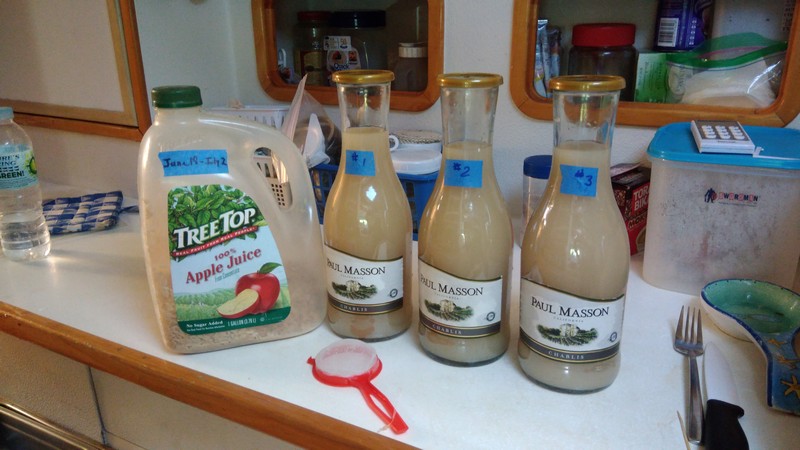
My Rice Wine Brewing Kit


When it came to "siphoning off" to bottles, I did that one time with a proper siphon hose and decided that was too much trouble. I ended up just pouring my 2-week-old fermented rice wine from the gallon jug into the "clarifying" bottles, gently, using a funnel, and leaving the sludge in the bottom of the jug. I did filter what I poured off through a fine-mesh plastic filter (a plastic filter, a little cotton cloth, or a paper coffee filter might work also). What I used is the red "filter" in the foreground in the picture. I labeled my clarifying bottles 1, 2, 3 because the first one was easier to keep the sludge out than the last one. The #1 clarifying bottle generally had a little less "sediment" in it, and took less time to clear up. (In the end, for a thirsty person, it didn't matter).

Once the very fine sediment falls to the bottom of the clarifying bottle, the wine looks clear, and looks very much like white wine. Then siphon or pour gently off to your serving bottles. It takes at least 3-4 days for the stuff to settle to the bottom of the clarifying bottles, and the milky wine to turn clear. But if desperate, you don't have to wait that long! Chill well, and it's a decent substitute for that evening glass of white wine.

I have found that I have quite a bit of left over rice in the gallon jug. I tried re-using the rice (just adding a little more), but the brew ended up too sweet for some reason, so now I throw out the used rice and start new.

It was totally drinkable, and certainly better than paying $25/bottle for terrible wine. I sometimes use it to stretch my existing (cheap boxed) wine by mixing half and half.

Once I ran out of the wine I brought with me, I started making a 1 gallon jug every week or two. By the time I decanted it the gallon jug into "clarifying bottles", this turned into three 1 liter Paul Masson clarifying bottles. Once decanted to 750 ml "serving bottles" (leaving sludge in the bottom), it would make about 4 standard 750 ml wine bottles. With 2 1-gallon Jugs, and 3-4 Paul Masson bottles, I always had enough to share with my (also desperate) friends.

I never bothered testing the alcohol level--it was a good enough facsimile to wine that I wasn't worried about perfection.

I did use the Betadine method to sterilize the jugs and bottles.

Try it, and see how it works for you!

Thursday, June 4, 2015

Right Turn, Clyde!
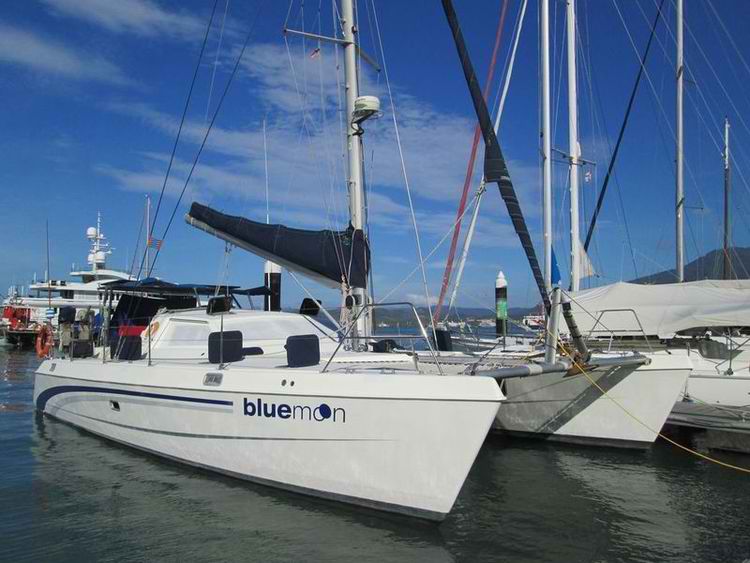
In somewhat of a shocking change of direction, we have decided to buy a catamaran!!

Our New Catamaran

This all started a couple of weeks ago when Dave heard that a guy in the marina was selling his catamaran. Dave has been hot to buy a cat for awhile now--ever since our good friends Jack and Nicole defected from the CSY camp to buy a Bahia 46. It flares up every now and then, but up til now I've managed to keep him focused on getting Soggy Paws around the world.

Great Dive Platform!

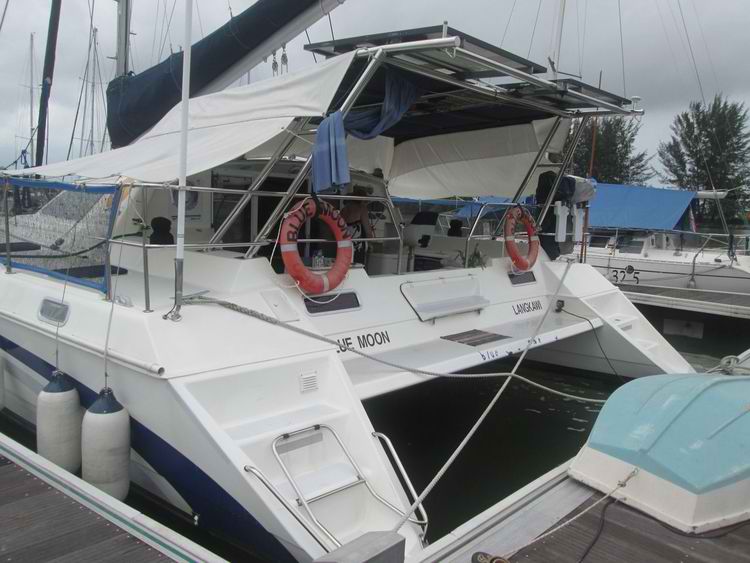
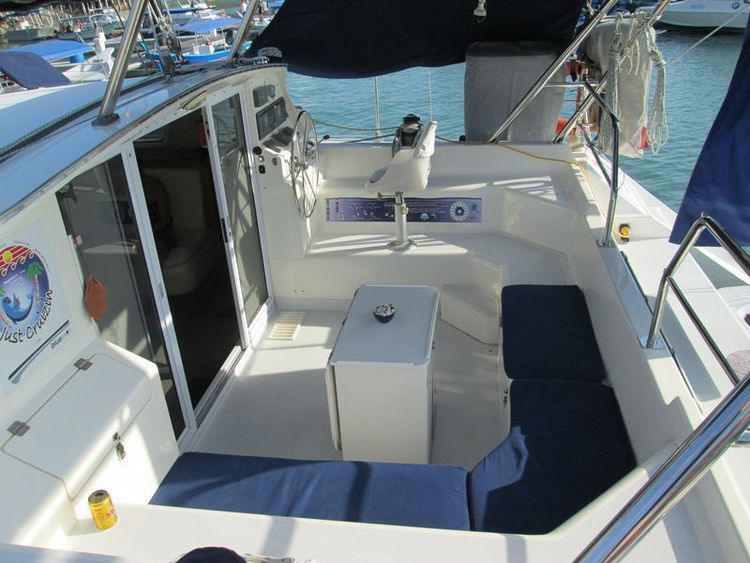
Well, one thing led to another, and after he looked at every cat in the marina and found them lacking (or too expensive), he found out friends of friends were selling a St. Francis 44 catamaran in Malaysia, and for a very good price. Looking at the pictures, it looked like a great deal. I couldn't talk him out of it. So we flew to Malaysia to take a look at Blue Moon.

And a Gorgeous Cockpit

Blue Moon turned out to be as nice-looking in person as she did in the ad, and I slowly came around to Dave's point of view. So we made an offer. "As is, where is" in Malaysia. And darned if our offer wasn't accepted!!

So we are now scrambling with trying to get all our ducks lined up to complete the purchase--without the luxury of being in the U.S. It's a crazy situation, with us here in the Philippines, the boat is in Malaysia, the seller is in New Zealand, and all our money is in the U.S.

Meanwhile, we've got people working on Soggy Paws to get her fixed up for sale. The boat, rigging and systems are really solid--it's mainly the cosmetic things that have suffered over the last 8 years of cruising. And this is great place to get that kind of work done. We've had 2 carpenters working for the last week in the v-berth, and it's already looking amazing.

Our plan, assuming we conclude the deal on Blue Moon in the next few weeks, is to fly to Malaysia around the 1st of July to get the new "Soggy Paws" launched and cruise her back to the Philippines. Once here, we can get both boats side-by-side and transfer all our "stuff", and then get serious about selling Soggy Paws.

It's going to a steep learning curve, going from a heavily-built monohull to fairly light and fast catamaran!

You can see a few more pics of the new boat here: http://www.bluemooners.com/journeysend.htm.

If anyone is interested in buying a great cruising boat and being able to cruise the South Pacific and SouthEast Asia, without actually having to cross the Pacific Ocean to get here, drop us a line! We'll have a proper "For Sale" page for Soggy Paws, the CSY soon.

Friday, July 11, 2014

Reef Diving in Palau

We have now made two 10-day trips out to the Rock Islands of Palau. On the first trip, we were mostly diving on the SW and West reef, between German Channel and Saies Corner. On the second trip, we did a lot of diving on the Japanese wrecks left over from World War II (covered in the next blog post).

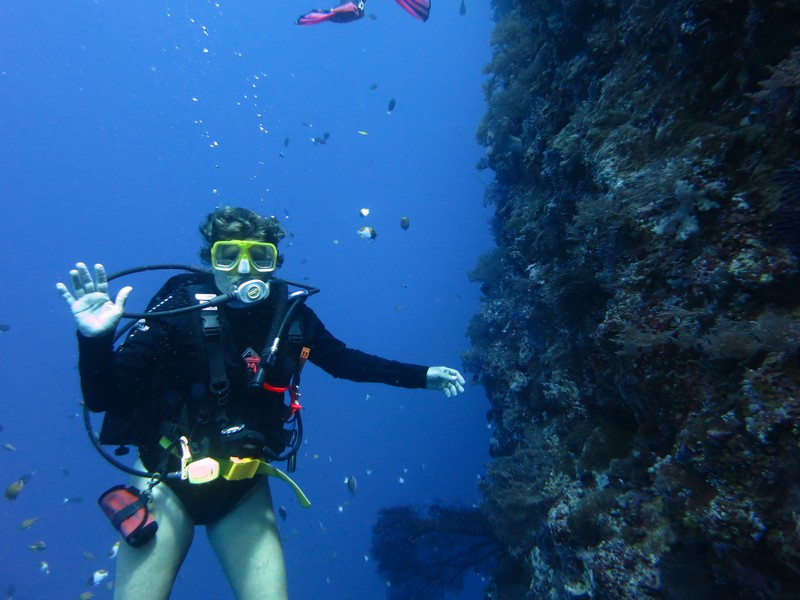
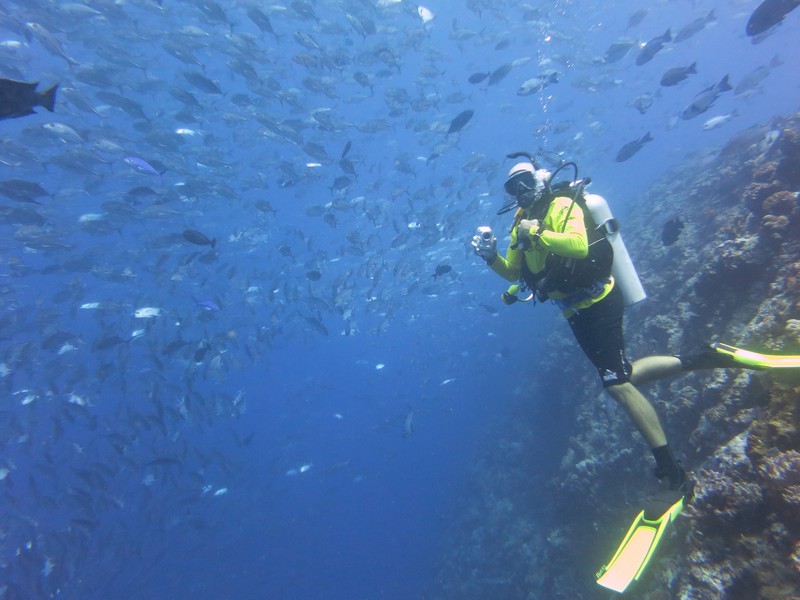
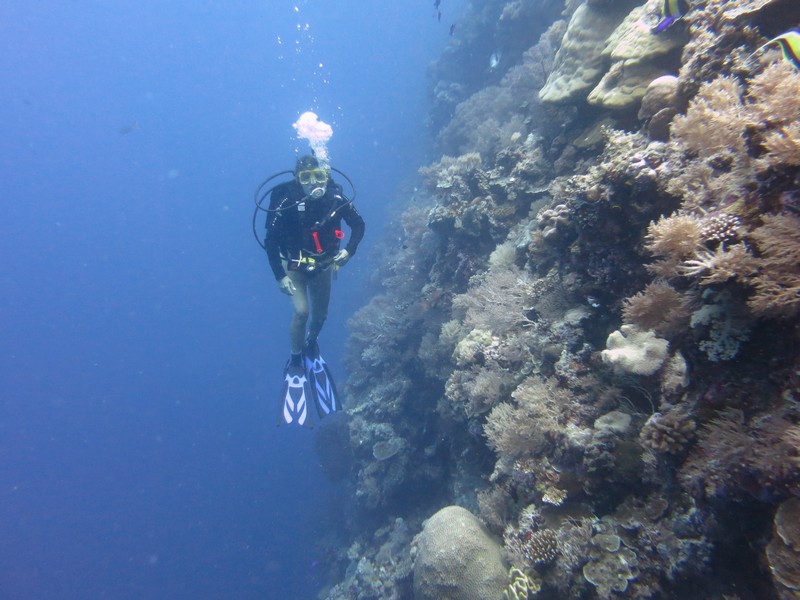
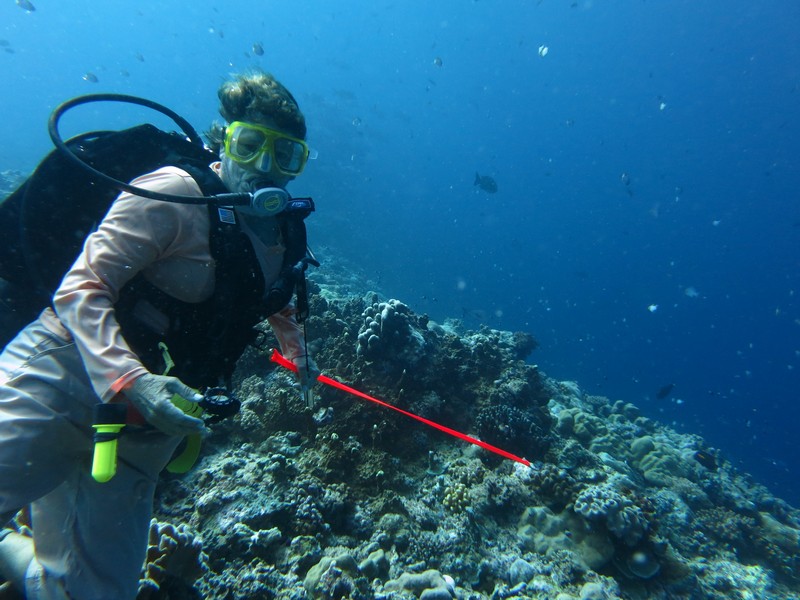
Sherry on the Blue Corner Wall

Below are the best of the photos from our reef diving. Most of them were taken by my husband Dave.

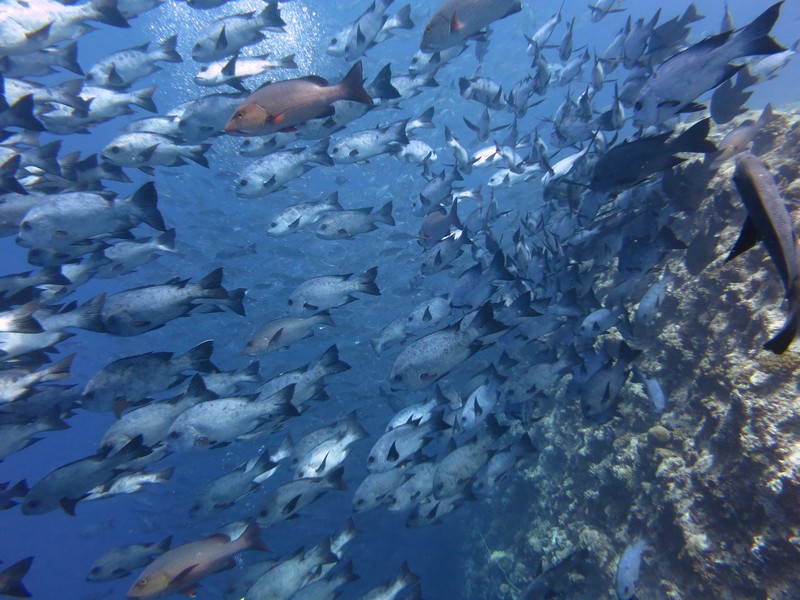
The signature dive for Palau is Blue Corner, which is just one spot on the reef. But in reality, there are about 5 miles of reef on the SW side of the Palau archipelago that have just incredible diving. Incredible because of the clarity of the water and the huge amount of fish life--caused by a combination of current outside the reef and environments conducive to marine hatcheries inside the reef... and stringent protection regulations.

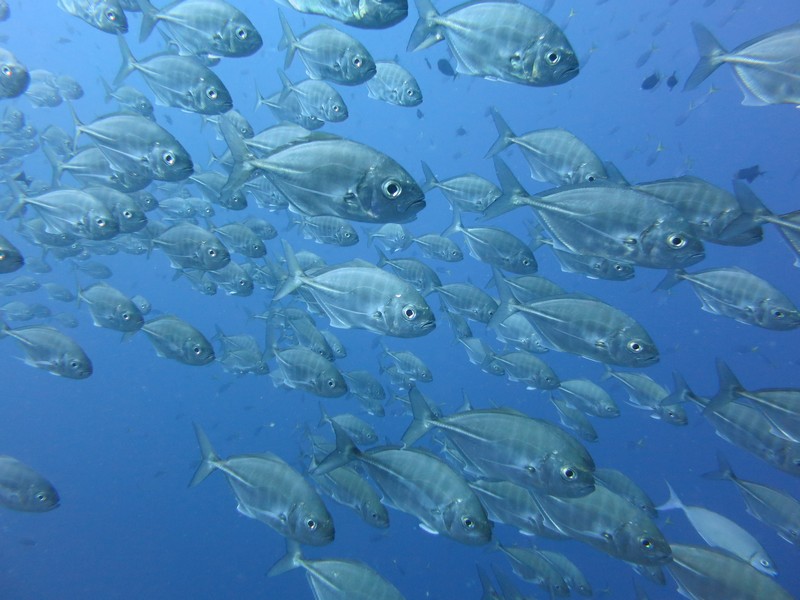
Huge School of Snapper Hanging Out at Blue Corner

Stephen from Westward II Watching the Action

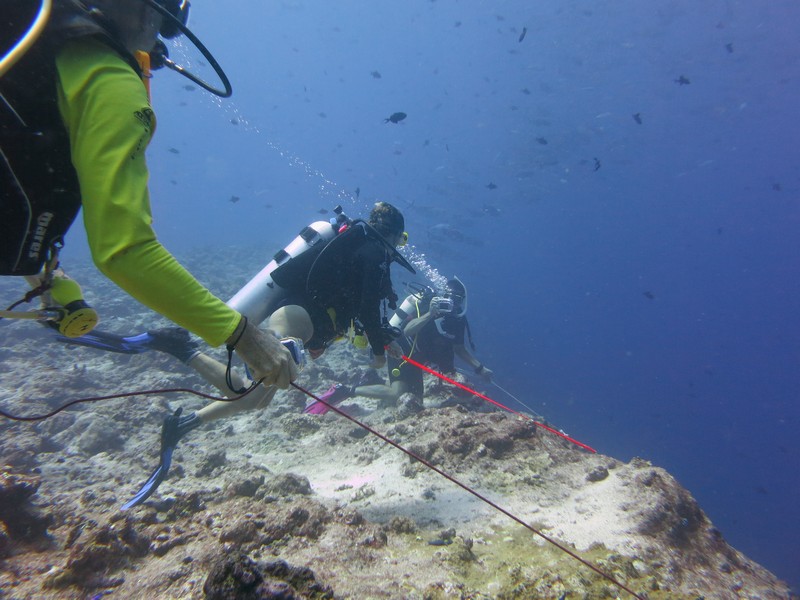
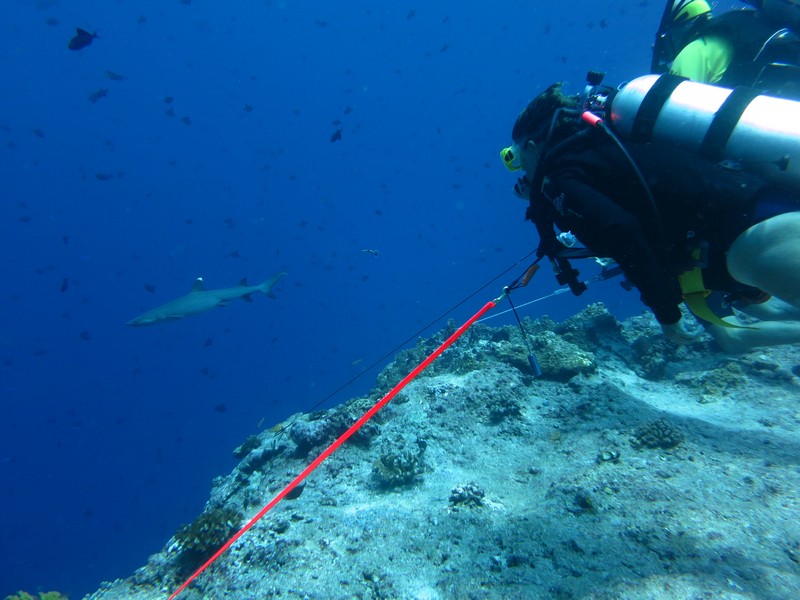
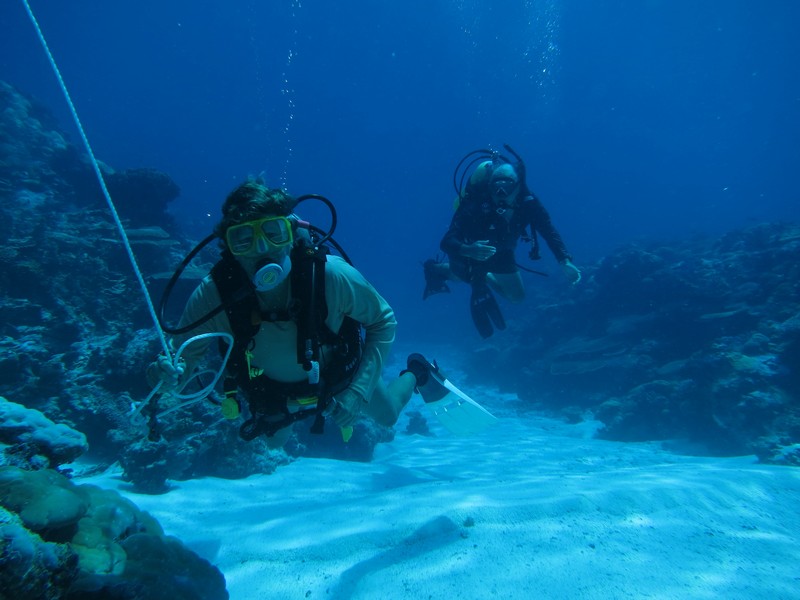
Using Our Reef Hooks to Hang on the Wall

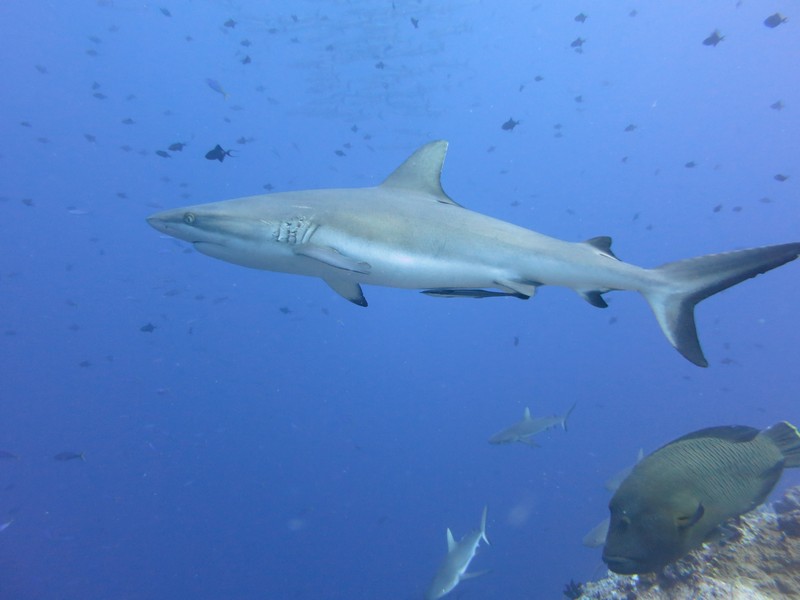
Sharks Too!


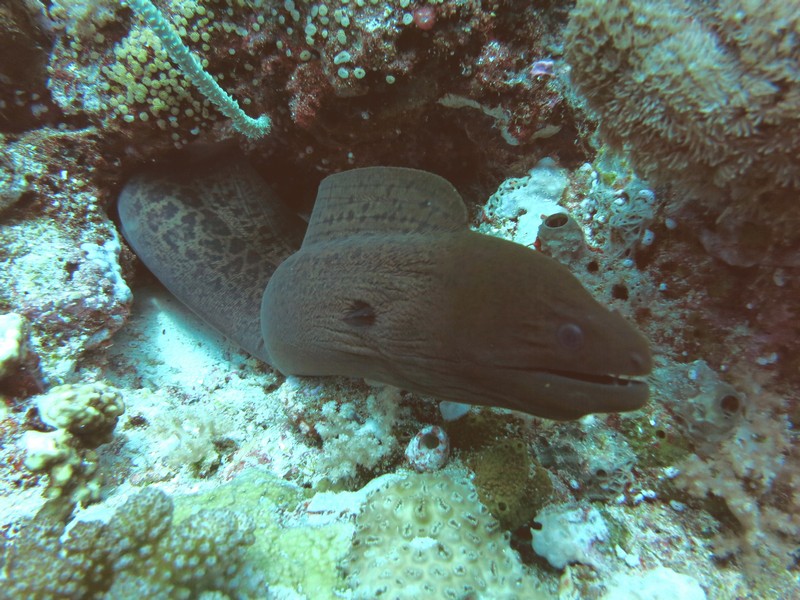
A Big Moray On Top Of The Wall


The people who manage diving tourism in Palau have done a great job of making the dive sites accessible without damaging the reef. They have a string of dive buoys all along the reef.

Another Huge School of Fish at New Dropoff

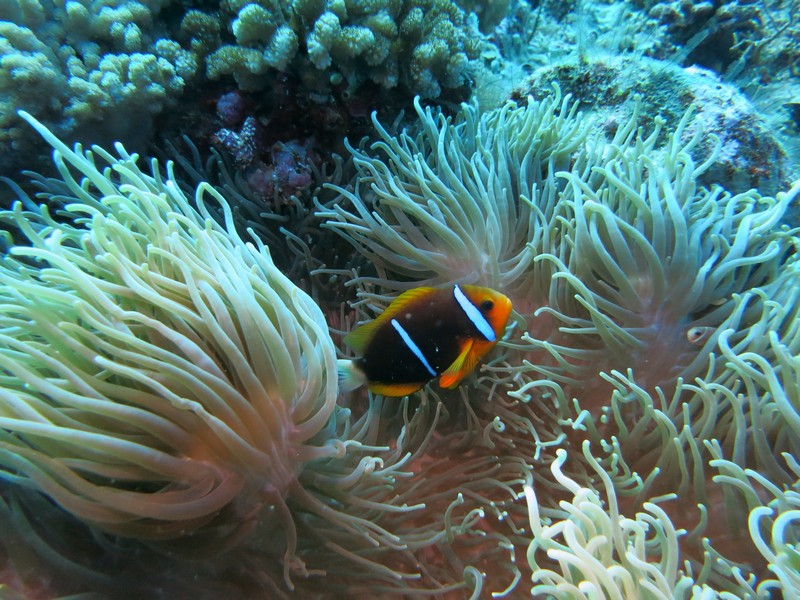
We Found Nemo!

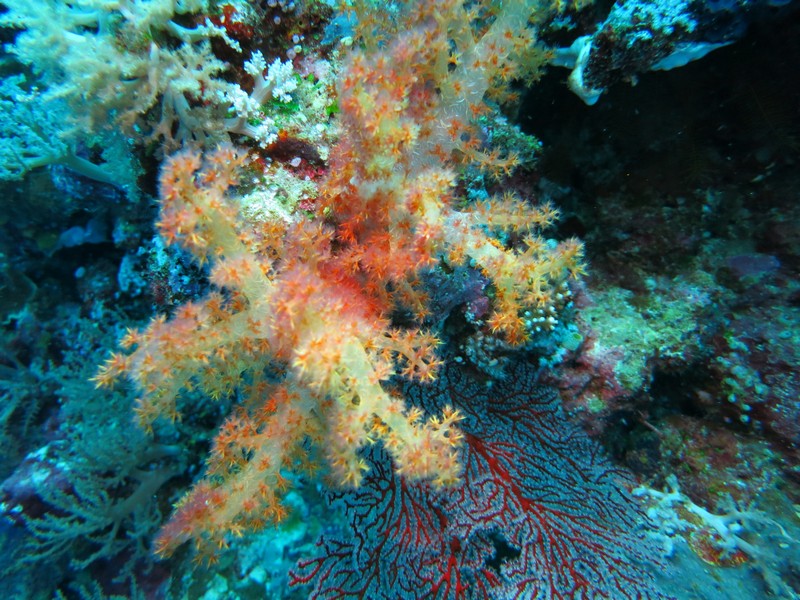
The Soft Corals Like the Current, Too

The New Dropoff Wall

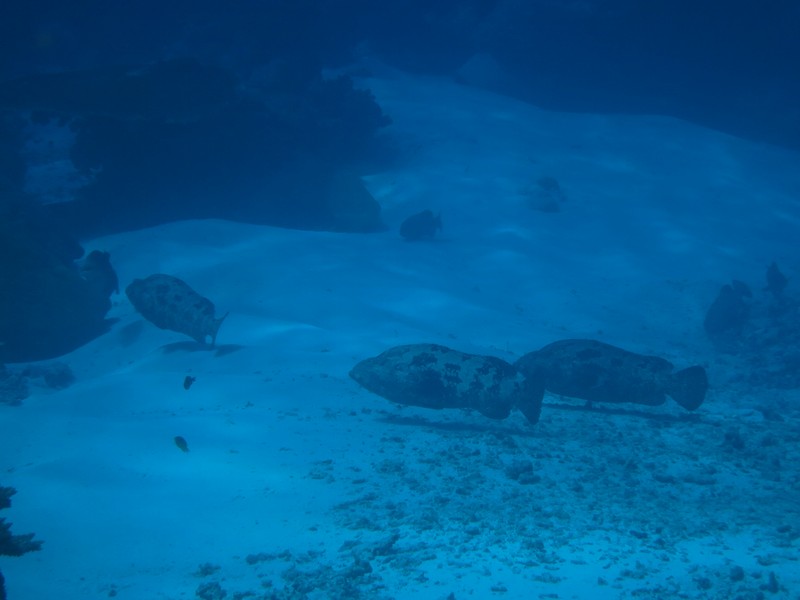
Besides the SW reef area, there are several channel dives. These are drift dives in the channel, usually on the incoming current. The best one is Ulong Channel, and we have done this several times. During May and June the Grouper are spawning, and they are all over in Ulong Channel. Other popular channel dives are German Channel and Lighthouse Channel.

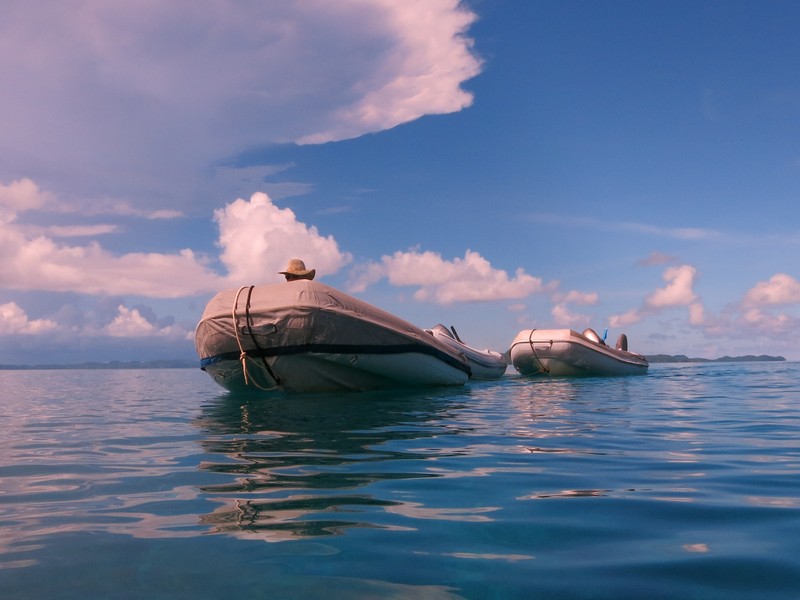
For a few dives, Jerry from Challenger volunteered to be "dinghy tender". This was quite a luxury for us. Makes things much easier on current dives to know there is someone on the surface following your bubbles, no matter where you end up.

Jerry With Three Dinghies

On other dives, we towed the dinghies with us. This is possible when there are no other divers or dive boats to worry about, and when there's not much wind.

Sherry Drifting with the Dinghy While Dave Takes Pictures

Grouper Spawning in Ulong Channel
(There were hundreds of them 18"-24" long)
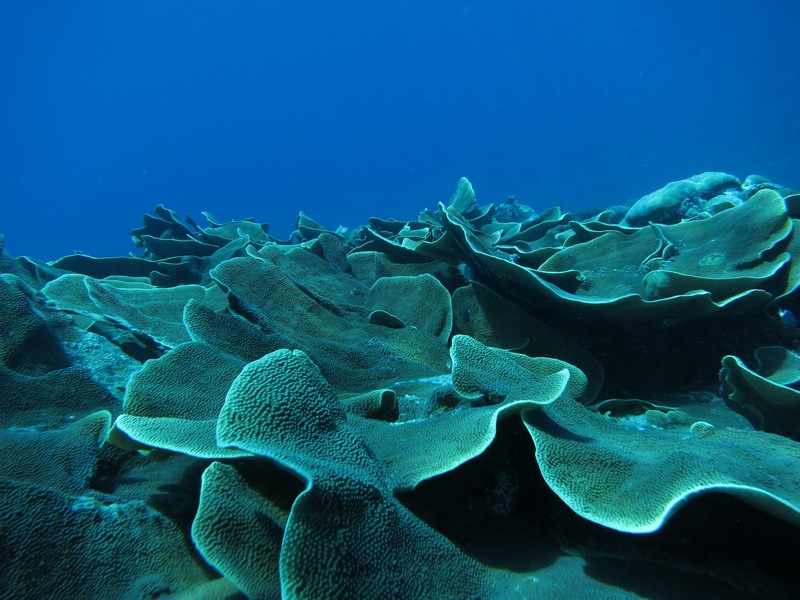
Awesome Spread of Lettuce Coral in Ulong Channel


There were lots of other very cool things to see in Ulong Channel, but it all happens pretty fast as we are drifting along at 1-2 knots. I really like the garden eels, but they are very hard to get a picture of. They are only about 8-10" long and sink into their holes in the sand when you approach. They look like turtle grass unless you look carefully.

Near Ulong Channel is a very nice no-current reef dive called Coral Gardens. This is a great place to take a novice diver as it is shallow and easy, with lots of pretty fish and coral.
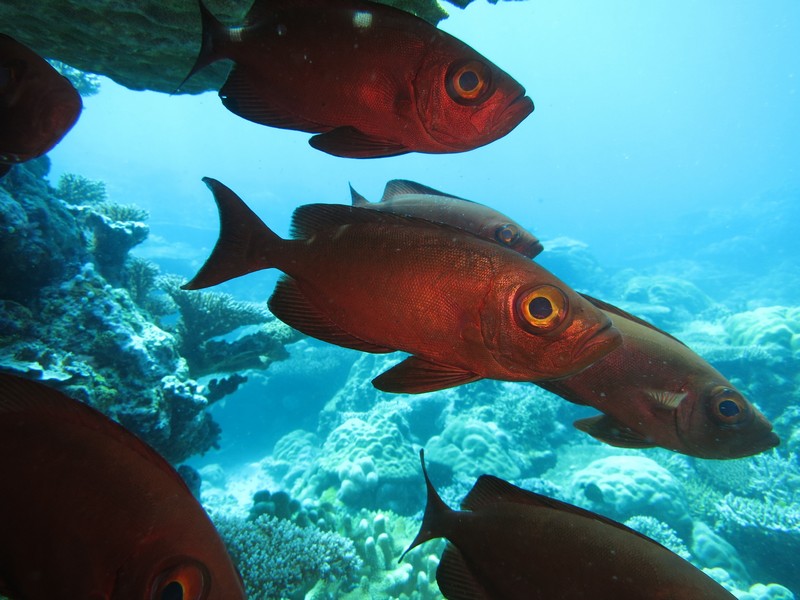
Big Eye Fish Hanging Out in the Shade of a Large Plate Coral


Further out from Ulong Channel is Saies Tunnels and Saies Corner. It's a long dinghy ride (3-4 miles), but doable in our RIBs with 15-25 HP motors. In the early morning (half tide or greater to get over the reef) with no wind, it's an exhilarating ride. And totally worth it.

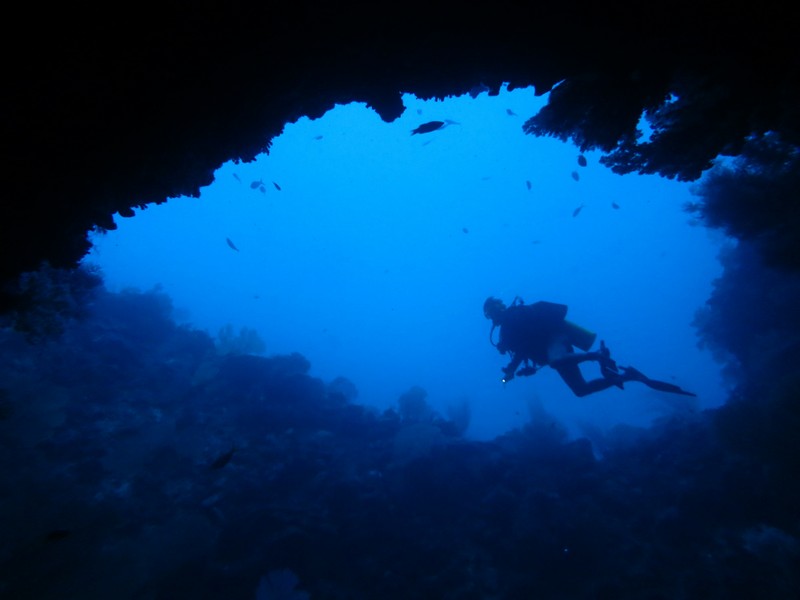
Interesting Caves at Saies Tunnels

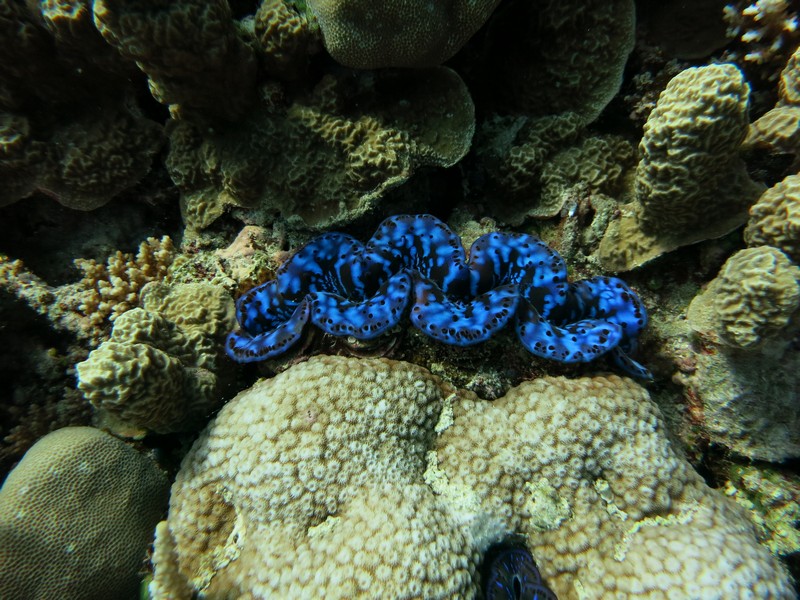
Colorful Tridacna Clam

Hanging Out in the Current at Saies Corner

Eagle Ray

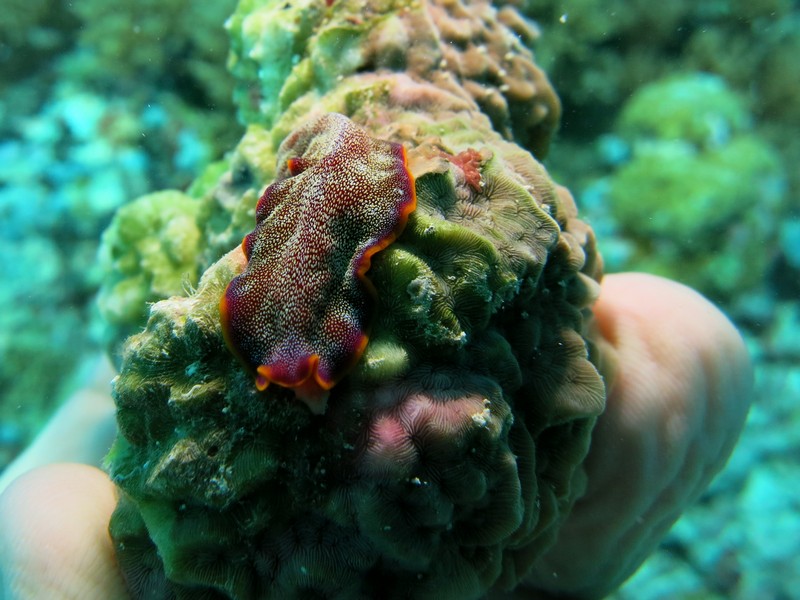
A Rather Large Nudibranch We Found in German Channel


The only problem with all this "resource management" is that it ends up being very expensive to cruise here. The $120 you pay on arrival as a cruiser is just the beginning. To go and anchor ANYWHERE except the single designated cruiser anchorage at Sam's Tours, it costs $50 per month for a Cruising Permit for the boat, and $50 per person for a 10-day Rock Islands permit.

So the first excursion out to the Rock Islands costs a whopping $150 for 10 days, and another $100 for another 10 days. Plus, there has been almost no wind (good for diving, bad for sailing), and so we've had to motor everywhere, and diesel is $5.45/gallon.

But it's better than paying the fly-in tourist diver rate of $145 per diver per day for a two-tank dive (plus of course, hotel, meals and transportation).

In my next installment, I'll post some pics of the wrecks we have seen.

Wednesday, June 4, 2014

Enjoying Palau

We have been in Palau for 3-4 weeks now. I have been really remiss in not posting, but we just been so busy!!

We have settled in at Sam's Tours--one of the most yacht-friendly non-yacht businesses we have encountered in 7 years of cruising. For $35 we joined the Royal Belau Yacht Club (essentially based at Sam's), which entitles us to use the dinghy dock, trash disposal, hot water showers, secure bike rack, AND get a 10% discount at dive shop and the bar/restaurant. We joined on arrival, and have contracted for a nicely-maintained mooring for $50/mo.

Sam's is primarily a dive operator, but they also arrange eco-tours, etc. They are incredibly busy in the mornings and late afternoons. But once the divers are away in the dive boats, by about 9:30 in the morning, it is a great place to hang out. The managers and helpers--when they aren't overwhelmed by their diver-handling duties--are incredibly friendly and helpful. They have already several times gone out of their way to help us out.

The anchorage is in a nice setting--we are essentially in one of Palau's quirky "Rock Islands" and surrounded by nature, in a fairly protected (but deep) location. It has fairly clear water, and is swimable. In fact there is a cave dive (Chandelier Cave) located right next to the mooring field, and in the late afternoons, there are 2-3 dive boats hanging outside the cave waiting for divers to return.

They speak Palauan and English here, and use the U.S. dollar as their currency. When Americans check in on their boats, they are asked, "How long would you like to stay?"...in other words, like the Marshall Islands, no visa hassles. (not so for non-Americans, unfortunately).

Sam's/RBYC is also a secure and easy place to have mail packages sent. Like the Marshalls, Palau has a U.S. Post Office zip code, and so you can have mail sent from the U.S. via USPS. Priority Mail packages don't cost very much to send, and they get here normally in a week to 10 days.

We have been hearing about the grocery stores here ever since we started reading up on Palau. There are 3 big stores, well stocked with both American and world-wide goods. There is a fairly large Asian contingent in Palau, so lots of small Asian stores as well. Due to the flourishing tourism business, daily flights bring daily replenishment of the veggies. So there seems to always be reasonably fresh-looking broccoli and lettuce on the shelves, and usually some decent tomatoes.

There are also two American brand hardware stores here... a Do-It-Best and an Ace, both well stocked.

There are several restaurants within easy walking distance of the anchorage, and "town" is a $5 taxi ride away, with a few more restaurants. So between eating out and eating in, we've been eating quite well!!

"Town" is, unfortunately not in easy walking distance of the anchorage. At high tide you could get there by long dinghy ride, but there are no dinghy dock facilities there. The alternatives are a $5 taxi ride each way (for up to 4 people), bicycles, or hitch a ride with Sam's on their morning run to pick up divers from the hotels. We have unloaded the folding bikes we bought in Hawaii (for the first time in 3 years!), and have been using them for getting around. Our friends on Carina bought a pair of bikes from another cruiser who was leaving. Jerry on Challenger bought a bike from a local store for about $150. The rest of the cruisers here have been carpooling with taxis, or occasionally walking. (Usually you only try to walk once, then you take an air-conditioned taxi).

We have great pay-as-you go internet in the anchorage. But the downside is that it's not cheap, and it's very slow. With the booming tourism business here, the internet pipeline is not adequate to accommodate the number of people trying to connect. In the middle of the day, even with a strong wifi signal, you are lucky to get a fairly complex page like Amazon to even complete loading. Forget trying to download ANYTHING bigger than 100Kb.

There seems to be no magic way around the speed issue, except to get up and do your internet business in the middle of the night. For this, the worst internet service we've had since the Marquesas, we pay about $1.25 per hour (via $10 for 7 hour scratch-off cards). If you buy your scratch-off cards in bulk (10 at a time), the price comes down to $8 per 7 hours. Due to the slow speeds, even getting up at 6am to do my surfing, I burned through $80 in a week, and have contemplated going on a monthly plan at $175 per month (unlimited time)! This is one reason I haven't been blogging or Facebooking much! Not only is it expensive, everything on the internet takes 2-5 times longer to complete.

I have heard that the Palau government is trying to upgrade their internet trunk line, but I haven't heard any hard dates, so it's probably "not this year". So we are stuck with the situation until we move on to the Philippines in September. I've heard the internet is better and easier there.

Another downside to Palau is that everything in general is a little pricey on a cruiser's budget. This is due to Palau being a tourist destination, plus being way out in the Western Pacific. It's not quite as bad as French Polynesia, but similar to Hawaii and big-city-American prices. The prices wouldn't be shocking for someone flying in from the U.S., but with the very cheap Philippines just over the horizon, some of our cruiser friends are complaining. Some examples... meals out are $7-25, with around $8-10 the norm. Liquor is probably the worst--there must be some hefty liquor taxes here. The cheapest bottle of wine you can find in a grocery store (what would be a $4 bottle in the U.S.) is about $12. We have yet to find any boxed wine. The cheapest beer we have found is $1.05 per can, and that's Milwaukee's Best or Japanese Asahi. They have a local micro-brewery that brews some really nice beer, and that's $1.75/can. Hard liquor is outrageous--the cheapest most rot-gut vodka is about $25 per bottle (what would be $5-7 in the U.S.), and everything else is more expensive.

A third major downside to Palau is that non-American visitors are only given a one-month visa, and then must extend monthly at about $100 per month per person. So our non-American cruising buddies are only staying a month and then moving on to the Philippines.

It seems like everyone on this cruising route is heading for the Philippines. The cruiser grapevine says that, if you avoid the bad spots (like Zamboanga, a hotbed of Muslim separatist activity), it's a great cruising destination and very inexpensive to cruise, and to get work done on your boat. Somewhat like Venezuela was before it (recently) got so bad.

This is long enough... I'll stop here and get this off before I get re-prioritized. I promise to fill in some more in the next few days.

Sunday, May 18, 2014

Passage from Yap to Palau

May 6 - May 8, 2014

We checked out of Yap on the morning of our departure. The Yap officials would not permit us to check out late the afternoon before and leave at the crack of dawn, as we had wanted to. So we had to wait until their office opened at 8am to check out. But it was done quickly and painlessly and without cost. We made one last stop at the grocery store--hoping that tomatoes would have magically appeared on the shelves. But alas, we had to make our passage tomato-free.

As seems to have been the pattern during our whole trip across Micronesia, we left port on another long passage with the promise of wind that never materialized.

And also true to form, Dave didn't want to drift along in the light winds, so we motored a lot of the way to Palau.

The entire trip was pretty uneventful. We spent most of the second day with passing squalls and doing the zero-to-25-to-zero squall "two step". But about midnight that day, the final squall passed and our last 12 hours was pretty good.

The whole passage was 260 miles, from the anchorage in Yap to the commercial wharf in Palau. It took us 53 hours, and we motored 31 hours of that.

Our check-in in Palau was pretty hassle-free. We tied up to the commercial wharf at 1pm, and by about 3pm, we were completely done. The whole thing cost $150 U.S. And as Americans, we have a year in Palau before we need to worry about a visa extension. (Non-Americans get 1 month, extendable to 3 at a cost of about $100 per month).

By 3:30pm we were on the Guest Mooring off Sam's Tours, and by 5pm we were enjoying a nice cold draft Red Rooster beer (great German beer brewed in Palau) at the bar at Sams. Hot showers, nice dinghy dock, etc.
-----
At 05/08/2014 9:17 PM (utc) our position was 07°20.32'N 134°27.17'E

A Week in Yap

April 28 - May 6, 2014

Yap... where the heck is that? When a cruising friend of ours stopped in Yap a few years ago, I had never heard of it. And still couldn't find it on the map, until we started planning our cruising for this year.

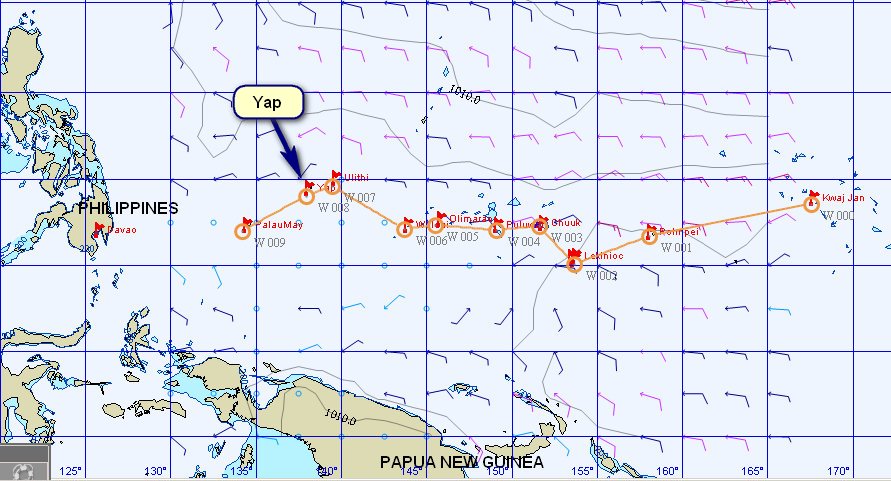
Our Trek Across Micronesia, Highlighting Yap

Yap is an Island/Atoll/State in the NW part of the Federated States of Micronesia (FSM). It is located at 09-30.87 N / 138-07.35 E, 450 Miles SW of Guam.

We found Yap to be an interesting contrast to the other populated centers in the FSM (Chuuk/Truk and Pohnpei). Though Yap is pretty sleepy, we found infrastructure and orderliness that we hadn't expected. Compared to the infrastructure disaster that Chuuk is, Yap really has its act together. There are trash bins and recycling boxes on the street corners--and they are actually USED by the local people. There is hardly any trash lying around.

Road Signs to Help Tourists

A huge number of miles of roads are paved and in good condition, and even the remote dirt roads are maintained. The villages--both ones that the tourists visit on their "culture tour" and the more remote ones--are neat and orderly. People work hard to keep their own grounds clean, and the roadside in their villages. While we were out driving around, we saw several "work crews" from a nearby village out picking up trash along the road. These people are in no way similar to what we saw in Chuuk.

We only stayed 8 days in Yap--we kind of got the "horse headed to the barn syndrome", and pushed on to Palau pretty quickly. But we did get to see a lot of Yap, thanks mainly to Marie and Glen from Backbeat.

Of course, after check-in, my first priority was groceries and Dave's first priority was seeing the World War II stuff. Diving ended up a distant 3rd--the reports on diving Yap were so-so and we knew we were soon moving on to Palau with GREAT diving. We took care of groceries on the first day there, then set out to see as much of Yap as possible.

Yap Visitor's Bureau (Struggling for Funding)

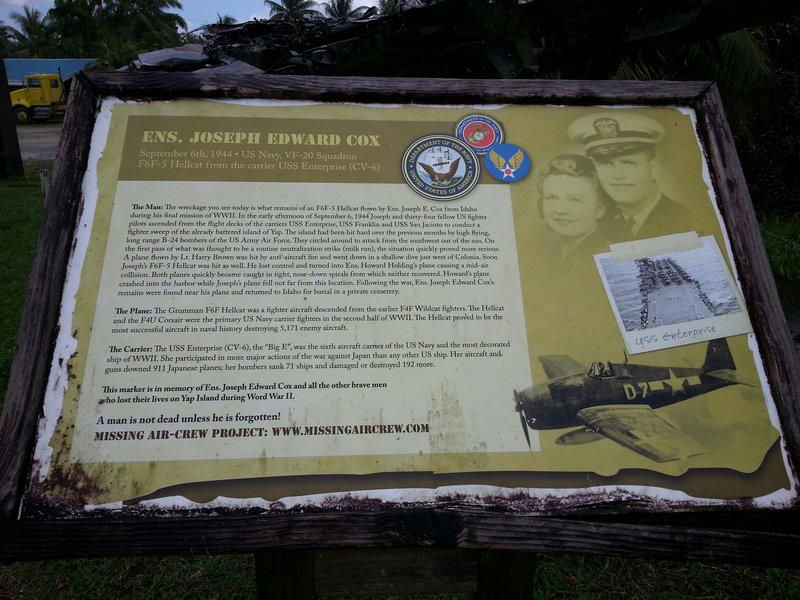
Philip and Leslie on Carina (cruising friends that had stayed 2 months in Yap) had told Dave to be sure to look up Tom at the Yap Visitor's Bureau (YVB), and this turned out to be a great tip. Tom is a native Yapese who has gotten as bitten by the World War II bug as Dave is. Tom has been one of primary members of the Yap end of the team for MissingAirCrew.com.

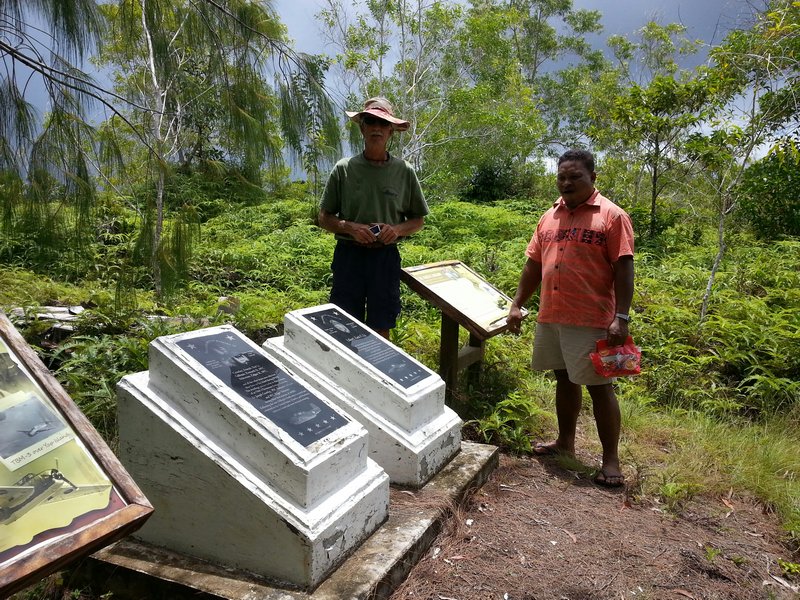
Tom Tamangmow from YVB, Showing Us Their WWII Memorials

Because of Dave's interest in World War II stuff, Tom loaded us up in a 4WD and took us out to show us what Pat from MissingAirCrew.com and Tom and the YVB have been working on--monuments to downed US Airmen in Yap.

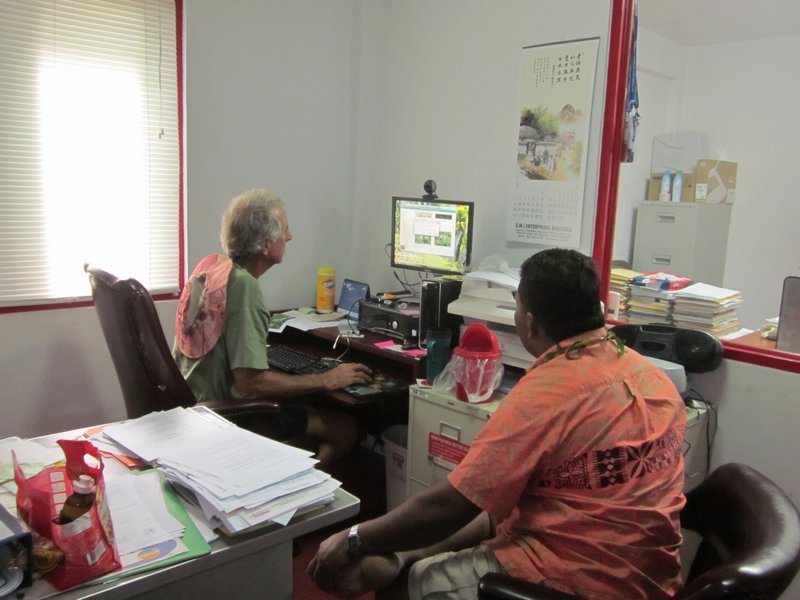
Dave in Tom's Office, Sharing Photos of Micronesian WWII Sites

Pat Ranfranz, back in the U.S., does the research as to planes that went down while bombing Yap. Then he sends Tom out to try to find the plane. Pat also tries to visit Yap at least once a year to do some searching on his own. They have found a lot of them, but they are still looking for a few. We got Glen from Backbeat turned on to this, and he's signed up for a personal mission to try to locate the remains of one specific plane that still has not been found.

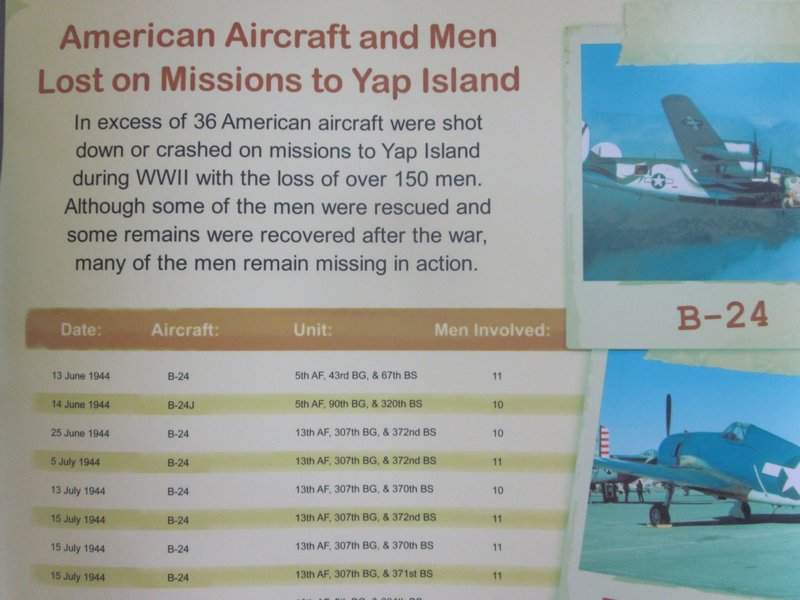
MissingAirCrew.com's List of US Planes Lost Over Yap

The U.S. bombed Yap nearly daily during 1944/45. There were never any plans to invade, but they wanted to keep the Japanese airfield and airplanes unusable. At one point, the Japanese (or Yapese) spelled out on the runway "We Give Up, Please Don't Bomb Any More". (sorry I can't locate this picture, but I think there is a copy of it somewhere on the MissingAircrew.com website).

One of the Plaques for Downed U.S. Airmen in Yap

So we got a quickie tour of the close sites by Tom from YVB.

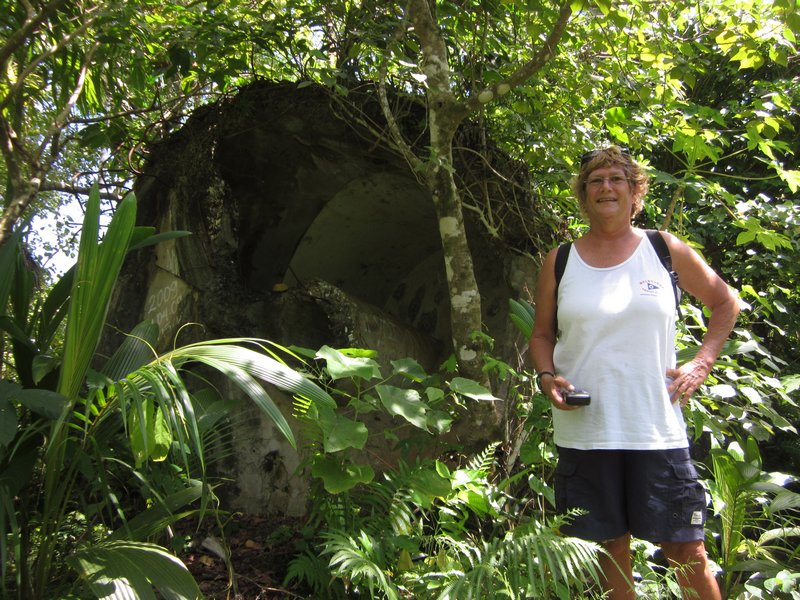
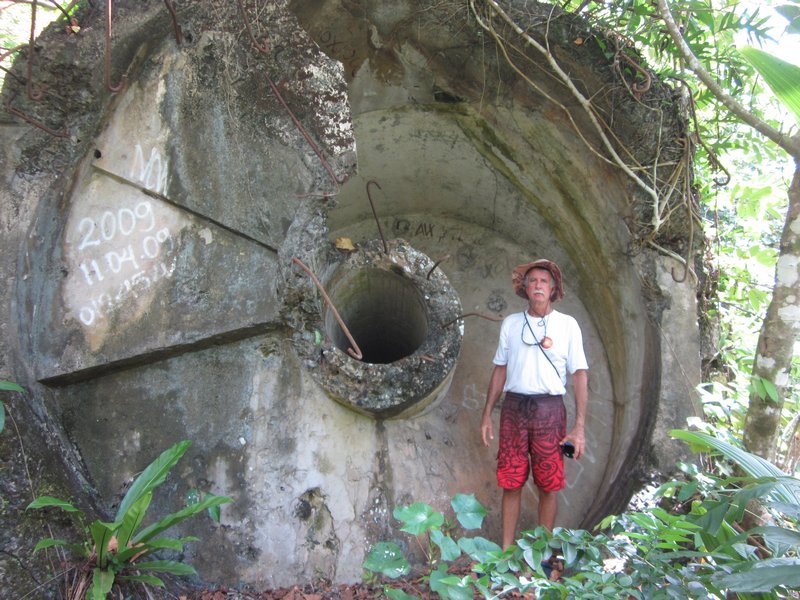
But then Glen and Marie loaded us up in their car and spent two afternoons showing us the rest of the island. We stopped at a bunch of Japanese relics that Glen and Marie had found on their own while out wandering around, plus the best of the "Stone Money Banks". We took waypoints on our GPS for every "Point of Interest" we found, because one of the things that the Yap Visitors Bureau lacks is a good map showing the exact location of all these attractions.

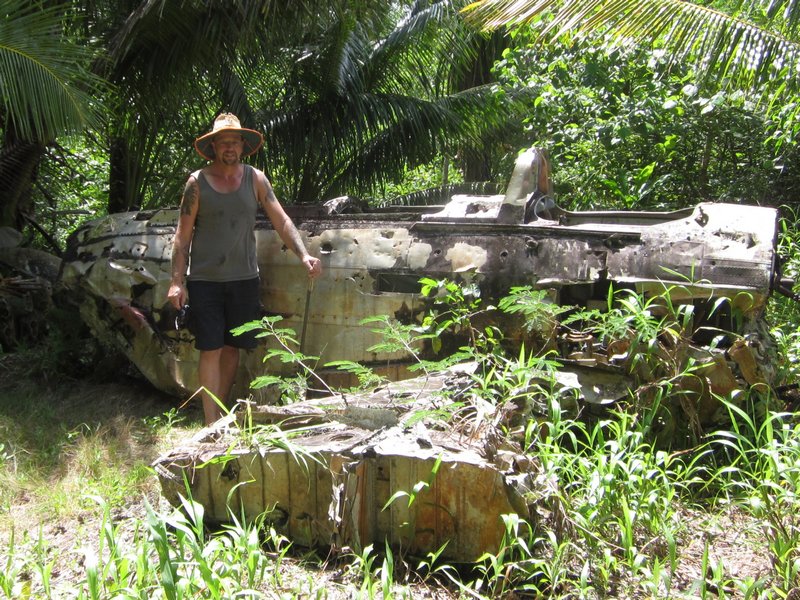
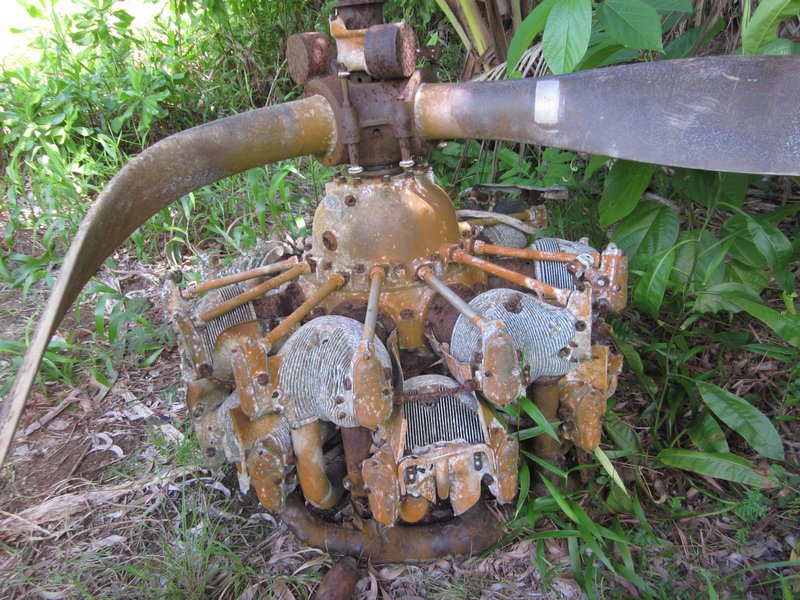
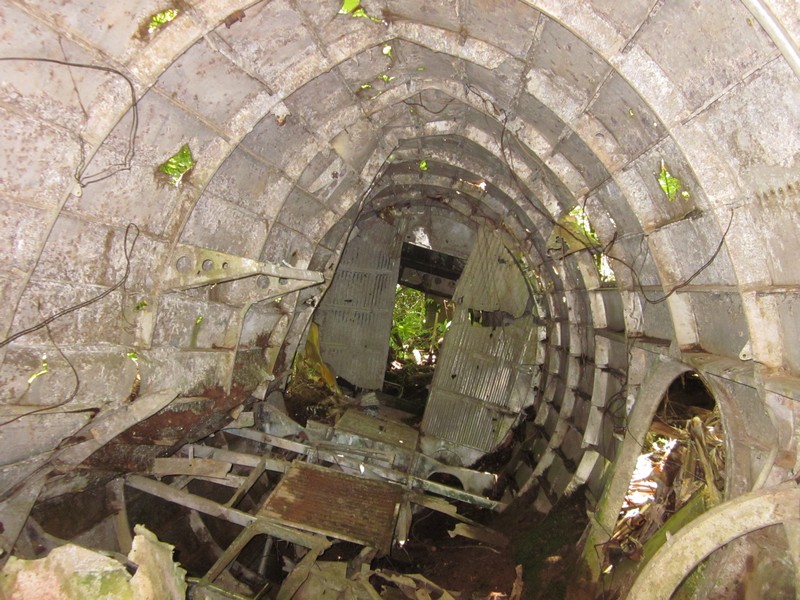
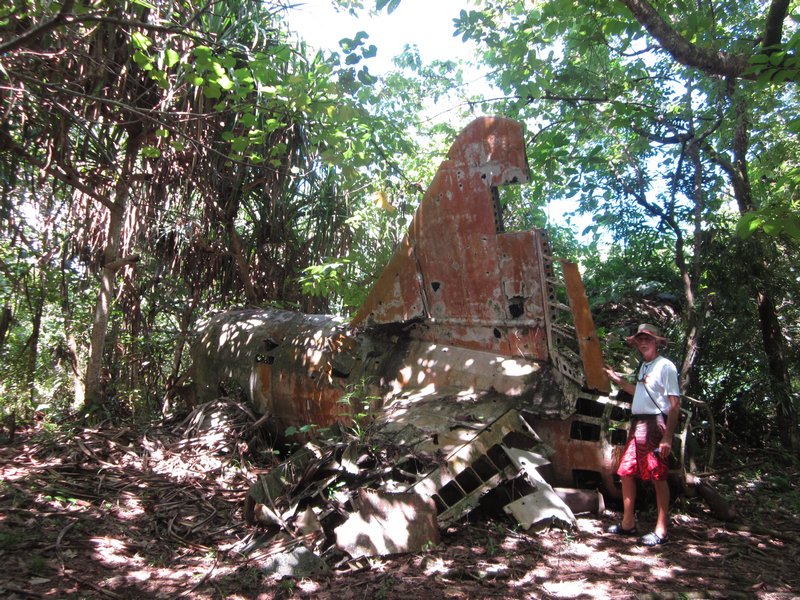
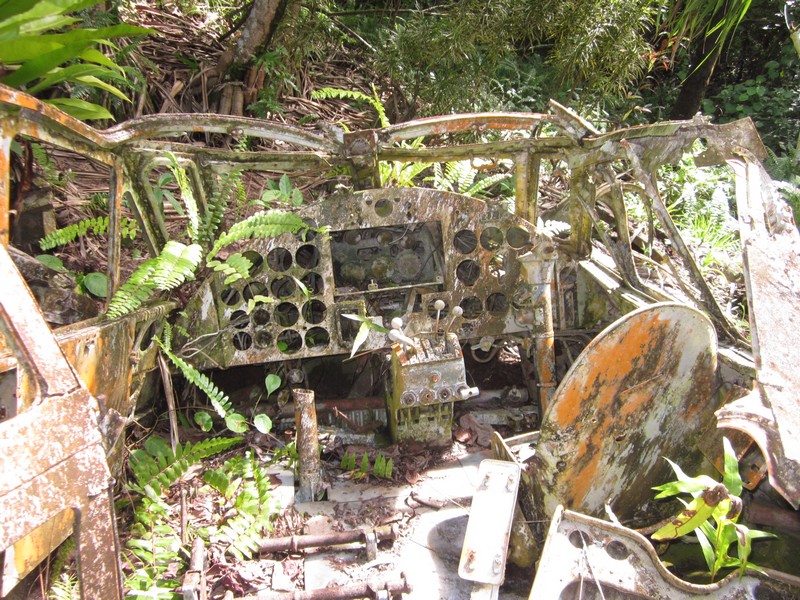
Glen Shows Us a Plane He Found Near the Old Runway


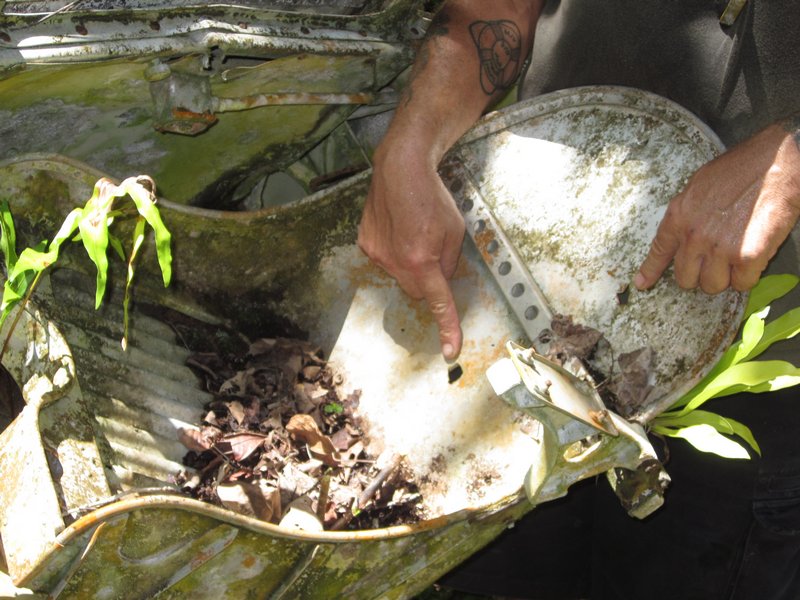
A Bullet Hole in the Cockpit Seat


As an example, there is a plaque placed by YVB at the former Japanese lighthouse. Tom had showed us a picture of it, and Dave wanted to go see it. But it's not on any map that we could find in Yap. Fortunately, we got a waypoint from Tom, because we would have never ever found it otherwise.

Japanese Light House, On Its Side

Destroyed by the Japanese, So the US Would Stop Using It For Target Practice

It is way out in the boonies on a dirt road, with no signs marking the way. There was once a road that went all the way to the lighthouse, but now the road peters out, and we ended up parking the car and walking the last mile or so (we had to ask permission to park there from a local, and get directions). And when we got very close (according to the GPS), we still couldn't see the lighthouse and couldn't figure out where it was. It turned out to be a short scramble up a hill, through the jungle. The reason it's not very visible is that the entire structure is now prone in the jungle. The story we heard was that the Japanese pulled the lighthouse down themselves--they were tired of getting bombed every day by U.S. forces.

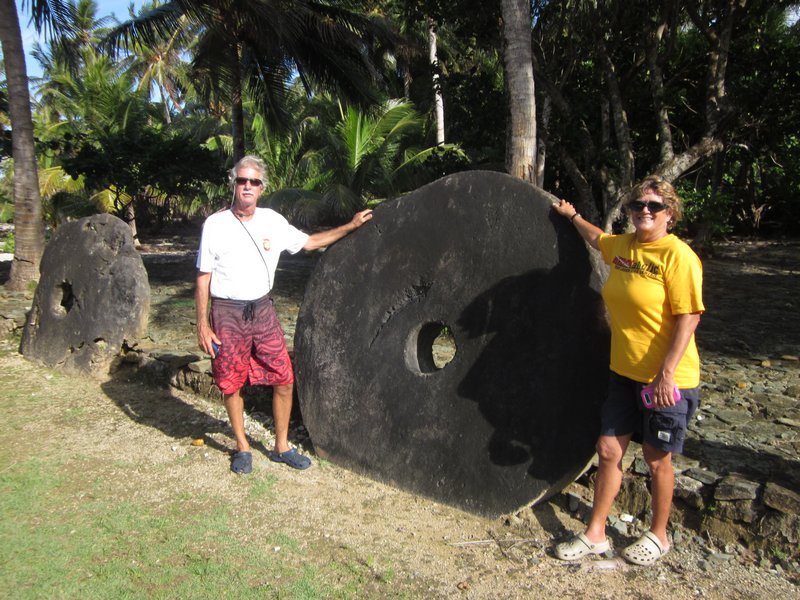
One Typical Example of Yap Stone Money

Stone Money is unique to Yap (and maybe Palau). The Yapese would send canoes to Palau to a special place with some special stone, and quarry these circular stones. They were used as money in Yap (and still are, to a limited extent, in traditional Yapese culture today). We were told that the value of a given stone is not based on the quality of the stonework, nor the type of stone, but more by the story of its voyage from Palau to Yap--how dangerous the trip was, how many men and boats were lost, etc.

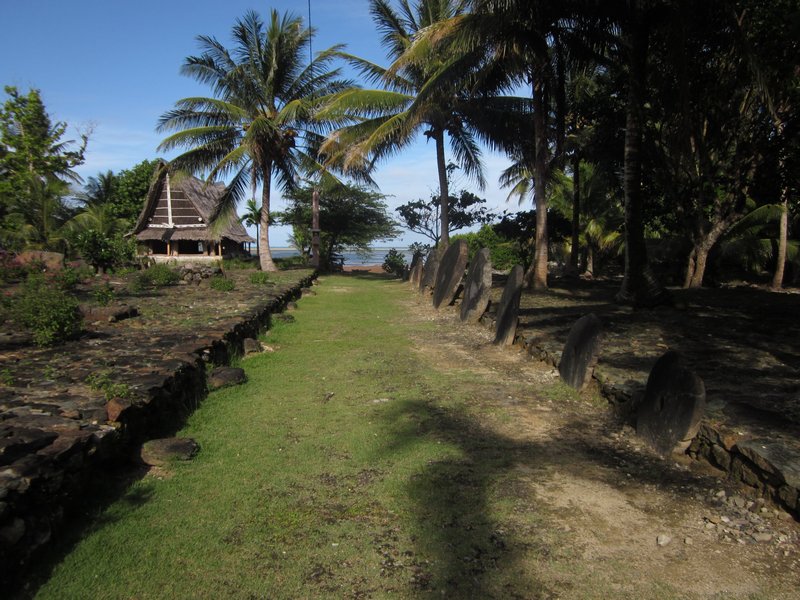
Village "Money Bank" Centered Around the Men's House

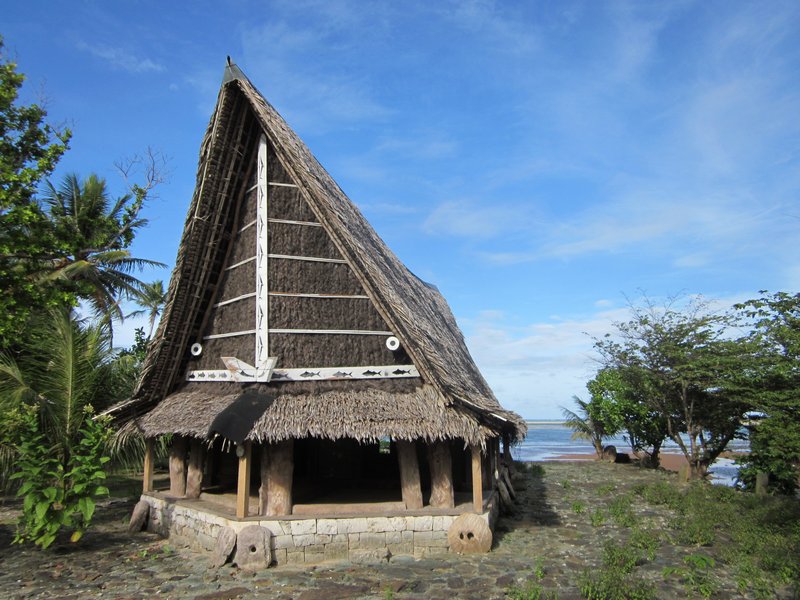
Traditional "Men's House" in Yap

In the mid-1800's an enterprising Irish-American trader, trying to get the Yapese to gather Copra (dried coconut) for him, started bringing stone money from Palau in his trading ships. His colorful exploits were written up in a somewhat fictionalized book called "His Majesty O'Keefe". This was eventually made into a Burt Lancaster movie of the same name (we haven't seen it).

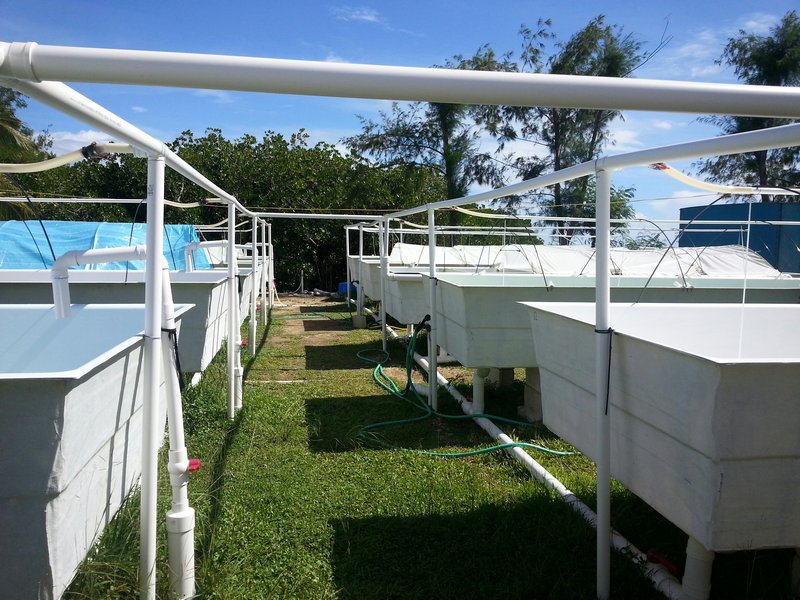
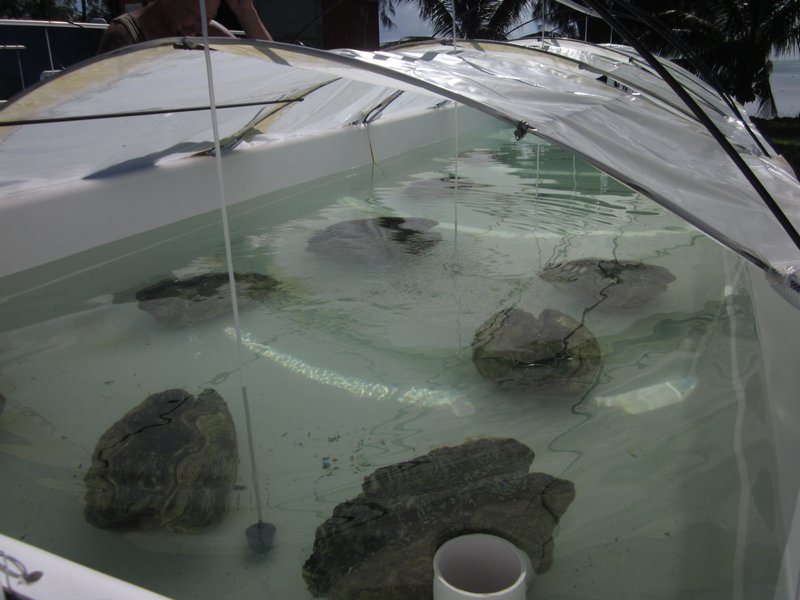
We also stopped by a Clam Farm, where a Belgian guy is trying to grow Giant Clams.

Cultivating the Giant Clam


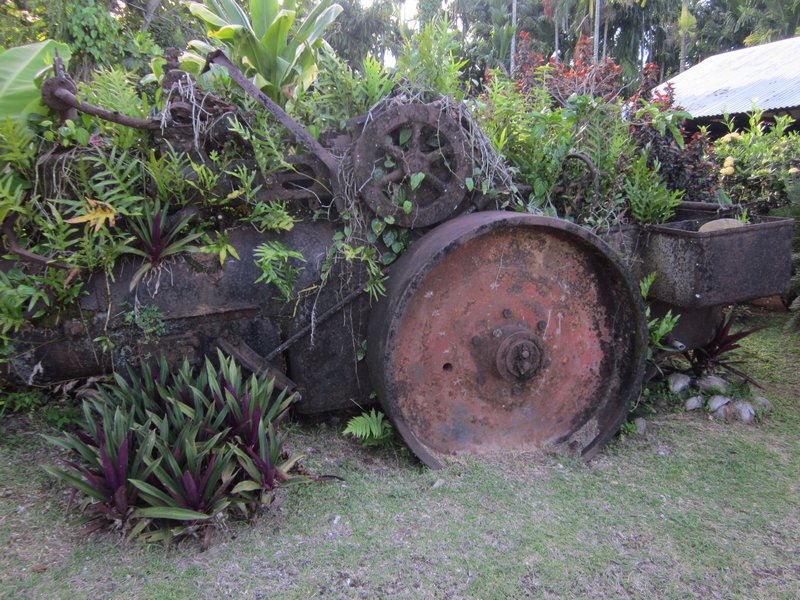
On our way through one village, we saw an old steam-powered roller, rusting in someone's backyard.

Steam Powered Road Construction Equipment - An Heirloom!

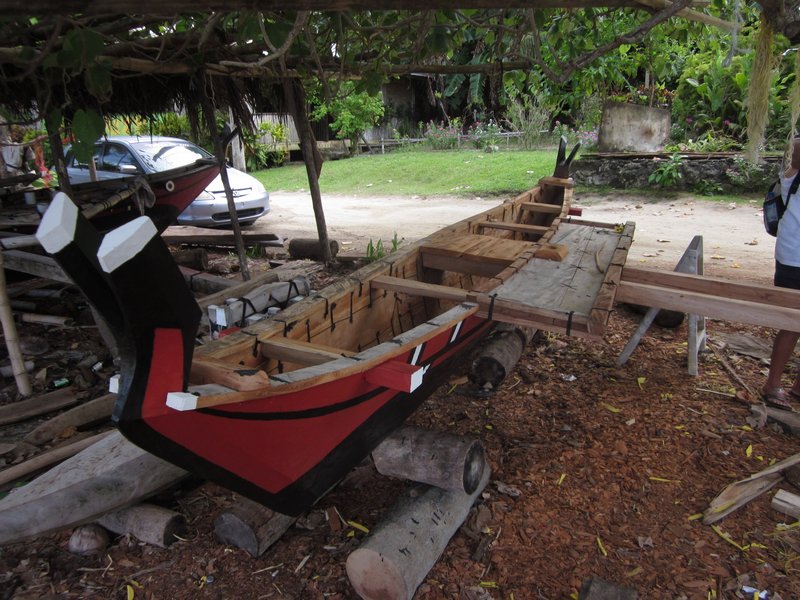
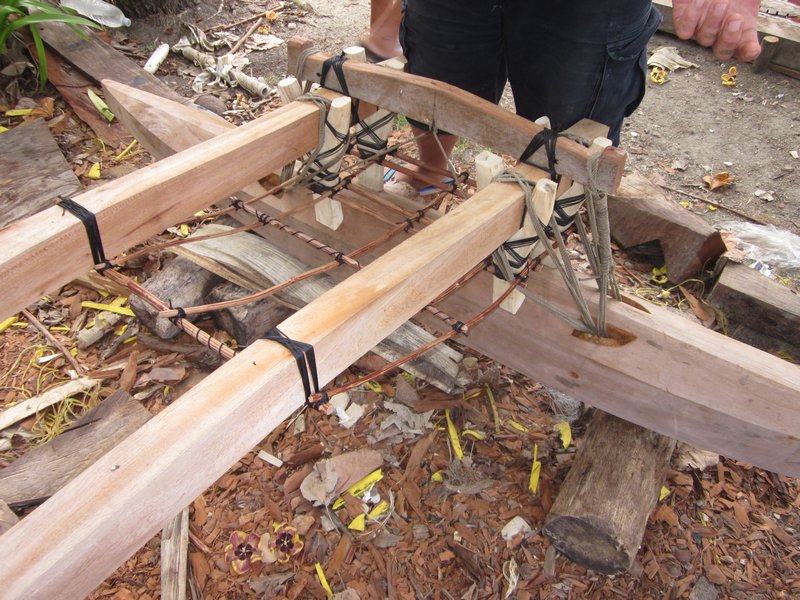
We also got a chance to get an up-close look at a one-man version of a Yap canoe. The entire thing is constructed only of natural materials--no nails, screws, or high tech glue.

A Yapese One-Man Outrigger Canoe

Note the Lashings to Hold Everything Together

We didn't do any diving in Yap. We had heard that the Manta Ray dive was fabulous, but we were past Manta season. And we knew Palau would have better diving.

Having seen most of what Yap has to offer in our short week, we said good bye and good luck to Backbeat, and move on to catch up with our friends who were all in Palau by now.

For more on Yap, see our friends on s/v Lorelei's Blog. They spent a lot more time in Yap than we did. And did some diving there, too.

Wednesday, April 30, 2014

Easy Passage to Yap

The wind died off about 10pm, so we had to motor the rest of the night. But by morning we could see Yap in the distance. We finally anchored in the inner harbor about 10am. Yap has a pretty well-marked channel coming in--with a few of the markers with proper red and green lights on them. And our CM93 chart, and the Google Earth charts we made, are pretty accurate.

We called the Port Captain on VHF on our way in, and made arrangements to meet the officials on shore at 11am. When we got there a few minutes late, John, the Port Captain representative was the only one there. He put us in his air conditioned pickup and drove us 100 yards to the air conditioned Immigration office (across from the Marina Restaurant). There we were waved into a chair and proceeded to meet 6 different officials to complete our check-in (Port, Immigration, Customs, Quarantine, Health, EPA). Quite a lot of paperwork for such a small island, and especially considering we've been in their country for almost 3 months already.

There was a question about our holding tank capacity--as usual, everyone wants you to have a holding tank, but nobody has the facilities to pump it out. We told them we'd be using the facilities ashore. Which, I am absolutely positive, DON'T go to a sewage treatment plant, but probably just a septic tank and then into the water (if it is a recently-built modern structure).

Also the quarantine guy wanted us to keep all our "garbage" (wet trash) aboard. But literally EVERYTHING (fruits and vegs) we have onboard were purchased in the FSM. They just don't get the difference between a cruising yacht and a big ship.

The EPA guy had a form for us to fill out about what fuel and other possible contaminants we had on board--in case we went aground or sunk, so they knew how to clean up our spill site. Methinks they've been training too much in the U.S. In contrast, I've seen guys in the islands just toss an outboard motor oil plastic container over the side when they were finished topping off their tank.

Anyway, everyone was friendly and fairly efficient. We hadn't brought enough copies of our crew list, but the Immigration lady kindly made a couple of copies for us. By 11:45 we were finished, and Dave and I went to lunch at the Marina Restaurant (no Marina to go with the Restaurant, but a nice view of our boat on anchor).

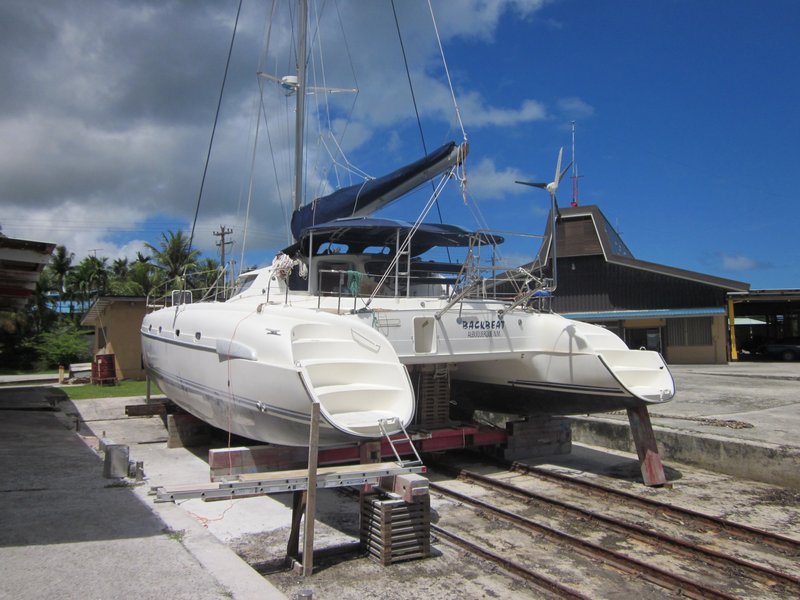
Backbeat Hauled Out in Yap

After lunch, we stopped in to say hello to Backbeat, a catamaran on the haulout ramp. We had heard of Backbeat when they went aground in Woleai last December when Typhoon Haiyan passed over... a huge saga.

They were fine, and the boat MOSTLY intact... except the keel running along one hull snapped sideways and made a major hole the length of the keel. They are designed as breakaway keels, but I guess it didn't break away cleanly.

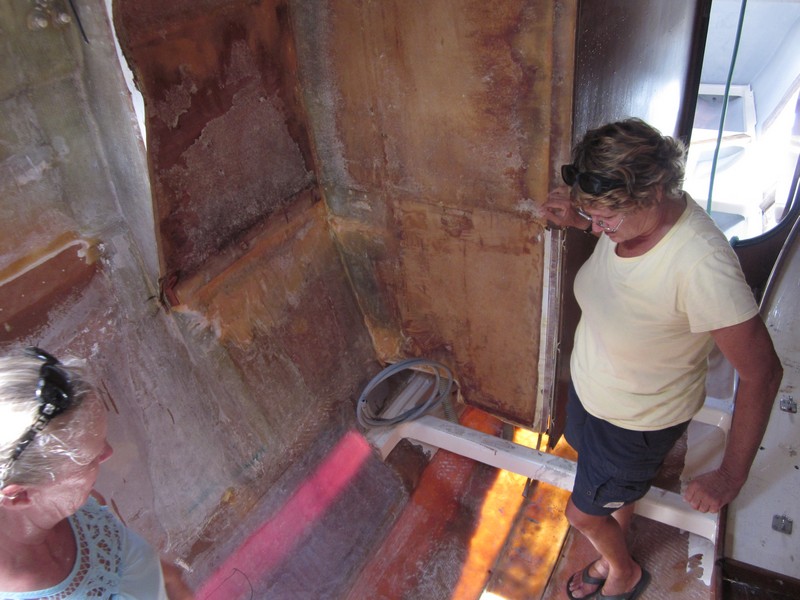
After a couple of months making temporary repairs in Woleai, they were towed to Yap. But during the 2-3 day trip from Woleai, the leaks increased to the point where the boat was basically being towed underwater. So the entire interior, including engines and generator, is a total loss. By the end of it all, they have their bare hull (with some signficant issues), and a pretty good rig, and their lives.

Stripped Out Inside, Repairing the Keel

They are stuck here is sleepy Yap until they can get their boat sound enough (and at least one engine working) to move to someplace else--probably the Philippines, which are only about 5-7 days downwind--to complete their re-fit.

Marie from Backbeat was kind enough to load us up in her air conditioned car and give us the nickel tour of Yap, with quick stops in all 3 primary grocery stores to pick up what veggies we could find.

We'll be here for a week or two, experiencing Yap, and then on to Palau if the wind ever comes back.
-----
At 04/28/2014 7:00 AM (utc) our position was 09°30.86'N 138°07.35'E