I have put a couple of new posts and some pics from our transit, but I sequenced them in order for our historical record. So those of you watching for the latest posts for updates, might miss it.
You can see them all together at this link: Panama Canal
Friday, September 26, 2008


Wednesday, September 24, 2008
The Flamenco Anchorage, Balboa, Panama
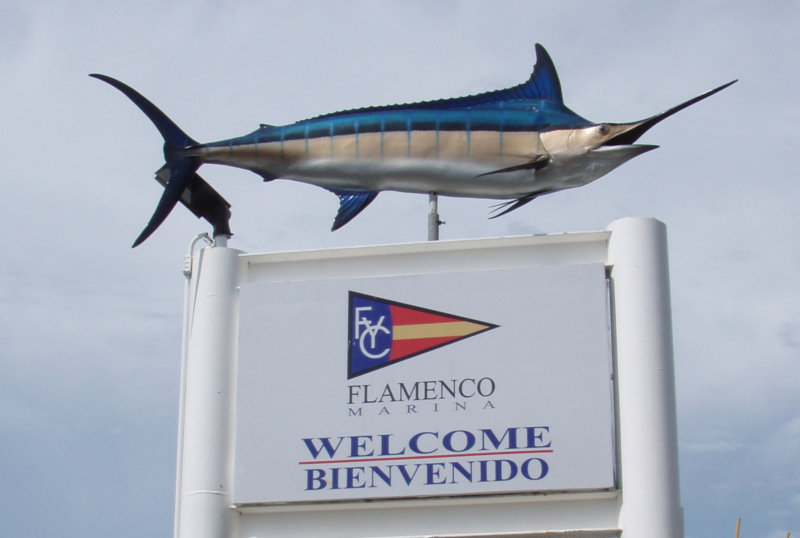
We stopped in here for a few days to let off passengers and pick up a few things before we start moving NW toward Golfito, Costa Rica.
The favored anchorage seems to change depending on the season, as the prevailing winds change.
For the rainy season, the anchorage is on the east side of the causeway that the Balboa Yacht Club is on the west side of, at the Pacific entry to the Panama Canal. As shown by the anchor in the Bauhaus guide, you tuck up on the north side of the Flamenco Marina area.
The only dinghy dock is at Flamenco Marina, and they charge $5.25 per day, somewhat loosely enforced (ie you definitely have to pay on your first visit, but they're not super strict about checking your receipt all the time. Some cruisers told us you could get by paying a few days at a time, and then skipping a few days). The dock is a nice floating dock and very secure.
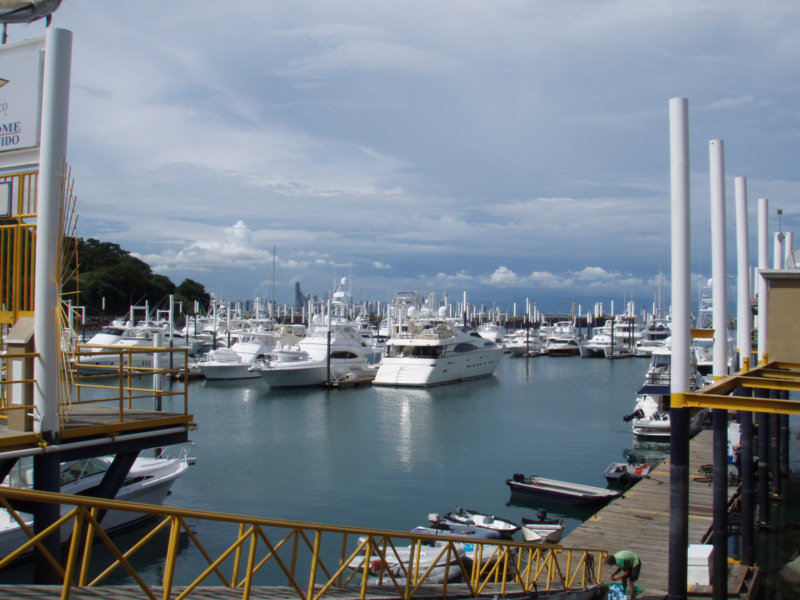
There is supposedly a $5/bag trash fee, but we have yet to be asked for it when we have dropped trash off. That may only be for boats getting rid of trash without paying for the dinghy dock.
There is a water hose at the dinghy dock, so you can fill jugs in the dinghy. Right now the dinghy area is at the far end of the fuel dock (in and to the left). There is a blue rope that designates the dinghy area, though even now in the low season, there's not enough room there for all the dinghies.
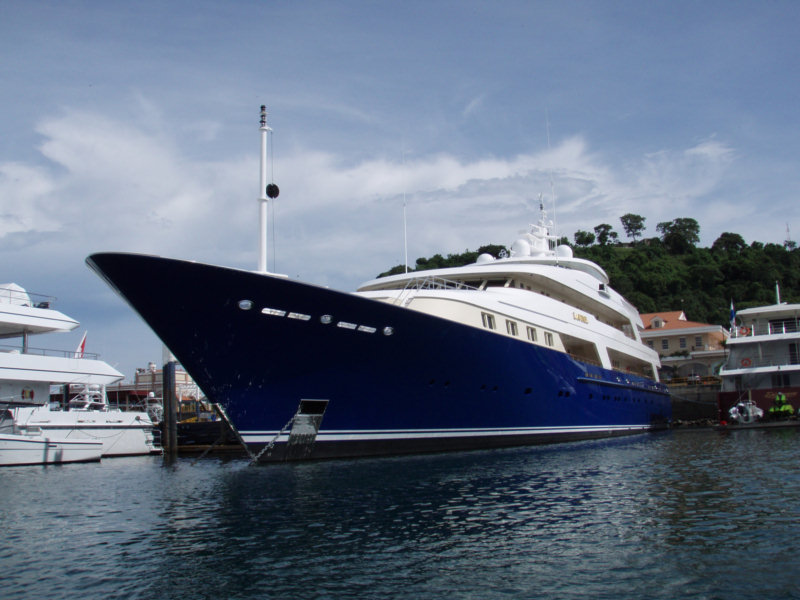
Note: Though the sign says Flamenco Marina, the official name according to the receipt we got is the Fuerte Amador Resort & Marina. Dockage is available at $1.65/foot short term and $1.50/foot long term.
The first time we anchored, we anchored south of where the Bauhaus guide showed, closer to the actual marina breakwater. This was fine for a day or so when the wind was very light. But when the wind came up just a little (10-12 knots), it got very rolly there. So we moved a quarter mile north to where Bauhaus shows the anchor. It is further from the dinghy dock, but much less rolly here. There is a large area, good holding, with about 10-15 feet at low tide.
Internet access: I can see the marina wifi out on the hook with my good wifi setup, at our first anchorage near the marina. But couldn't get anything free/open out there. The only usable hookup was the Flamenco Marina hotspot (nice strong signal), but when hooked up, you get a logon screen. When I asked at the marina about a logon, we were told that the marina internet connection is terrible, so don't bother paying for it. There is free wifi at the Flamenco Cafe and at Bennigans, both right at the marina. It is slow... probably the same feed that you have to pay for on the marina's wifi. I have not pursued a faster alternative ashore.
When we moved further down to the regular anchorage, I started picking up the Whisper hotspot. This is a 'for pay' hotspot, and you can buy 2 hrs for $5, or 15 hrs for $20. At $1.25/hr for reasonably fast wifi on the boat, I think it's a good value. (Dave said "Twenty dollars!!") You can sign up on their website with a credit card, or call the number on the webpage, or find a physical outlet (the shops/restaurants ashore in the shopping center, probably... we haven't been there). I just used my credit card. So far haven't regretted it, though it is probably a little bit risky over an unsecured wireless link.
There is fuel at the Flamenco Marina. It is way cheaper than it was at PCYC in Colon, and a little cheaper than BYC. It does a huge volume with the sportsfishing boats, so the fuel is very good.
There is a mini-mart at the marina, across from the office. It has basic stuff you'd expect at a marina-based mini-mart (no veggies).
There are taxis hanging out at the marina parking lot. We met one who was very nice, with a/c taxi, speaks english. Ramon's cell is 6452-7157. It's $30 to the international airport. Ramon will do 'by the hour' taxi $10/hour and he knows most of the places that the cruisers want to go.
There are buses that stop at the marina but as yet do not have any experience taking them yet. We understand that the route here either ends near the Albrook Mall or at Centro Commercial.
Saturday, September 20, 2008
The Pearl Diving Submarine in the Perlas Islands

Yesterday, on our way around the east coast of Isla del Rey, we went to see what the locals call 'the Japanese Submarine', on the north coast of Isla San Telmo (St. Elmo).
Though everyone, including the cruising guides, refer to it as 'the Japanese submarine', we understand that it is really a 1860's pearl-diving submarine.
A marine archaeologist friend of Dave's by the name of Jim Delgado was here in 2001 and thought it didn't look very Japanese-like. He was very familiar with Japanese sub construction after spending years in the Pacific documenting Pacific WWII ship wrecks.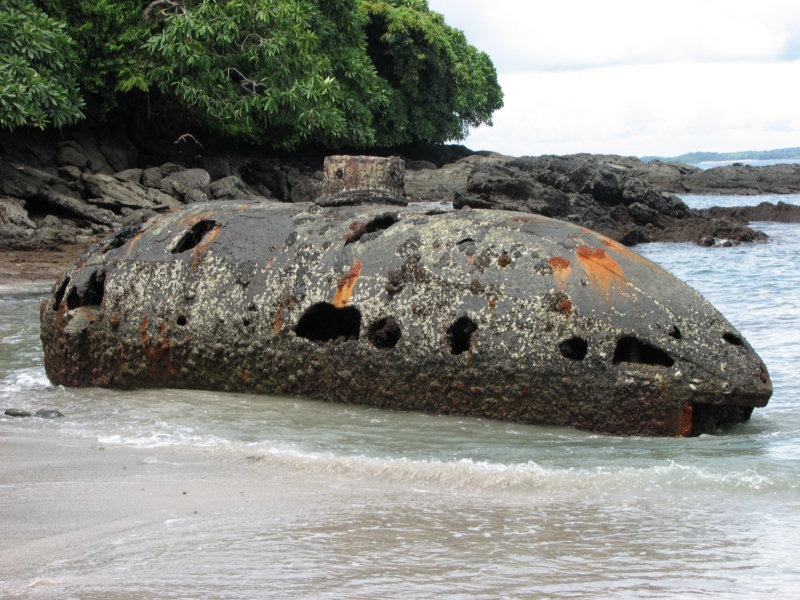
After encountering the sub on the beach while on vacation, he researched it some more and after spending time here again in 2002 and 2004 with several friends, including Larry Murphy formerly of the National Park Service, he eventually established that it was a "lost" pearl-diving submarine, 'Sub Marine Explorer', built by a German engineer in 1865. It is one of only 5 surviving submarines built before 1870. Read about the find here. Jim Delgado, the archaeologist, is a former historian with the US National Park Service, and is now the director of the Vancouver BC Maritime Museum. He and Dave worked together in the Pacific in the late 1980s, documenting Japanese wrecks.
To sum up the history of the Sub Marine Explorer... a German engineer, Julius Kroehl, built the sub in 1865 to do pearl diving in the Las Perlas islands. But they didn't know about 'the bends'... a problem that occurs when breathing compressed air at deep depths and then surfacing without properly decompressing. The boat arrived in Panama in Dec 1866 and did make several successful pearl dives to deep depths, but by Sep 1867 the engineer and all the sub operators died of 'the bends'. The next/last documented attempt to use the sub occurred in August 1869 when over a period of 11 days it recovered $2K worth of pearls (a LOT of money in those days). But again, soon after, all its crew died of the bends. The sub was then was abandoned, apparently beached on San Telmo and left for good.
The Bauhaus Panama guide book mentioned the sub, but only that it was a Japanese sub on the north side of San Telmo. So we got on the VHF and got a waypoint from s/v Carina. Our Tides & Currents 3.0 program seems to be pretty accurate, and it indicated that low tide was about noon. So we set out from the Punta Cocos anchorage (S end of Isla del Rey) and arrived right about noon.
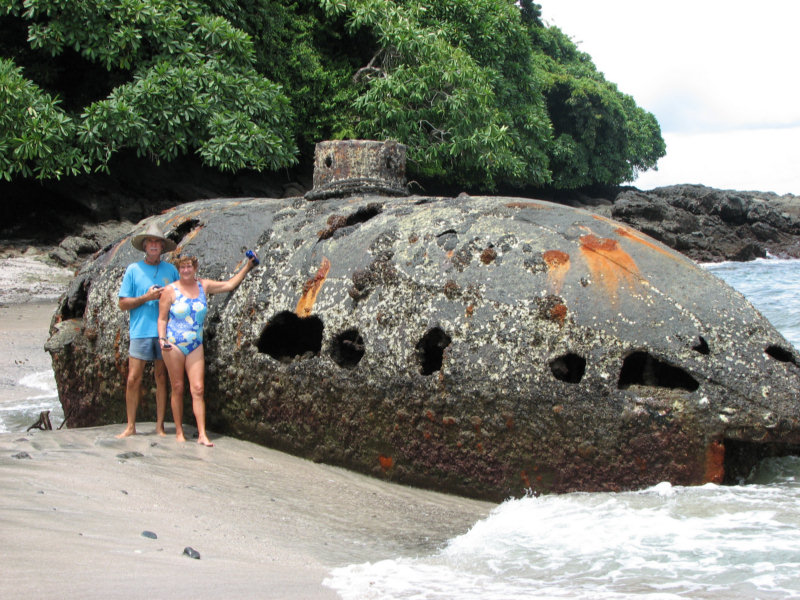
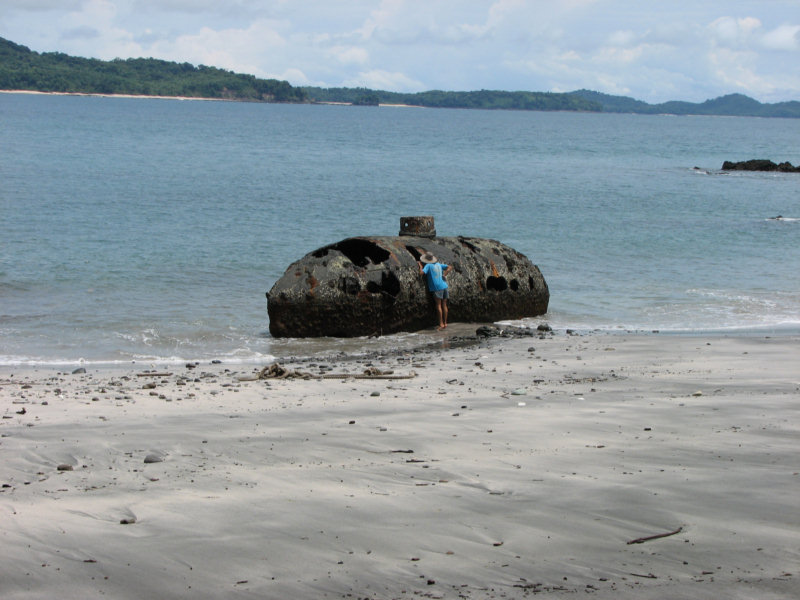
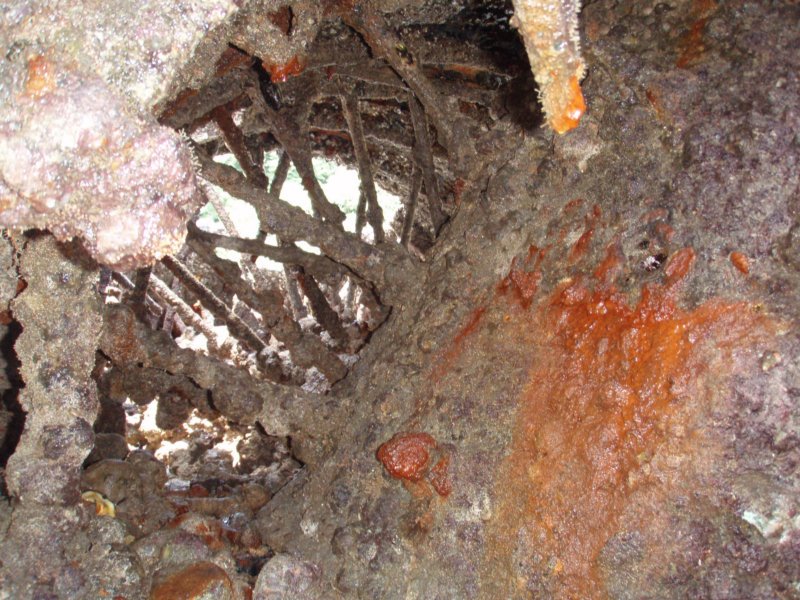
The sub was clearly visible on the beach at low tide, but would be covered at high tide. It was shaped like a fat cigar and is pretty large. I am amazed at how well-preserved it is after sitting in salt water for 150 years. We took a zillion pictures and will post some here as soon as we get internet.
Sub position: 08-16.896N 078-50.743W
Our anchorage: 08-17.050N 078-50.801W (day anchorage only, in settled weather)
There is an uncharted rock/reef outside/north our anchored position that was visible at low tide at APPROX 08-17.136N 078-50.815
On a settled day with a fast dinghy, you could also dinghy to see the sub from the Punta Cocos anchorage.
Friday, September 19, 2008
Whale Ho!!!
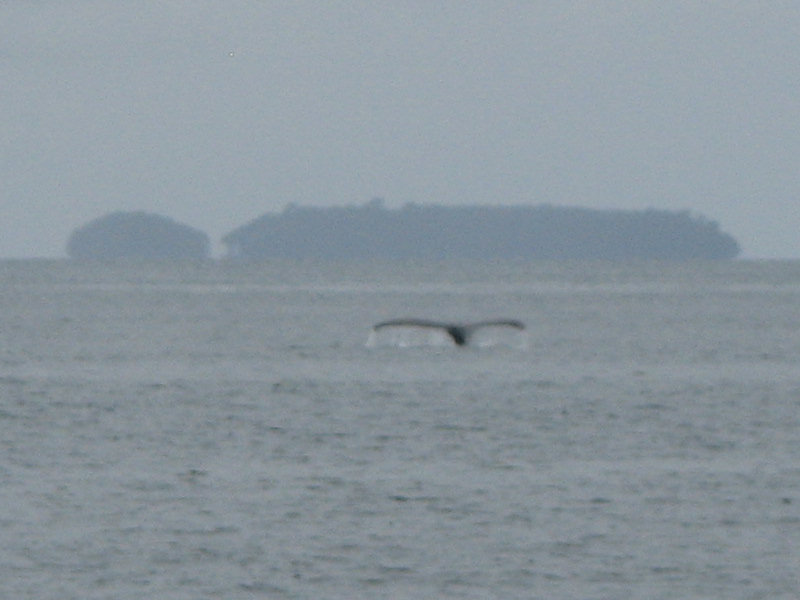
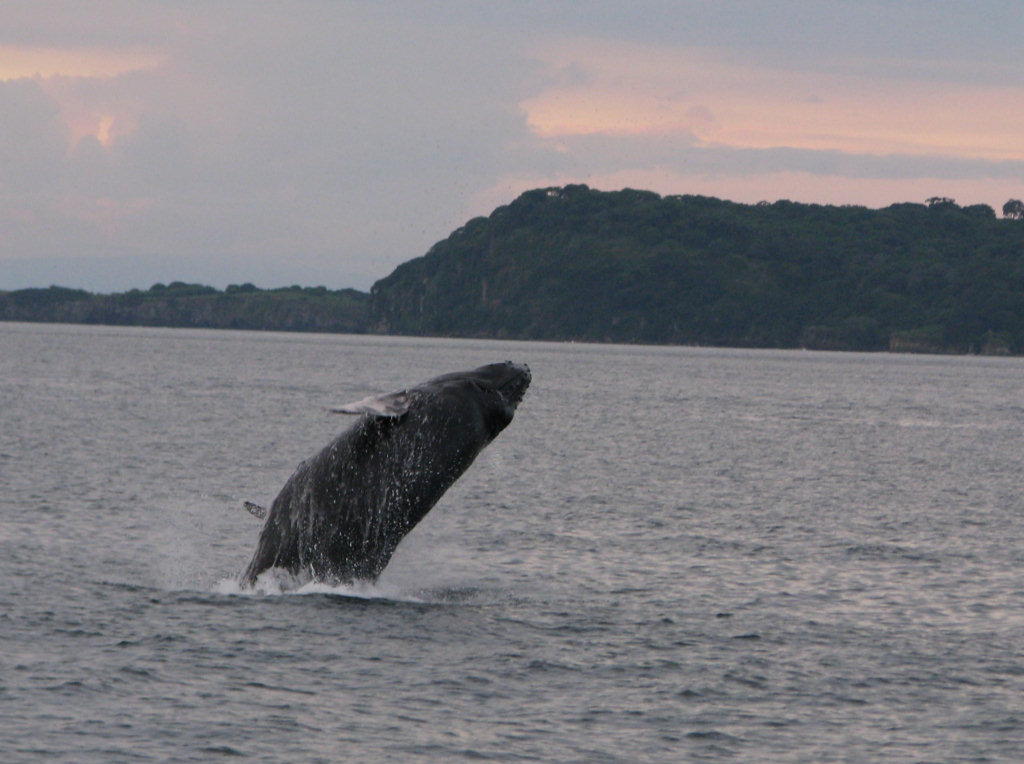
We are really excited to be in whale territory. We have had numerous sightings so far of huge humpbacks, though we don't have a great picture to post yet.
Once when we were sailing, we sighted a whale about 200 yards directly in front of us. Dave was worried about colliding with it, but it sank out of sight before we got close. You could see the swirls in the water where he had flipped his tail when we went over the spot.
One night, in the Isla Pedro Gonzales southeast anchorage, they were playing in the swirl of current going by the point. Doing what we called 'Tail Flops'. They stand on their head and whack their tail back and forth on the surface of the water. Very impressive. No pics of this, as it was at night (but enough moonlight to see that it was whale tails making the smacking sounds).
On our final night in the Perlas, we were anchored on the north side of Isla Contadora, and were treated to a show by a couple of whales going by the anchorage.
Thursday, September 18, 2008
Our New Code 0 Sail
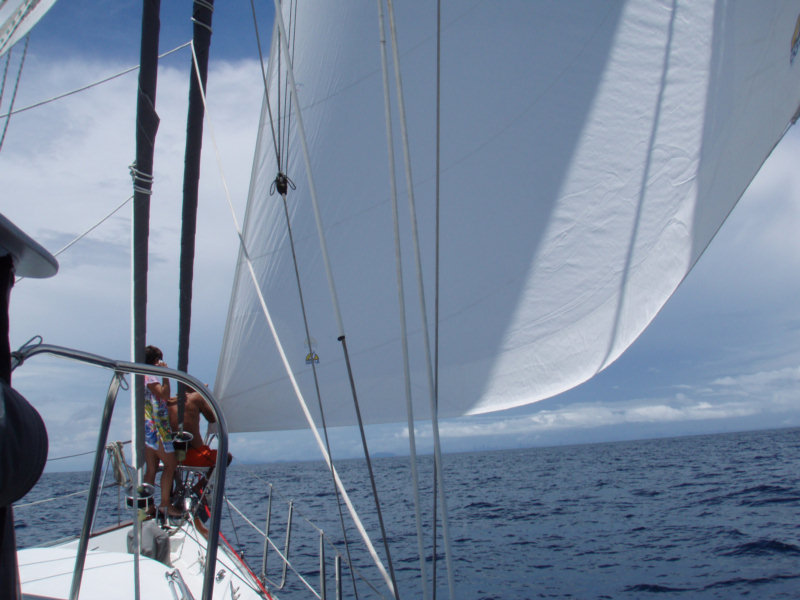
Dave has been talking about getting a Code Zero sail ever since I met him. On our first date, he showed me the Facnor roller furler that he had just purchased for it.
We have looked on all the used sail sites on and off for the past 2 years, and have been unable to find a used sail that would work. And by the time you buy it used and have it modified to do what we want with it... We talked to a few sailmakers at the last St. Pete boat show, and got some quotes. They were pretty expensive (in the $2000-$4000 range), so we put off doing anything.
But as the price of diesel fuel has been rising, and as we've been motoring around in light winds all summer long, we finally justified the expense by talking about cost savings at approx $4.50 per motoring hour here in Panama and probably more than that out in the South Pacific.
So with the ability to ship stuff to Panama pretty easily via Marine Warehouse, we went ahead and ordered a new Code 0 from Dave's favorite sailmaker (SuperSailmakers in Ft. Lauderdale, a Doyle loft). We took delivery of the sail in Colon just before we left... didn't even have a chance to get it out of the bag, though.
Finally, sitting on the mooring in Balboa, Dave hauled it out and he and Jim Yates (one of our visiting line handlers) rigged it up and got it rolled onto the furler.
With great anticipation, we rolled it out on our way to Taboga. It seemed the conditions were perfect... light winds on the beam.
It lasted about 10 minutes before the wind came up a little and broke the block at the top of the mast. Rats! And with the rise in wind came a wind shift... on our nose again.
The next day before we left the mooring, Dave found a replacement block and went up the mast to replace the broken one. (The cheek broke).
But on our way from Taboga to Contadora, the wind was almost on our nose the whole way. And, the distance was 40 miles to the closest anchorage, so we couldn't afford to stay out there messing around with sails all day. So we motored again. But we did notice that the lower attachment point of the sail, on our anchor tray, as far forward as we can put it, wasn't working out as anticipated. (the tray was lifting off the frame as we tensioned the luff).
So yesterday, hanging out at anchor at Isla Pedro Gonzales, Dave and Ron and Jim engineered a cobbled-up fix to the problem. I was busying doing other things, but there were sawing and drilling noises coming from the workshop. I'm sure Dave will explain the final solution when we have it working well. About dusk they seemed satisfied that what they had whipped up would work for now.
We are hoping to be able to sail today. We have 20 miles to go to the next anchorage.
Isla Taboga, Panama
The guidebook has a clearly-marked anchor in the harbor at Taboga, but where the anchor is is now filled with moorings.
We arrived on Sunday afternoon, and understandably, the harbor and the beach was pretty full of power boats from Panama City. As far as we could tell, everyone was on a mooring.
We hadn't thought to ask anyone about Taboga specifically, though we had gotten several tips from some new friends on Rhapsody on where to go in the Las Perlas (Pearl) Islands. The only cruising boats we could see in the harbor looked unoccupied. Where there were no moorings, it was over 50 feet deep (at high tide). Even the outer harbor had 4-5 large (about 200 feet long) Tuna boats.
Finally we saw a dinghy coming out from shore to a power boat on a mooring. They looked like cruisers and not locals. We idled over nearby and asked them about anchoring and/or mooring. They recommended we call 'Libre' on channel 74 and ask about a mooring. We called a couple of times, but didn't get an answer. Then we heard Rhapsody, back in Balboa, calling us and telling us to go to 77. We still aren't quite sure exactly why, since Libre was close ashore somewhere, but Rhapsody (8 miles away)
could hear Libre answering us. So they relayed for us and directed us to a mooring.
Later, Chuy and Susan from Libre stopped by in their dinghy. They are a cruising couple from California who have put down roots at Taboga, and they now run 'Taboga Island Moorings'. You can call or email ahead for a mooring at 507-6442-5712 or chusanandlibre@hotmail.com. They also do 'boat sitting' for people who need to leave the boat for a little while.
We didn't go ashore. It looked like a small town with a resort atmosphere... there is regular ferry service to Panama City/Balboa, and cell phone service, and even wifi. It's very popular with the Panamanians on the weekend, but gets a little sleepy on weekdays.
It was a nice enough anchorage, but a little rolly (our mooring was pretty far out). The only really bad thing was that the tuna boats ran their generators and lights all night long.
Isla Contadora, Las Perlas, Panama
Monday, Sep 15
Anchorage Position: 08-37.91N 79-02.39W
Anchorage Position: 08-37.91N 79-02.39W
We left Taboga about 8:30 for the 40 mile run to the Las Perlas islands. We had chosen an anchorage on the north coast of Contadora, because someone told Dave that there was good diving there. The guidebooks talk a lot about the winter weather, but they don't say much about the summer weather. And we don't know the normal weather patterns here.
We had a nice day motoring across. We trolled two fishing lines, and did get several hits, but all the fish we pulled in were Bonito, which aren't very good eating.
When we arrived at the anchoring spot, it looked OK. Here again there were moorings in the anchorage, but also a couple of anchored cruising boats. So we picked a spot between empty moorings and anchored in 25'. Checking my trusty electronic tide table, we were at high tide, with a 15 foot tidal range. That means that at low tide, our 25' depth will shrink to 10' !!!
During the evening, dark clouds started to build. We had a pretty good lightning show after dinner. We were a little apprehensive about what the weather might bring during the night. But the weather held until early morning, when we really got hit... hard rain and lots of lightning and thunder very close by. We filled our water tanks and put the valuable electronics in the oven. Fortunately, no direct hits from the lightning.
The forecast was for strong SWly winds, and we were a little exposed to the SW. We heard a couple of boats on the net talking about Isla Pedro Gonzales. We remembered reading an SSCA letter from another cruiser saying that Pedro Gonzales was the best anchorage they'd seen on the whole west coast of Central America.
So when the rain let up, we set off for Pedro Gonzales.
Monday, September 15, 2008
Balboa Yacht Club
We stayed about 24 hours at Balboa Yacht Club, situated right at the entrance to the Panama Canal on the Pacific side.
A few facts:
- Only moorings there (no room to anchor right in this spot) - $22/night plus 5%
- Wifi available in the mooring field
- Free lancha, so you don't have to put your dinghy down
- Nice bar and restaurant
- BYC stands by on VHF 06
- The local cruisers are on VHF 74 and there is a net 8am every day except Sundays
- The HF net on this side is the Panama Pacific Net on 8143 USB, at 9am local time
We had to leave by Sunday afternoon, because Dave opted to check out of Panama at the Colon Yacht Club for Costa Rica (with intermediate stops), when we left Colon.
It was either that or check out of Colon for Balboa and have to check out of Balboa (another expense) later. What we didn't know when we made that decision was that we'd have to check out of Balboa, immigration-wise, within 48 hours of getting our Zarpe in Colon (or face a fine, or have to check back into Balboa). We were hoping the Balboa Immigration guy would let us stay til Mon morning, but no such luck.
So we left BYC yesterday and sailed 9 miles SW to the island of Taboga.
Panama Canal - Locking in the Rain
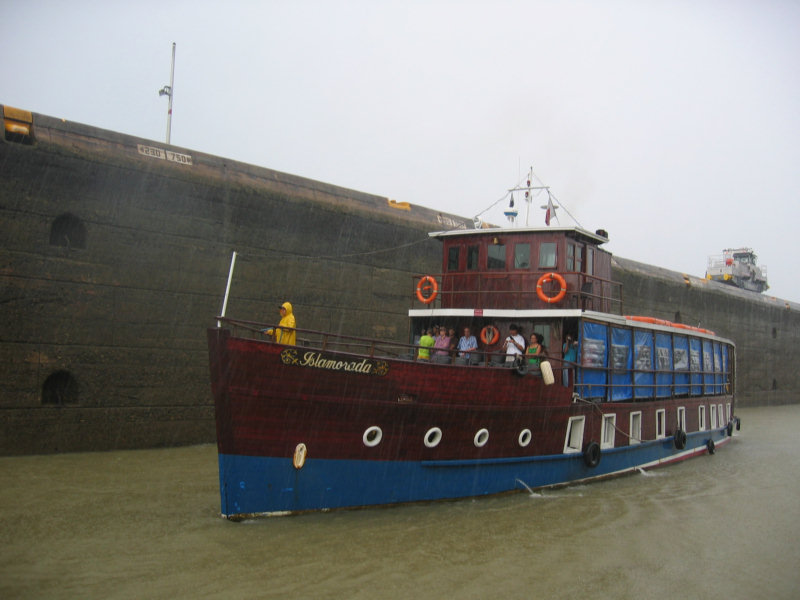
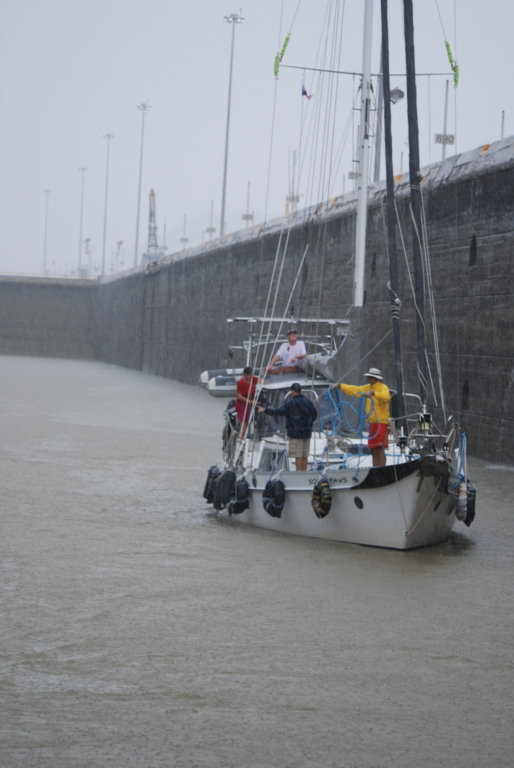 Catching up a little...
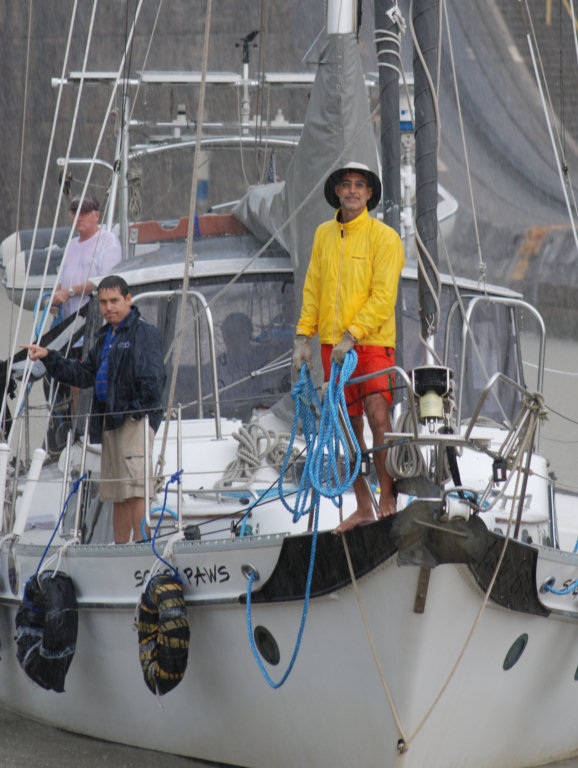
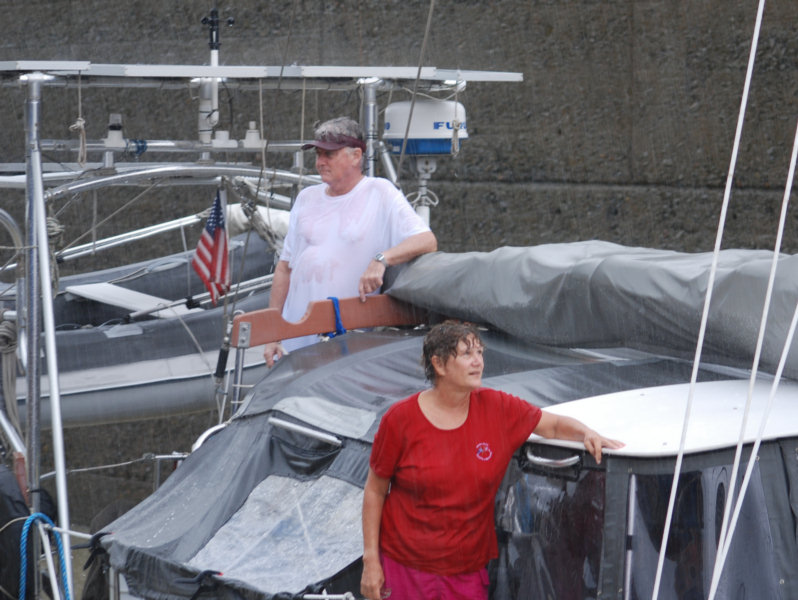
One of the passengers on the small cruise ship Islamorada that we rafted up with for the last set of locks sent us some pictures of us in the rain. (Thanks, Maria!)
Sunday, September 14, 2008
Panama Canal Transit - Our Crew
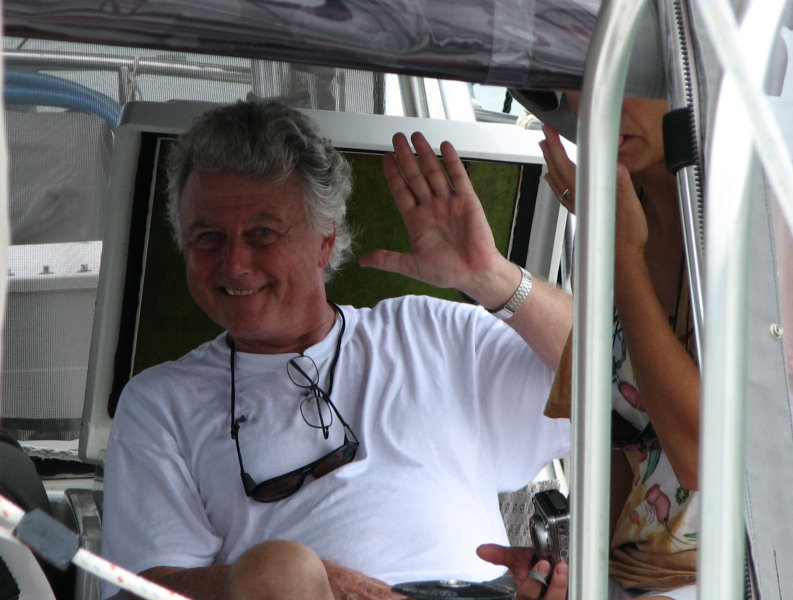
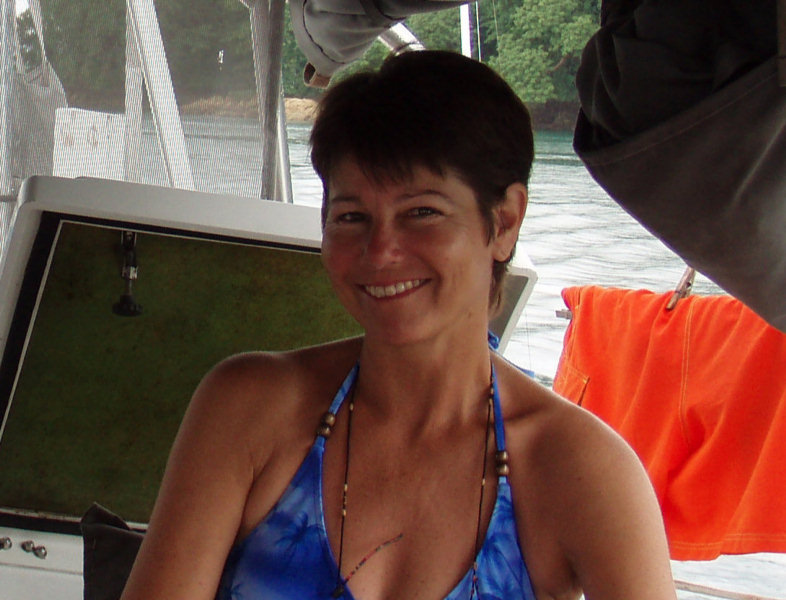
Just wanted to recognize and thank our crew... guest linehandlers Ron & Dorothy Sheridan, and Jim Yates, who flew down from Florida to help us out. And of course, Sherry, our 4th linehandler, and Captain Dave, who impressed our Advisors with his skill on the helm.

Ron Sheridan, owner/captain of the CSY 44 Pilothouse Ketch, Memory Rose, currently based in Guatemala

Dorothy Sheridan, Chef Extraordinaire and First Mate on Memory Rose

Jim Yates, owner/captain of the Roberts 56, Carisma AND the Lindenberg 28, Bad Penny, both currently based in Satellite Beach, Florida

Co-Captains Dave and Sherry McCampbell
The pictures on the Panama Canal and Las Perlas sections of the blog have been taken by one of the above people. We had 5 people and 7 cameras!!! Thanks crew for the help, the pics, and the memories!! See you in Tahiti!!
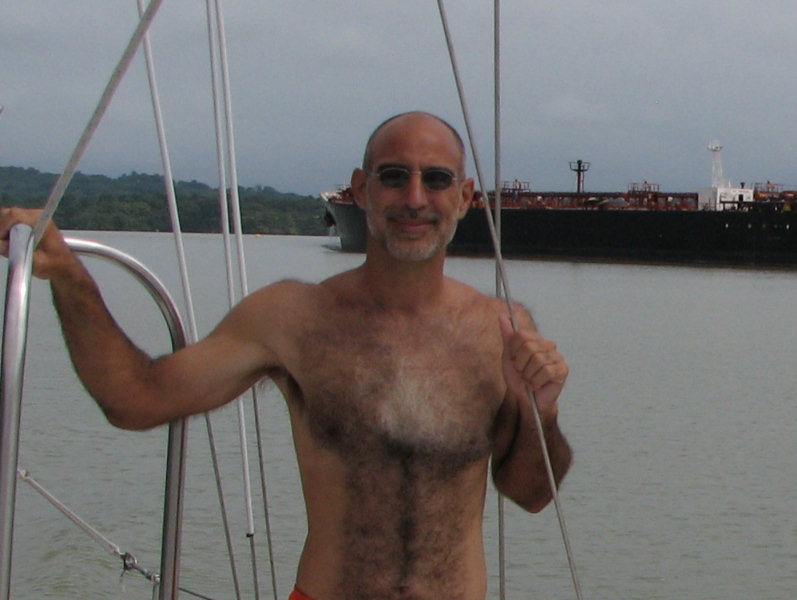
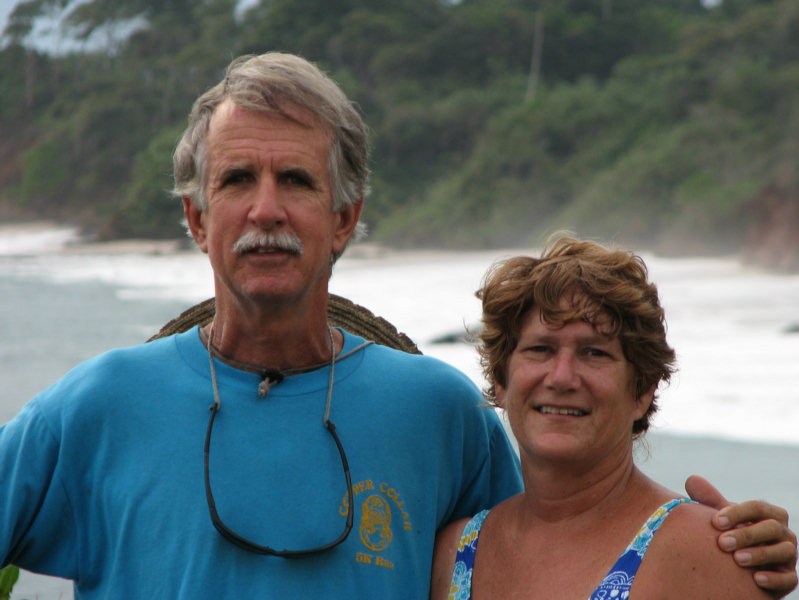
The pictures on the Panama Canal and Las Perlas sections of the blog have been taken by one of the above people. We had 5 people and 7 cameras!!! Thanks crew for the help, the pics, and the memories!! See you in Tahiti!!
Subscribe to:
Posts (Atom)