Tuesday, March 12, 2013

A Week on the Tui Tai in Fiji

We're back aboard in Savusavu after a very rainy week.

This Weather Lasted Nearly All Week!!

We had a pretty good time on the Tui Tai, even though it rained more this week than it has all year (and the weeks afterward).

The "Sun Deck" in the Rain

Isoa, the Activities Director, Briefs us on Emergency Procedures

But we still got in some good diving out on Rainbow Reef and Budd Reef.

Awesome Diving
Our Album of the Diving


In the middle of the week, we spent nearly one whole day hanging out in the cabin reading and sharing travel stories, because the weather was too severe to go out in small boats. We had a really nice group of people who managed to find humor in our terrible weather, and the resulting poor conditions on the Tui Tai.

Jerry from Challenger, Reading in the Main Salon

My favorite fellow passenger was Allyson, who's theme song was "If you're happy and you know it, clap your hands!" Always accompanied with a big smile. But everyone tried to stay upbeat--there were no whiners, thank God.

Allyson's "upper deck" ($$) cabin floor sloshed with all the rain seeping under the nice big sliding glass doors. But she and her husband, Steve, who had just spent 6 months camping in Australia, just told wry Brit jokes and kept smiling.

Allyson--Always Smiling

We spent one afternoon kayaking in the rain.

Setting Out on a Kayak Expedition

Dave and Jerry Head Off

Exploring Viani Bay in the Rain

Our Faithfull "Minders" Keeping us Safe from Sea Monsters

A Little Horse-Play After We Return


We managed to hike to two Taveuni waterfalls, and stand on both sides of the International Dateline.

The Taveuni Waterslide

We hiked up here and then slid down the "sluice" on our butts. Then we went and stood on the Dateline.

The Meridian Sign

The Meridian Church--Typical Fijian Contrast

Later In the Week, We Hiked to the Big Waterfall

A Big Waterfall & Long Hike

Dave LOVES Waterfalls

We did make it out to Budd Reef, where we had visited in Soggy Paws in July. We had snorkeled then, but had not gotten a chance to dive. We did 3 dives at Budd Reef--it was really nice having dive guides and a dive tender.

The non-divers did a snorkel and then a hike up to the crater.

Heading for the Crater Hike

On our last day, Dave arranged for a tour of the Engine Room.

The Guys Take an Engine Room Tour

The morning we left, the whole crew assembled in the lounge to sing us the "Farewell Song".

The Farewell Song

Monday, March 4, 2013

Arch Update

Dave and Jerry spent a whole nother day drilling holes in the legs and the connector piece to put the bolts in. Then we fitted it again, and drilled a couple of holes in the deck. But it became obvious that we wouldn't get finished before we had to go play.

So we left it bolted together and barely bolted on deck, and spent yesterday preparing to leave Soggy Paws for a week.

We have signed up on a last-minute deal for a week aboard the Tui Tai, a live-aboard "adventure cruise" and dive boat. The cruise leaves today from Savusavu, and we cruise east in Vanua Levu, stopping and visiting villages (hiking, snorkeling, kayaking) and diving.


http://tuitai.com

More later...

Saturday, March 2, 2013

New Arch Going Up

I do still plan to fill in our adventures around Viti Levu, which include:

- Taking delivery of our shipment in Suva
- A brief cruise from Suva to Vuda Point Marina
- Haulout in Vuda Point Marina
- Whitewater Rafting in the Viti Levu highlands with Rivers Fiji
- Cruise up the Yasawas
- Cruising back to Savusavu via Nanu-i-Ra
- Back in Savusavu

However, we are now at the Copra Shed Marina dock in Savusavu putting up our new arch. And I know there are a number of people anxious to share this experience with us.

We bought this "Arch in a Box" back in October at the Annapolis Boat Show (see post). It was part of the shipment we received in Savusavu in January. We've been carrying it around on our deck for a month, and we're just now getting around to putting it up.

New Arch on Deck, late January


Once we were settled in at a dock from which we could work around the stern, the first step was to disassemble the old arch. This took a whole day.

Disassembling the Old Arch

All This Wiring Has to Come Out

Chaos!

Almost Down


Now the fun part starts!!

Unpacking all the Small Pieces

Dave and Jerry Watching the Assembly Video

Assembling The Two Halves and Rough Sizing

First Fitting (Held Up by Main Halyard)


Once we got the arch in place, we found that our stern pulpit interfered a little bit with the arch (something Dave had worried about all along). At Jerry's suggestion, we "adjusted" the stern pulpit a bit.

Adjusting the Stern Pulpit

After a bunch of whaling away at it, we had moved it some--enough on the starboard side. But the port side, which was mangled in Cyclone Cyril last year, was still an inch or so too far in. We ended up deciding to cut the port railing--it needs to be replaced eventually anyway.

Final Cutting to Adjust the Height

Once we had it more or less in place, we could then see how much the legs needed to be cut off to get the height right. We cut about 8" off the front legs and 5" off the back legs. It's still plenty high, so we can get our dinghy hoisted up over the Monitor Wind Vane when we need to. (And well up out of thieves reach and waves reach).

Final Fitting


At the end of the first assembly day, we had the arch pretty much fitted... now we have to drill and tap all the screws, drill the holes into the hull, mount all the stuff (solar panels, stern and anchor light, wind instrument, outboard motor brackets and dinghy lifting gear), re-run the wiring, and patch the holes for the old arch (another 2 days of work at least).

We've sold the old arch pieces to another cruiser, who plans to assemble something similar on their boat.

Wednesday, January 23, 2013

Gunkholing around Ovalau

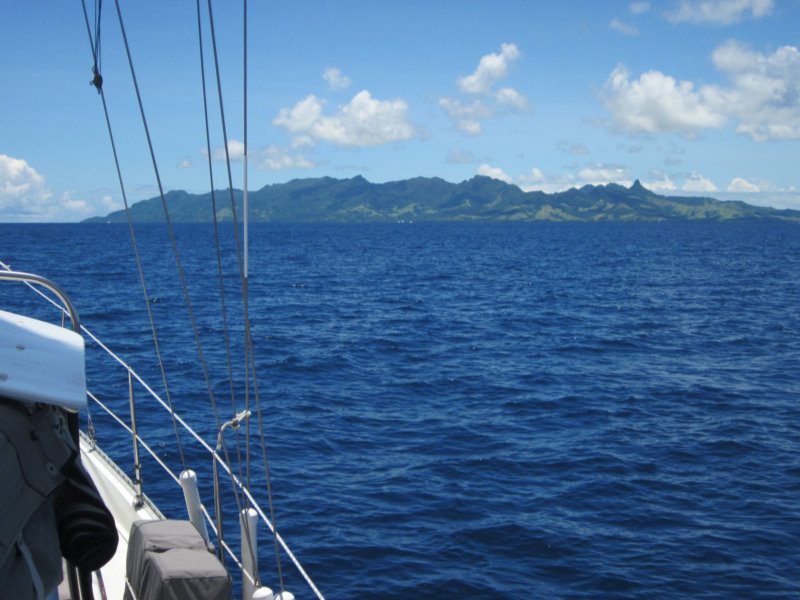
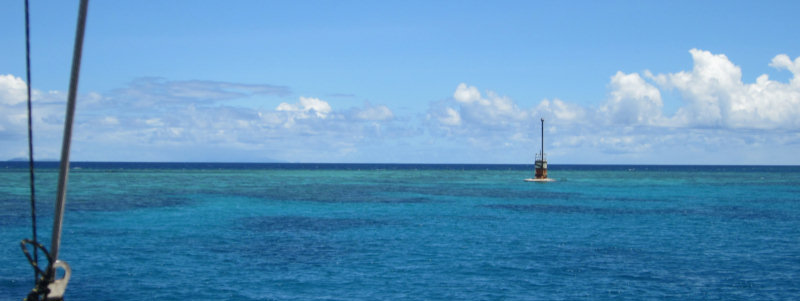
We spent several days exploring the island of Ovalau on our way to Suva. We approached from Namena through the Makogai Channel (regretfully passing up Makogai because we didn't have time) on a beautiful clear day without much wind. Because the conditions were so perfect, we decided to sneak inside the reef at the very north end of the reef east of Ovalau. (17-43.52S / 178-50.89E)

Approaching Ovalau from the North

This enabled us to travel south inside the reef, in calm water. We left our fishing line out and actually caught a small (but edible size) Walu (Spanish or Pacific Mackerel).

The Marker at the North End of the Reef at Ovalau

As we made our way south to our intended anchorage at Levuka (the primary town on Ovalau), we wandered between the reef and the shoreline, checking out possible anchorages, and sightseeing.

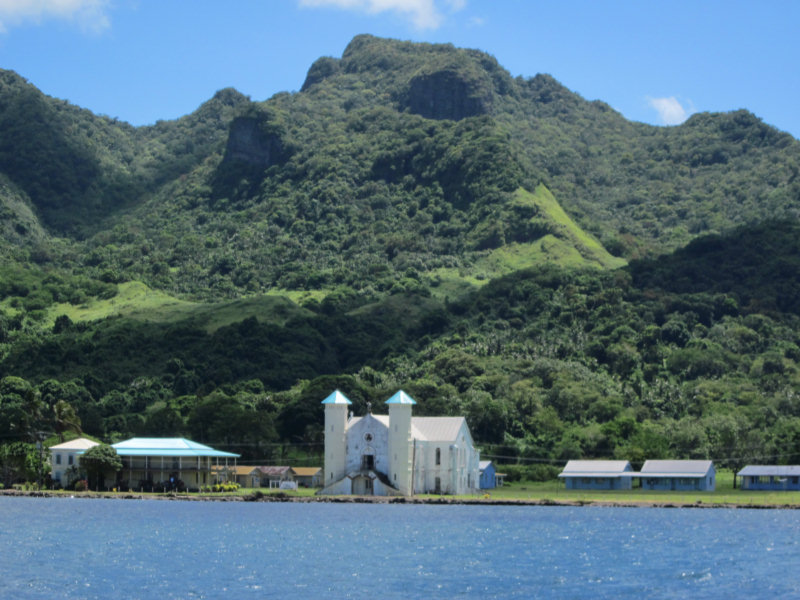
An Old Church on the Shoreline

The Levuka anchorage is somewhat exposed to the prevailing southeasterlies, and we were looking for an anchorage 'nearby' that would be better. We found several possibles--but since we had nearly no wind, it was hard to evaluate exactly how good (or bad) the anchorage would be if the winds were blowing 20 knots out of the SE. One possible we found, about 4 miles north of Levuka, is at 17-37.47S / 178-48.82E.

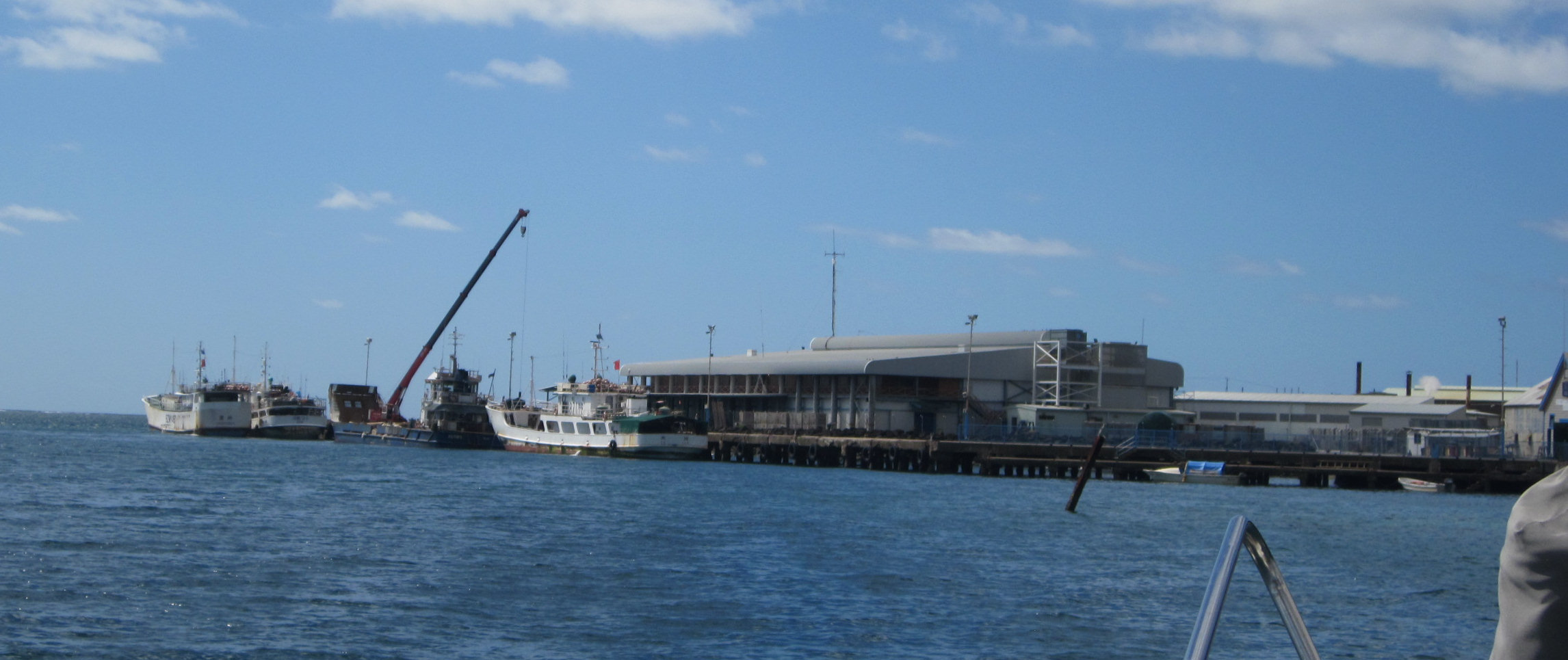
We eventually ended up at Levuka. Curly had told us to anchor close in, in 7 meters, a shade south of the "leading line". We looked around a bit and decided that this WAS the best anchor spot. The big pier for fishing boats and ferries, if you anchor close in, gives you a wee bit of protection from the chop and swell from the SE. So we dropped anchor at 17-40.97S / 178-50.15E.

Anchored Behind the Pier

While VERY convenient to town, and a spot at which you can check in to Fiji, this anchorage has two MAJOR drawbacks (besides it is slightly exposed in strong southeasterlies). First, the town generator is right at the base of the pier--right next to you. It is a very VERY noisy beast and runs 24x7. It was Sunday afternoon, and we didn't notice the second one until Monday morning--when the Tuna processing plant cranked up. Whew!! We were right downwind of the tuna factory.

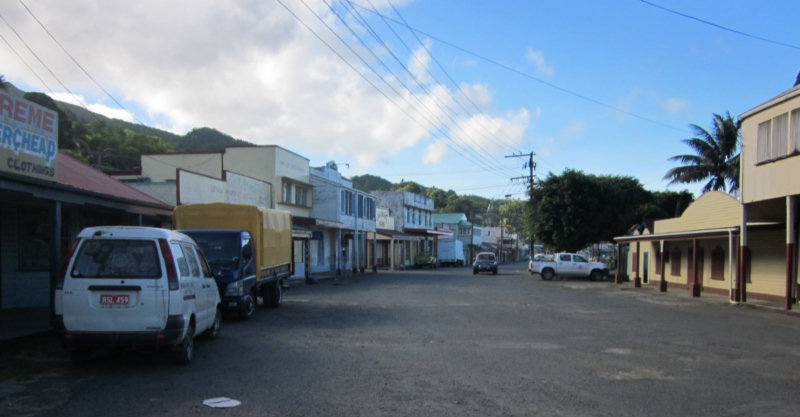
From FijiGuide.com "Ovalau's primary attraction is the old colonial capital of Levuka, a community of 1500 or so inhabitants. Nestled at the base of steep bluffs, Levuka has the ambience of a 19th century whaling town, which is exactly what it was. With weather worn clapboard buildings, narrow streets, and ever-friendly residents, Levuka’s harbor and bars at one time welcomed vessels from every seafaring nation."

As soon as we got the anchor set, we went ashore and paid our respects to the Port Captain (there is a small dock at the base of the pier for dinghies and small boats--the PC office is right there). In fact the Port Captain had called us on VHF 16 as we were wandering around checking anchorages (wanting to know our boat name and intentions). We showed him our papers, and paid a small port fee (something like $10).

We had been out at Namena for a few days, so Dave offered to take me out to dinner in town. He had read in our Moon Guide about a couple of restaurants, and we had our friends on Java's recommendations, too. We walked the town looking for places to eat, but it turned out that only one place was open on Sunday--and not til 6pm.

Downtown Levuka on Sunday Afternoon

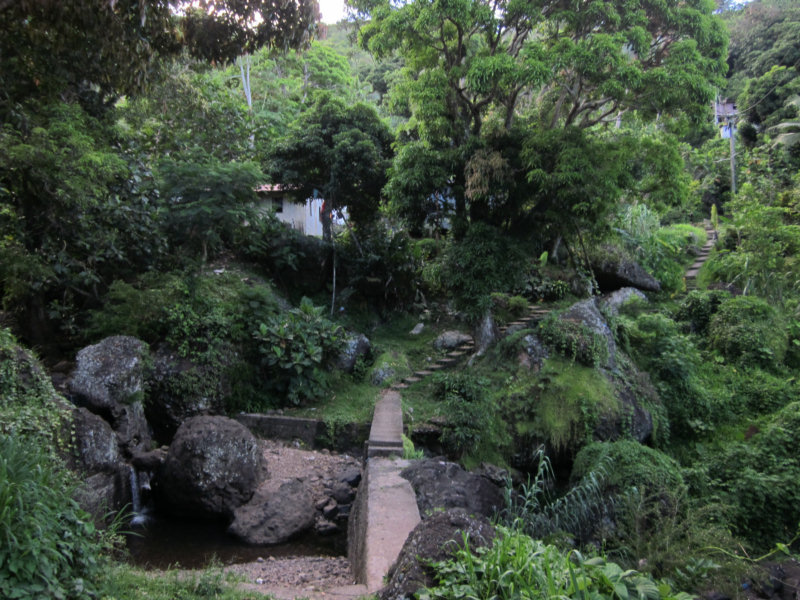
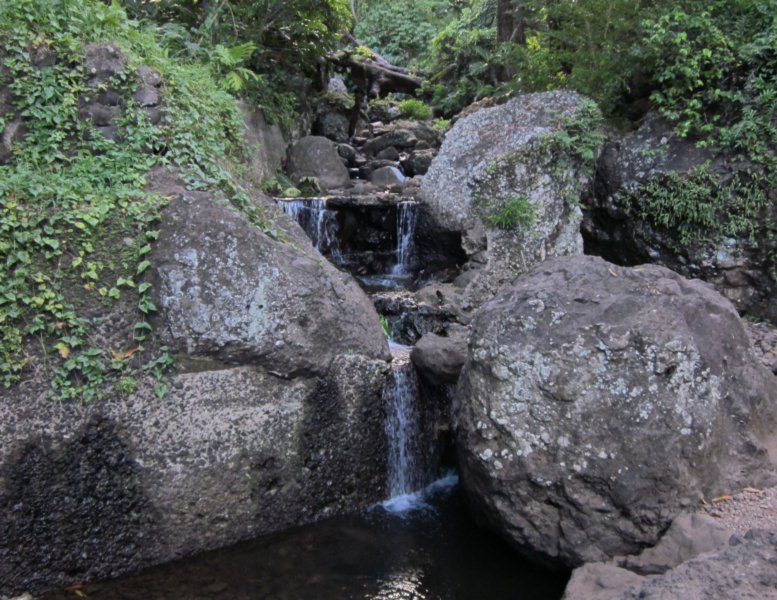
It was 4:30pm, so we had an hour and a half to kill. Dave had read about a nice walk up into the hills, so we decided to investigate it a little bit. Then we found there was a river was there, and Dave got hot on the trail of a waterfall. So we ended up hiking WAY up into the hill to the beginning of the town water supply, there was a tiny waterfall. Fortunately it was mostly paved (ending up being just a narrow one-person track at the end). But we got back to town at 6pm in our Sunday Best all sweaty from a hike.

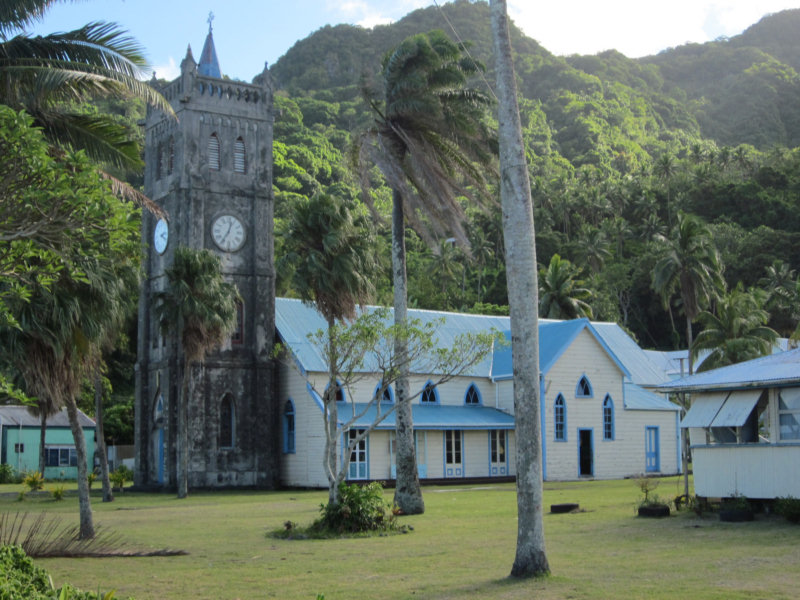
The Main Church in Levuka

The Path to the Waterfall

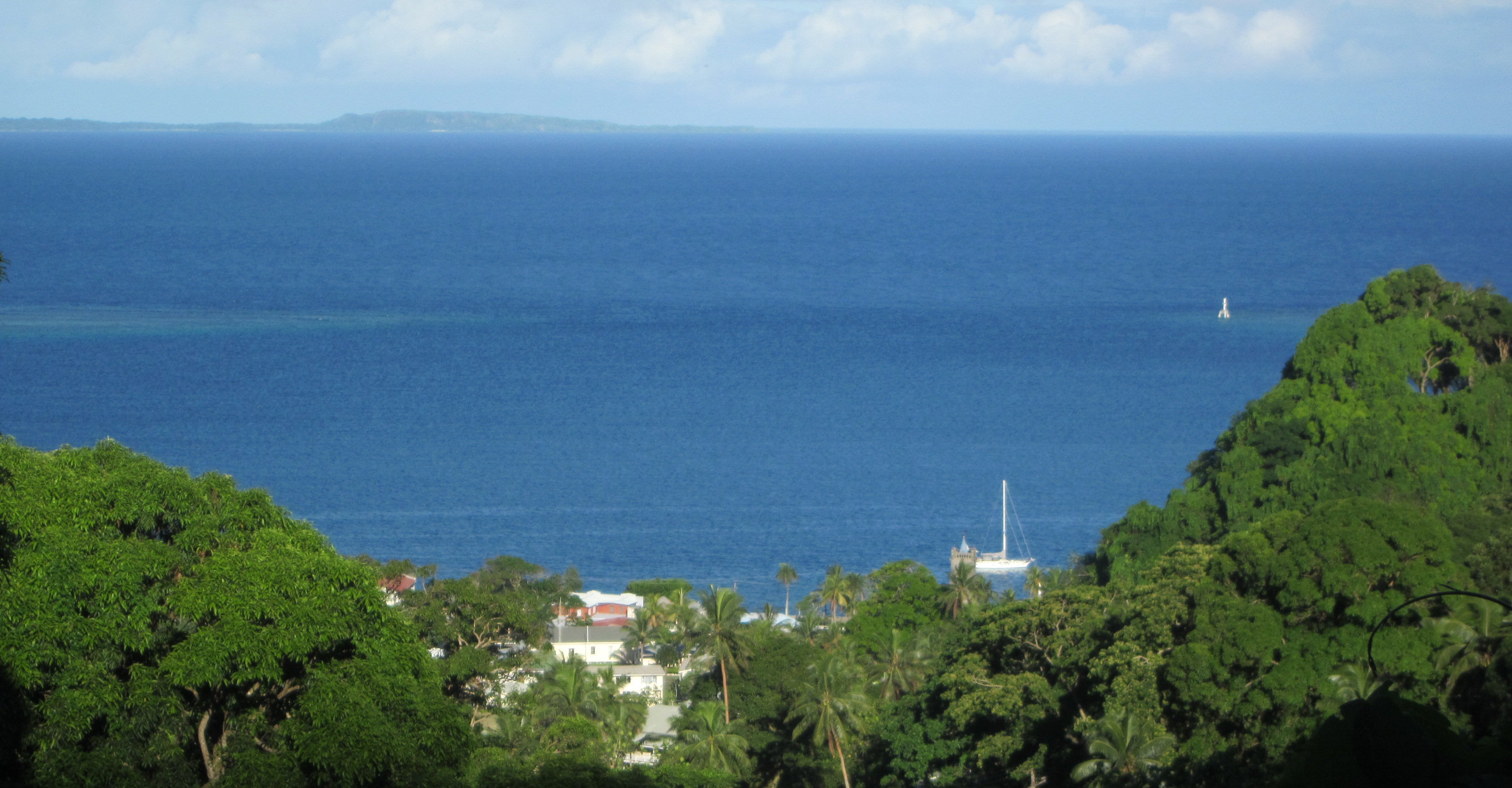
Overlooking the Main Entrance to Levuka

We Finally Reach the Waterfall

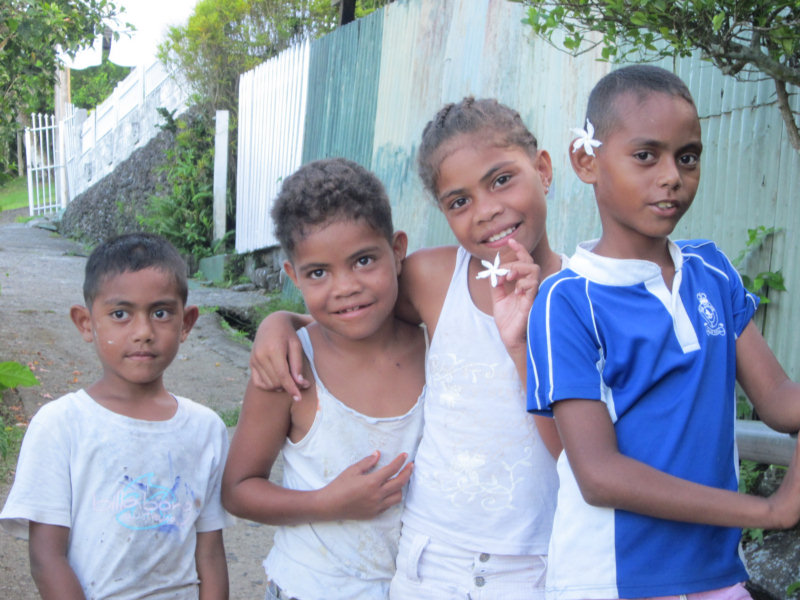
Some Great Kids we Met on our Walk

The only restaurant was a Chinese place, and we were keenly looking forward to some Chop Suey or Stir Fry, but were dismayed to find that they had NO VEGETABLES. Apparently there were no fresh vegetables on the island at all at this time. Ovalau is a small island not far off the coast of Viti Levu, the main island. But everything comes in by ferry. Being Sunday, all the grocery stores were closed.

Unfortunately, this lovely restaurant, with a nice balcony overlooking the harbor, also overlooked the town generator. Un-airconditioned, it was too hot INSIDE the restaurant, and they had 70's music blasting at too loud a volume to talk. Outside on the balcony, it was cooler, but you had to listen to the generator. We were fortunate to get our order in first, service was slow, and we ate our chicken and rice with canned vegetables and left.

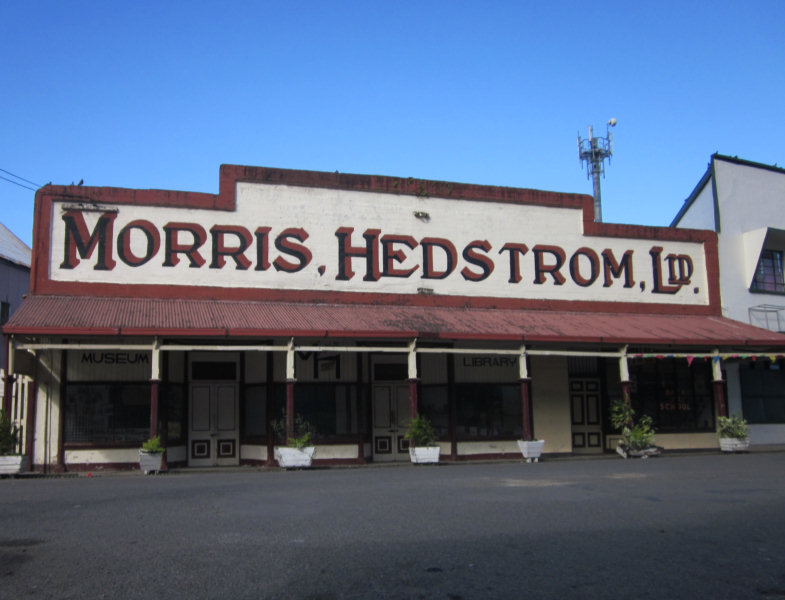
The Original Morris Hedstrom Store

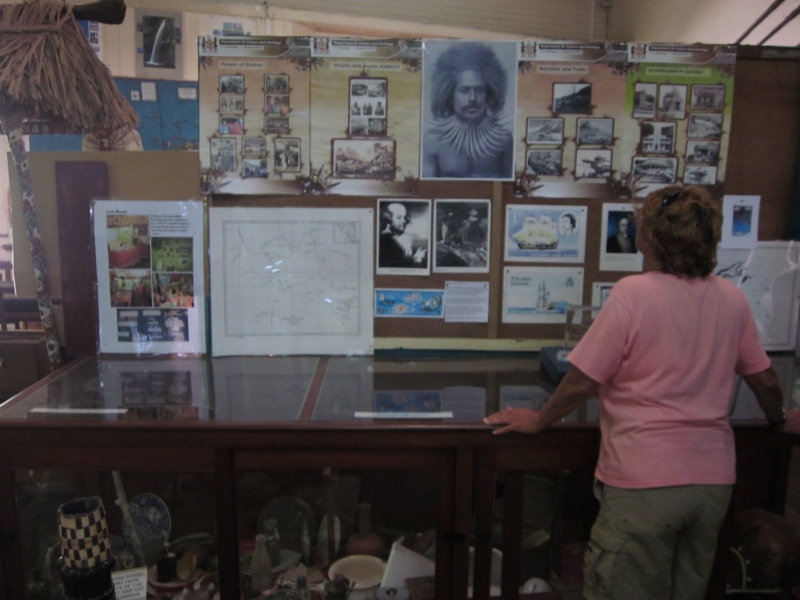
The next morning, Monday, we spent about 10 minutes in the tiny M&H grocery store--getting a couple of things, but no fruits and veggies. Dave was keen to see the Levuka Museum across the street, housed in the old Morris Hedstrom building. So we spent an hour looking at the combination Museum and town library. It was interesting reading about how the European traders had injected themselves in local politics between chiefs in Fiji, and ended up owning the country. Typical story we have experienced all across the Pacific islands. And of course the Europeans brought diseases that the islanders were not immune to, and wiped out 2/3 of the population. And the Missionaries, who followed the traders closely, attacked their culture, stealing their souls as well as their country. Oh, I mean SAVING their souls, right?

We Perused a Few Dusty But Interesting Exhibits

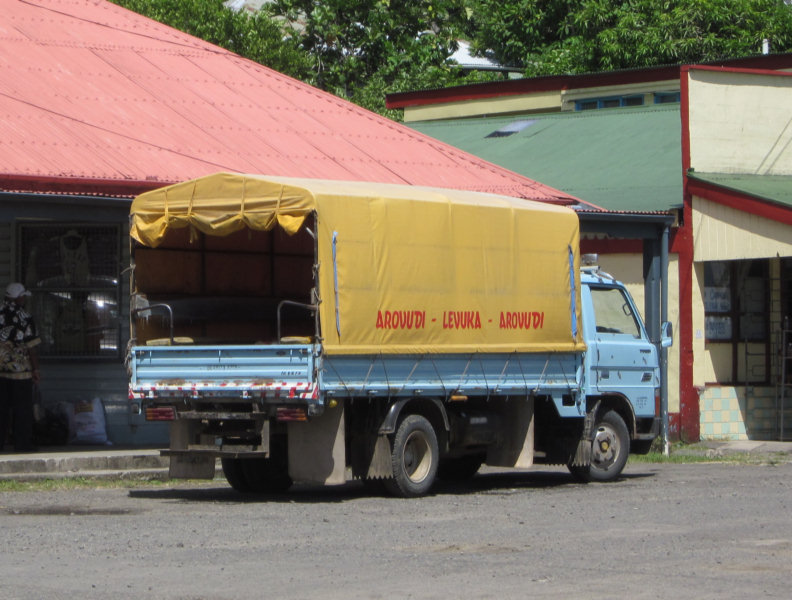
We inquired about taking a bus around the island, but found that there was no bus that GOES around the island. There is an old decrepit bus that goes one way, about a quarter of the way, and another bus that goes the other way, a quarter of the way. But the road is bad, and the trip is not cheap. The other half of the island has no road.

Levuka Buses, Built for the Rugged Roads

So we returned to Soggy Paws, hauled up the dinghy, and left Levuka to do our own exploring.

We spent the rest of the day gunk-holing counter-clockwise around Ovalau, checking out anchorages and sightseeing.

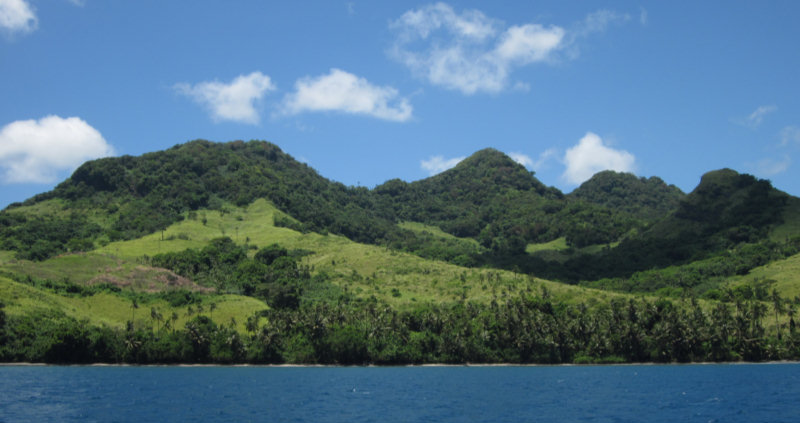
Lush Countryside

We were keen to check out a place that Curly had showed us, labeled "Hurricane Hole". We eventually found the place and agreed with another cruiser, Mr John IV, who said it was a snug anchorage, but isn't quite protected enough to be a Hurricane Hole. (but it was way better than remaining off Levuka in a blow). The best spot was saw was about 17-44.09S / 178-45.99E.

Even though it was getting late in the day, we decided not to anchor there, but press on south to an anchorage off one of the two islands on the south end of Ovalau that supposedly had a "Backpacker Resort" on the island. There are reefs all over in this area, and we'd certainly ignored AGAIN Curly's advice to only travel between 10am and 2pm so you can see the reefs. GoogleEarth Charts are our friend. It also helps a lot that the regular electronic charts (CM93 C-Map charts dated 2010, and our Garmin charts dated 2008) are reasonable detailed and reasonably accurate in most places.

A Caqalai Bure

We ended up at tiny Caqalai Island (anchorage: 17-47.15S / 178-43.80E). On our chart, there is no island there--just a reef. But this island is owned by the Methodist Church in Ovalau, and has rustic accommodations for about 20 people. Caqalai is pronounced Thang-a-lie in Fijian. We went ashore and talked with the people there. There was only one guest and she was leaving tomorrow. The 3 Fijian caretakers on the island apologised for the messiness of the island--they had not yet properly cleaned up after getting blasted by the edge of Cyclone Evan in mid-December. (But weren't working very hard on cleaning up, either). We asked if we could get dinner there, and ended up paying $15FJD per person for a small whole fish and some cabbage and rice. But it was interesting hanging out.

Caqalai Staff Cleaning the Grounds (NOT!)

The next day, we headed further south into the reefy areas south of Ovalau. Dave wanted to check out another possible "cyclone hole" Curly had pointed out, down along the coast of Viti Levu. However, we never got that far--it was dicey getting in, and didn't look like we could get far enough in shore to get any real protection in bad weather.

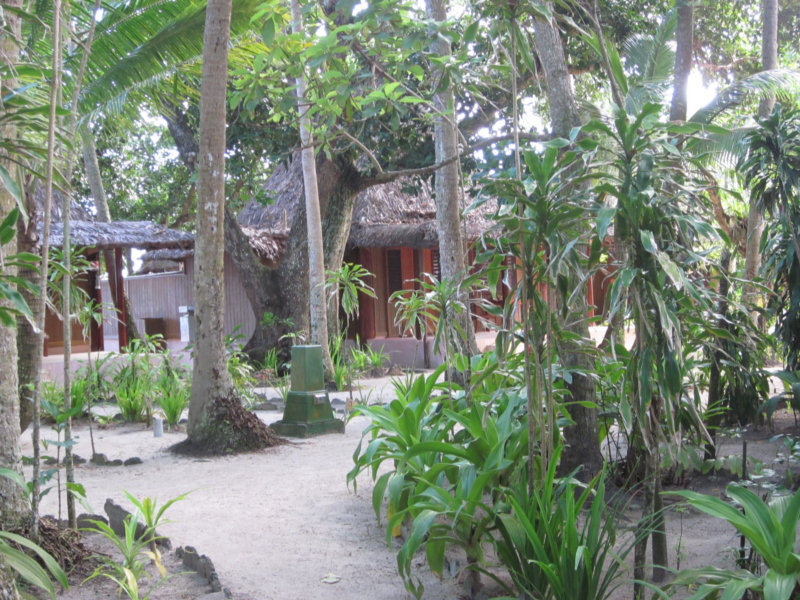
So we stopped instead at Toberua Island. (anchorage: 17-58.58S / 178-42.17E) Toberua Island Resort is another resort on a small island in the reefy area between Ovalau and Viti Levu. What a difference from last night's stop at Caqalai. This resort is owned by Kiwis and is an extremely well manicured family resort. The buildings were nicely constructed, and everything was in its place. The Fijian staff was impressively friendly.

Immaculate Grounds at Toberua Island

We introduced ourselves and asked if "yachties" were welcome ashore (sometimes they are, sometimes they are not). The owners happened to be in attendance, with brand new managers, one of whom was a former sailor/cruiser. So they said, "Yes, we welcome well-behaved yachties ashore."

The Workout Bure at Toberua

We got a grand tour of the island, besides some 20-odd "bures" (thatched guest quarters), there was a sort of barracks at the back for the Fijian staff, a huge generator, a workshop, and water storage. There is a dive shop and "water sports" building out by the beach. And the place was full...

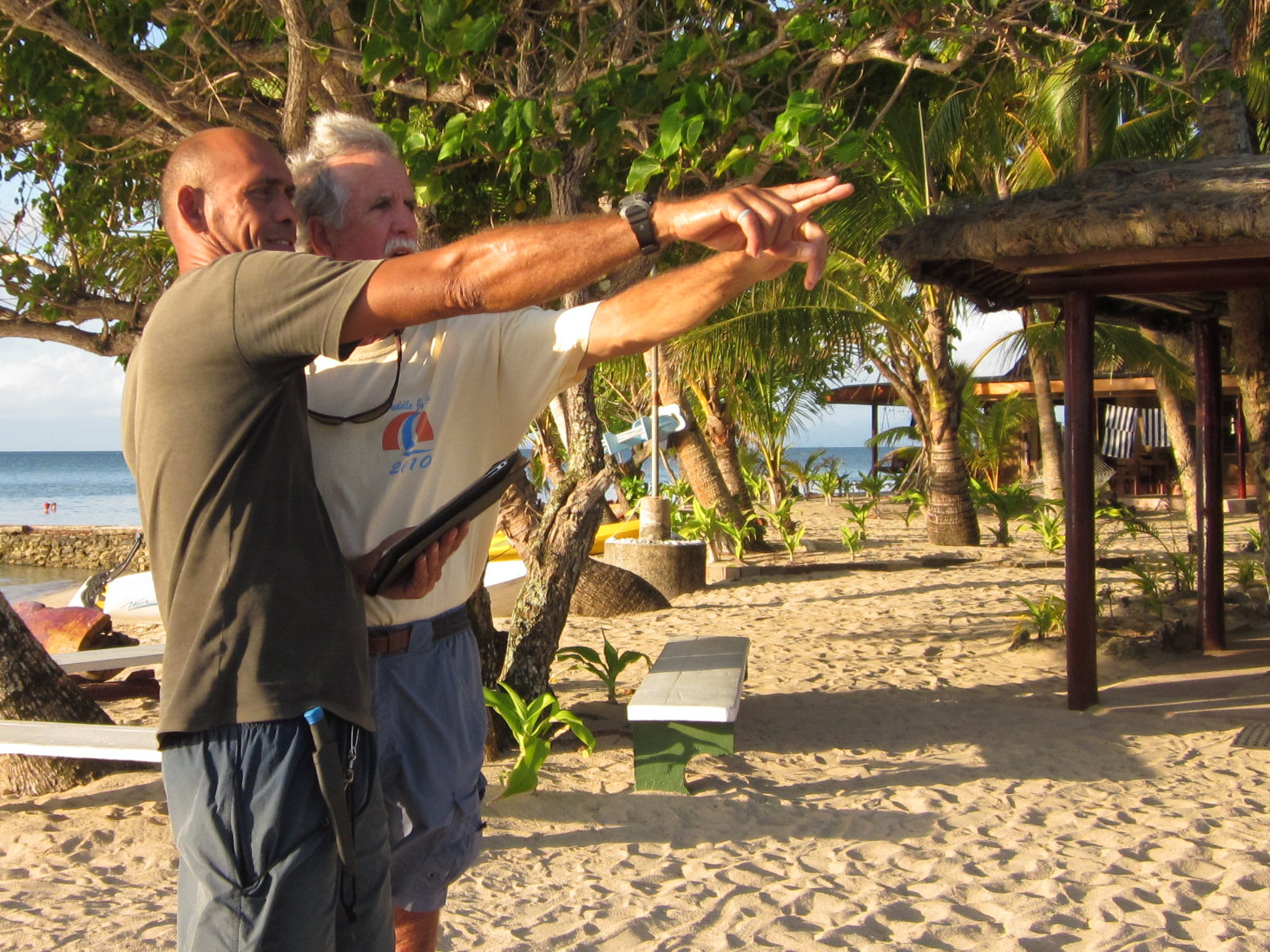
Dave Gets a Briefing on the Route Out the Reef to the Southeast

We talked with the dive shop operator, to get a little coaching on getting out of the reef toward the southeast tomorrow. Everyone was very friendly and helpful. Wished we could have stayed a couple of days, done some diving, and hung out.

But tomorrow... onward to Suva.

Monday, January 21, 2013

Diving in Namena Marine Reserve

Read about the Namena Marine Reserve.

On our way in to Namena, we checked out the area around the North Save-a-Tack Passage, and found a good spot to anchor Soggy Paws, so we could take our dinghy out for the dive. But Tobi recommended that we dive the areas on the south side of the thumb-shaped reef, and save North Save-a-Tack for the next day, when high tide would be later. The North Save-a-Tack dive is a drift dive, best done on a good incoming tide (for clearest water).

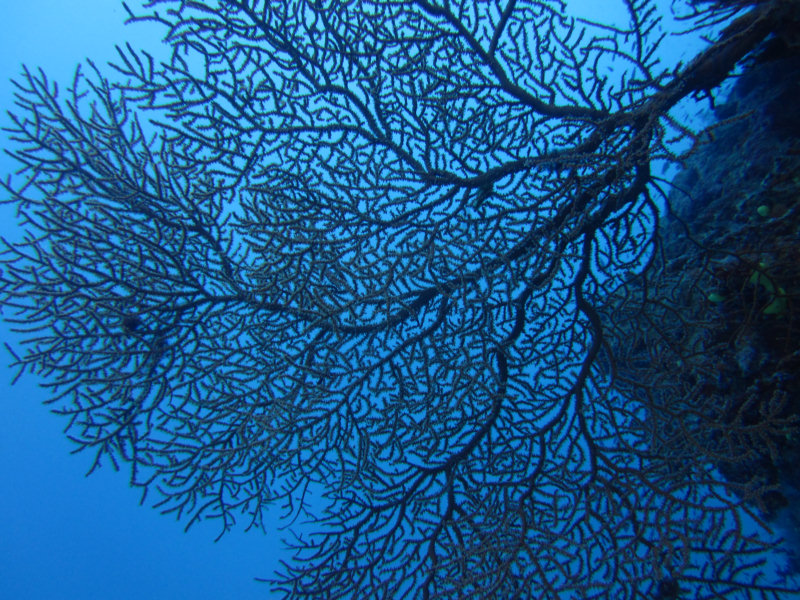
A Giant Sea Fan on the Side of the Bommie

So we headed for the anchoring spot that Tobi recommended, near the 2 dive sites we wanted to see first, Chimneys and the Tetons. The conditions were perfect for diving--about 5 knots of wind and flat seas. Sure enough, Tobi's anchor spot was a winner--a small patch of sand next to a big bommie (Western Pacific lingo for 'coral head'). We carefully placed our anchor and backed down slowly, making sure we didn't get into any coral. It was about 50' deep, but the water was clear enough to see sand vs coral on the bottom. 17-06.74S / 179-03.83E

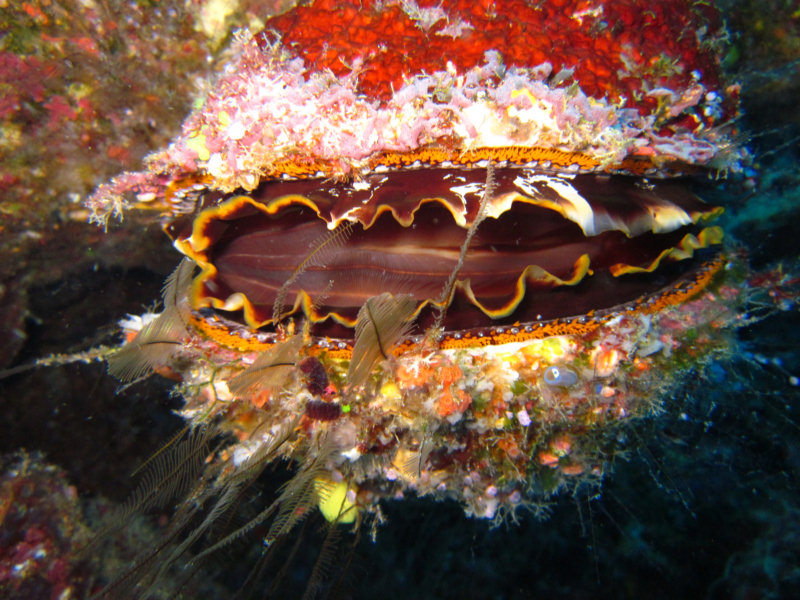
Clams This Size are Rarely Found Outside a Preserve

Then we loaded our dive gear in the dinghy and dinghied a short distance over to the "Chimneys" (aka 2 Thumbs) dive spot. 17-06.79S / 179-03.82E. We hand-placed our dinghy anchor on the top of the pinnacle, and snorkeled a little bit to get the lay of the dive site. Here, there are 2 pinnacles coming up from about 80 feet to the surface, ringed with all kinds of fish, invertebrates, and hard and soft corals. He did our typical half-a-tank dive. Because Dave and I are easy breathers, we can get a pretty good 35 minute dive on half a tank. That's normally enough to see what there is to see. When we got down to a third of our to go, we headed to the second pinnacle and circled around it a couple of times, before heading back to a safety stop near the dinghy. At 15-20 feet (the safety stop depth), there is a huge amount of sea life, so the 3 minute stop passed quickly. This was truly gorgeous diving.

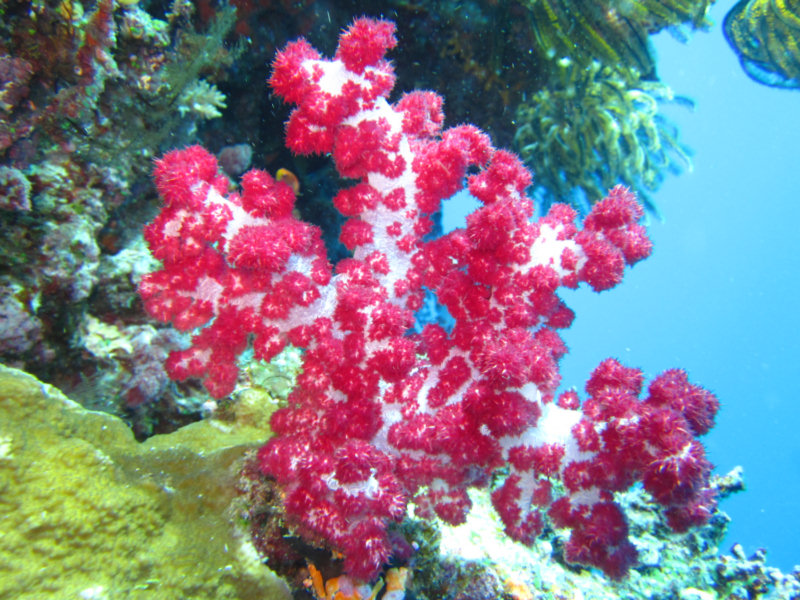
Beautiful Soft Red Coral

We went back to the boat and had a nice lunch, and then dinghied over to the dive spot known as The Tetons for a second dive. Again, very nice coral diving.

The next day, we got going reasonably early, and headed for North Save-a-Tack. We anchored Soggy Paws in about 35' nice sand, behind the reef near the drop-off (17-04.38S / 179-06.51E), and proceeded in the dinghy to the Grand Central drift dive start location (around 17-04.26S / 179-06.59E). This is right off the end of the shelf, on the south side of the pass--where the depth goes from about 50 feet to 100 feet in a sheer drop.

We put on our gear, repositioned the dinghy to the correct spot, and hopped in and descended quickly, with the dinghy in tow on a long line. We were being swept in with the current (not bad in deep water, but runs pretty swiftly on the tops of the shallow bommies). We picked a spot right on the drop-off and placed the dinghy anchor in a rock cleft, and spent about 10 minutes swimming around on the edge of the drop off. As promised, we saw lots of big fish and a few sharks. The conditions were good and the water was clear. But we couldn't stay down long at that depth, so we eventually picked up the anchor and drifted in with the current. (Other divers have gone NNW along the face of the drop-off). There are a couple of big canyons where the bottom goes from 50' to 20' rapidly. One such dive spot is called Kansas (17-04.32S / 179-06.42E). But we thought the best part of the dive was along the drop-off.

Just as we got out of the water, the Cousteau dive boat pulled up with a load of divers. Those suckers were paying $150 USD each for that dive!

After lunch, we went back to the west side of the Namena reef and dove the Mushroom dive site--another big bommie rising up out of the 100-foot depths. (17-06.35S / 179-03.59E). We picked out a nice sand spot near the bommie to anchor Soggy Paws (17-06.35S / 177-03.63E).

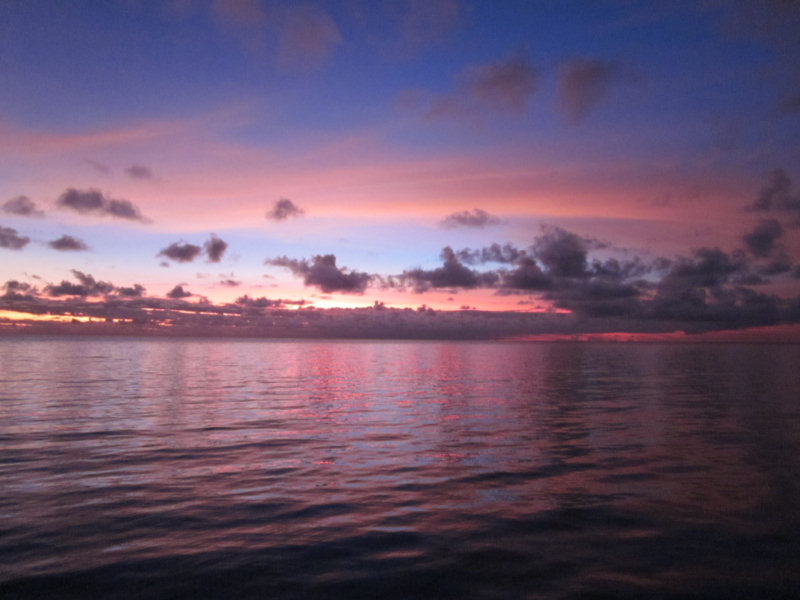
Another Great Sunset

The weather was great and diving conditions were perfect. We would love to have stayed a lot longer and done some more diving, but we got a call from our agent in Suva--our shipment had already arrived!!! (it was not due for another week). Since they were going to charge us storage fees if we left it unclaimed for longer than 3 days, we needed to hustle on down to Suva to take care of business.

We have barely scratched the surface of the diving at Namena. It is close to Savusavu and we hope to get back and do some more diving before we leave Fiji.
Lots More Diving in Namena


(Now I'm only a month behind in my blog!!)