Many thanks to both s/v Brindacier and m/v Starlet who both updated the tide tables in my old "guestimator" and sent in a copy. Both are included in the zip file, which can be found here: http://svsoggypaws.com/files/TuamotusCurrentGuestimator.zip
Cruiser's helping cruisers--I love it!
Wednesday, January 31, 2018


Friday, January 12, 2018
Short Sightseeing Trip to Cambodia and Thailand - Part 1
We have wanted to visit Thailand forever, and it is especially easy to do while already in SE Asia. Dave also had a hankering to see Angkor Wat, in nearby Cambodia. Plus, our Philippines Visa on Arrival is only good for 29 days, and then we need to renew or fly out. Renewals these days cost $75 USD per person. So we figured we'd fly somewhere, using that $75 USD as a subsidy for our trip.

Getting Ready for Another Adventure!
Before we left the US, we booked a round trip flight on Air Asia from Davao to Kuala Lumpur, Malaysia. Having an outbound ticket from the Philippines when we flew in from the US also maded airport check-in and arrival, on a one-way ticket from the U.S., much easier. Because SE Asia is used to backpackers and yachties traveling through on a one-way ticket, going from country to country, it's much easier to talk your way on the plane from Kuala Lumpur than it is from LAX.
I spent a week in December making up a rough plan for our trip. I emailed the plan to several friends who had been to both places and asked for input. The major addition to our initial plan was to plan to go to Chiang Rai (a 3 hour bus ride from Chiang Mai) and spend at least a few days there. So, here is what we planned, and we were pretty much able to execute this plan. January is peak tourist season, so I felt like I had to pre-book the major things, to make sure we got to where we wanted to go, and had a place to stay when we got there.
Jan 8 - Fly Davao to Kuala Lumpur
Jan 8 - Overnight at Tune Hotel KL Airport
Jan 9 - Fly KL to Siem Reip (v early morning flight)
Jan 9-11 Explore Siem Reip / Angkor Wat
Jan 12 Siem Reip to Bangkok ($30/8hrs by bus $60/2hrs fly)
Jan 13-14 Bangkok
Jan 15 Daytrip by van to Ayutthaya
Jan 16 Bangkok to Chang Mai day train (all day) or 1 hr flight
Jan 17 Rest/get oriented in Chang Mai
Jan 18-26 Chang Mai and vicinity / touring, etc
Jan 27 Chang Mai to KL, overnight at Tune Hotel KL Airport
Jan 28 Fly KL to Davao

Our Planned Whirlwind Trip to Cambodia and Thailand
We should have planned for more time (or fewer bucket list checks), but we had other considerations... one was getting all the work done on Soggy Paws, and the other was the schedule for visa renewals in the Philippines when we returned. For the first two months of your time in the PI on a tourist visa, you can only do monthly renewals. After 2 months, you can apply for a longer extension (2 months at a time, presently). We wanted to be in the Philippines for the first 2 months, and apply for a 2 month extension, before we left Davao at the end of March. So January 28th was about the last we could fly back in from Thailand that wouldn't hold us up in March.
So after 29 days aboard in the marina in the Philippines, working feverishly on boat projects, we took off on Jan 8 for a little R & R in Cambodia and Thailand.
After an uneventful flight direct from Davao, we spent a short overnight at the The Tune Hotel at the Kuala Lumpur (Malaysia) International Airport, and were off early in the morning for our flight to Siem Reap in Cambodia. The Tune Hotel at KLIA is a great spot for an overnight stopover. You can walk to it from the International terminal. All the other hotels require a taxi or bus ride into downtown KL.
Cambodia (Siem Reap & the temples of Angkor)
Since we were on a fairly tight schedule, I had pre-booked a Tuktuk (motor tricycle) driver/tour guide via the internet, using a recommendation from a TripAdvisor blog. Mr. Sulu TukTuk Tours turned out to be a fantastic choice. Sulu met us at the airport, took us to the hotel, and then off for the first day's touring, starting with a stop to get our permit. He spoke good English, and was polite and not pushy. He knew where to go to minimize crowds, yet still get us to all the major attractions in our 3 day visit. He picked us up at the airport, took us through 3 days of touring, and took us back to the airport on the 4th day, all for the pre-arranged fee of $80 USD. We have since recommended 2 other travelers to him and both felt the same way we did. Click the picture below for a link to his facebook page, and contact him there, or email him at mengleaplim@gmail.com

We bought a cell phone sim card in the airport, even though we were only going to stay 3 days--to be able to contact our driver, the hotel, use the internet, etc. It only cost $10 (text, voice, and data already on it), and was well worth having.
Our Siem Reap hotel I'd booked off Booking.com and it was a fairly new establishment, and located on a back street, but not far from the main tourist part of town. A guy who was teaching hospitality at the local college, bought a 5 room "hotel" to reap some of the tourist dollars, and also help train his students in hospitality in the real world. The hotel room for 2 people, a queen sized bed, with private bath, air conditioning, and breakfast, cost $36 USD TOTAL for 3 nights (Siem Reap Phan Villa). As an exploding tourist destination, there are plenty of $100 per night hotels in Siem Reap, but we didn't need to spend that kind of money on a place to sleep!!

Our Hotel in Cambodia
It was only a short walk to the tourist center of Siem Reap.

The Neighbor Bringing His Cows Home
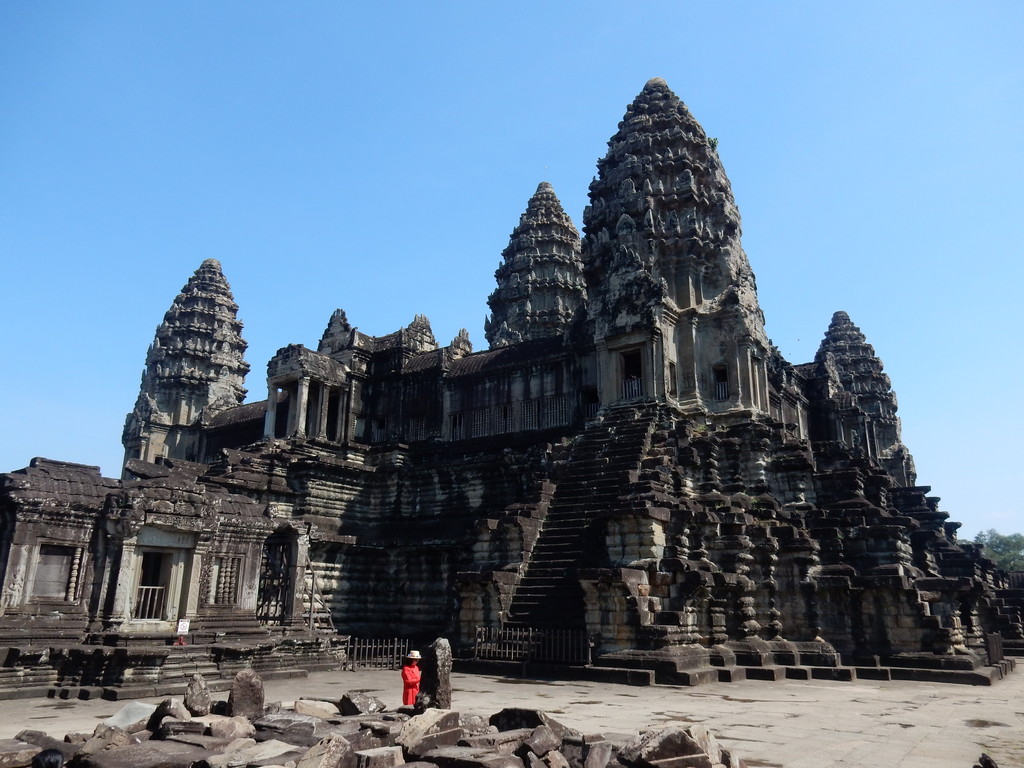
Ankor Wat was amazing--similar to the Pyramids of Egypt; the Mayan structures we'd visited in Guatemala, Mexico, and Honduras; and the Inca structures in Peru, we just couldn't believe that such fantastic structures could have been built so extensively back in the day before big cranes and modern building techniques.

With $60 3-Day Tickets in Hand, Headed Out to our First Temple
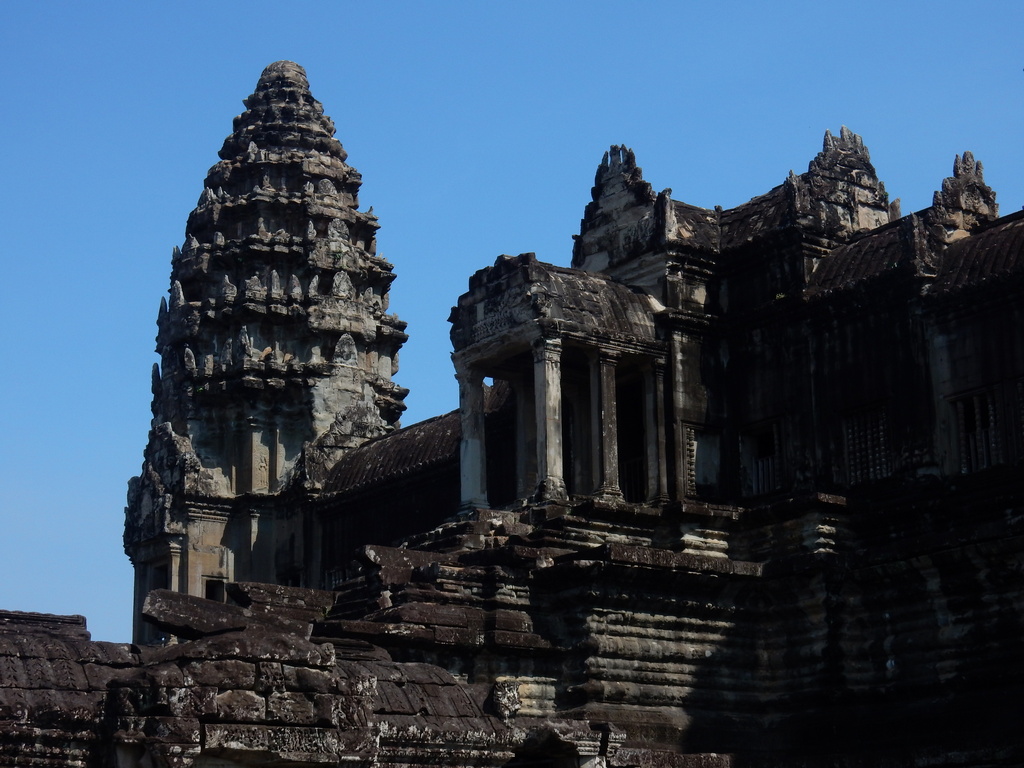
Dave and I together took 630 pictures in 3 days. This is one of the reasons it has taken so long to produce this blog! (sorting through the pictures, trying to remember what we were taking pictures of) But below are few pictures to give you the gist of the magnitude of the Khmer empire at one time. We did 2 days of touring temples, and then spent our last day on a trip to the lake, and somehow also squeezed in a couple of hours at a small "World War II" museum. We kind of lost track of which temple was which, so I'm not going to try to name them below, but just show you some pretty pictures.
Unfortunately, we hadn't done any studying at all about Cambodia, the Khmer Empire, or the history or culture, so we felt pretty stupid at times. We did buy a $10 book from a vendor at the first site we stopped at, but then never had time to read it carefully. So for those of you starting out where we were, here's a very brief recap.
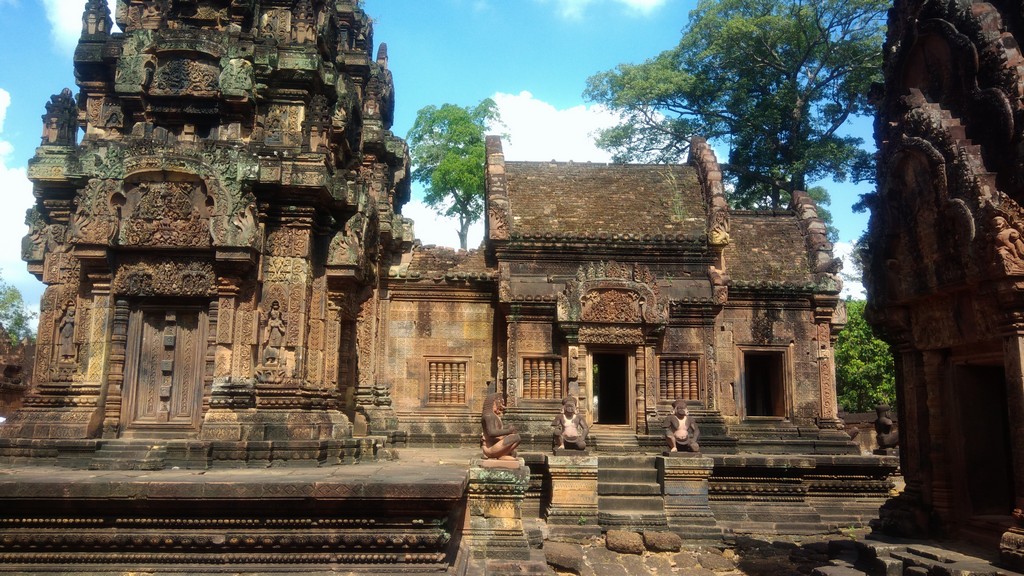
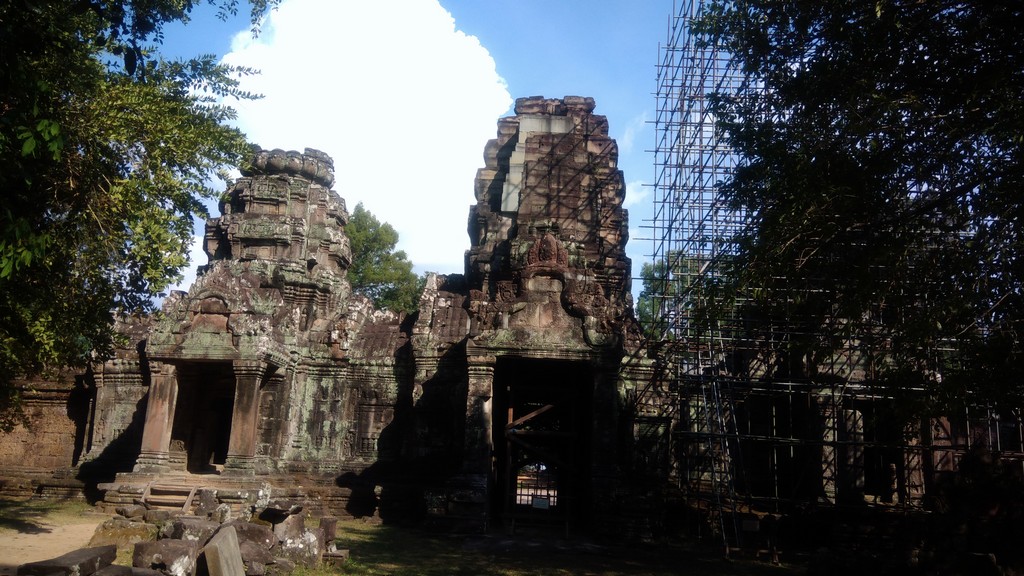
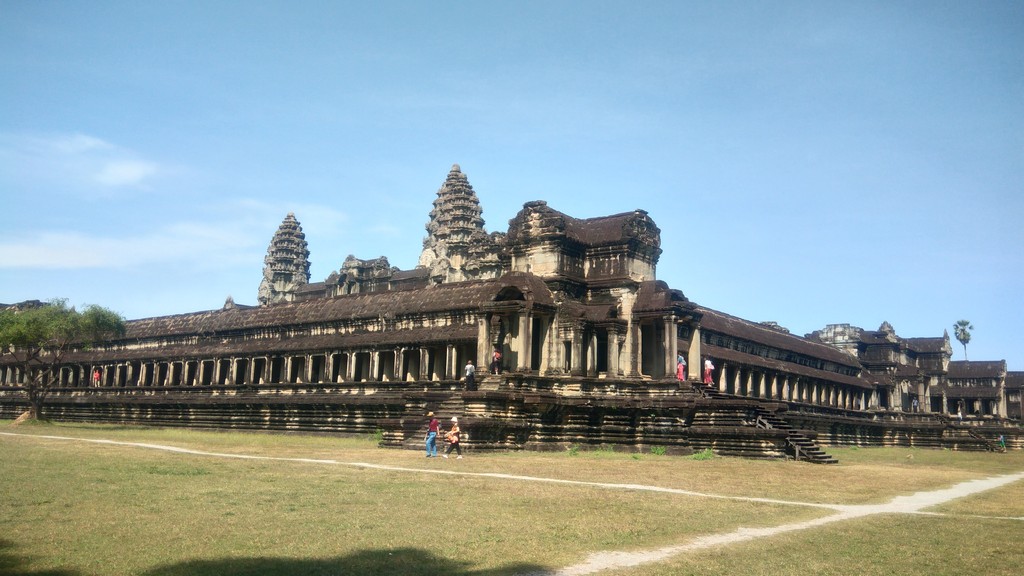
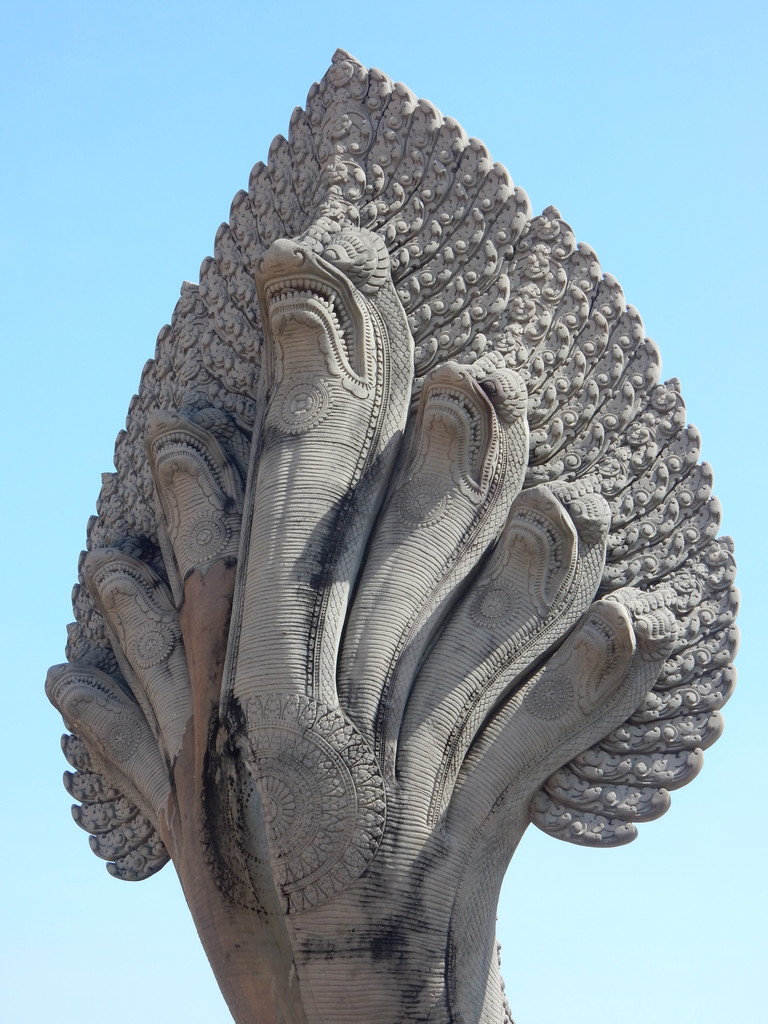
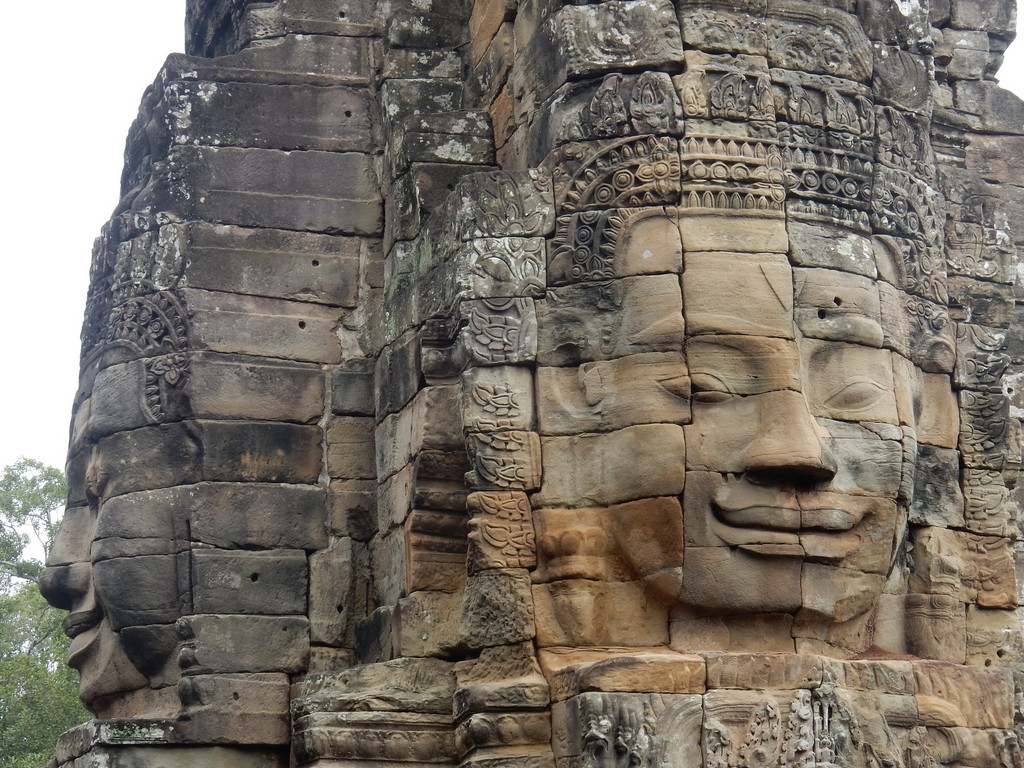
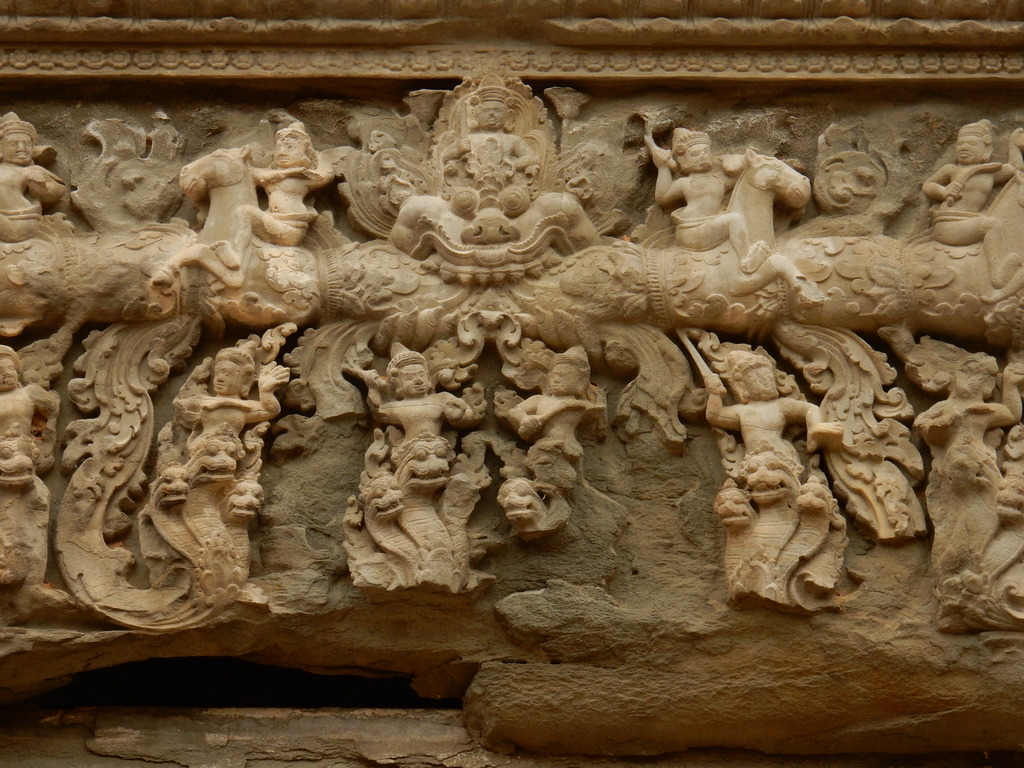
Between the 8th and 13th centuries, a succession of first Hindu, and later Buddhist kings created magnificent temples in stone. Each temple was bigger then the next, but all had elaborate carvings, honoring Hindu gods, detailing victories in battle, and honoring Buddhist principles. The final two temples, and the biggest, were Angkor Thom in about 1200 AD, and Angkor Wat, around 1250 AD. After about 1300 AD, the Buddhist temples were built out of wood, and few survived. There are about 100 temples scattered around in Cambodia. In our 2 days of temple touring, we were able to briefly visit 13 of them. I'd love to educate you more about each temple, but honestly, it kind of all blurred together. Knowing a bit of Hindu lore would be useful before visiting, as most of the symbology at the temples were Hindu. Here are a few of the pictures we took:

Typical Temple Layout (Bantai Srai Temple)

Looking in the Gopura Oriental at Bantai Srai

Inner Temple at Bantai Srai

Dave Standing in front of the tail of a Naga (snake) being pulled to churn the underworld
Unfortunately, the heads on the men holding the (very large) tail of the snake have all been "looted".

Lots of Reconstruction Work Going On in Various Temples

Angkor Wat Is So Big, It Is Hard to Photograph!

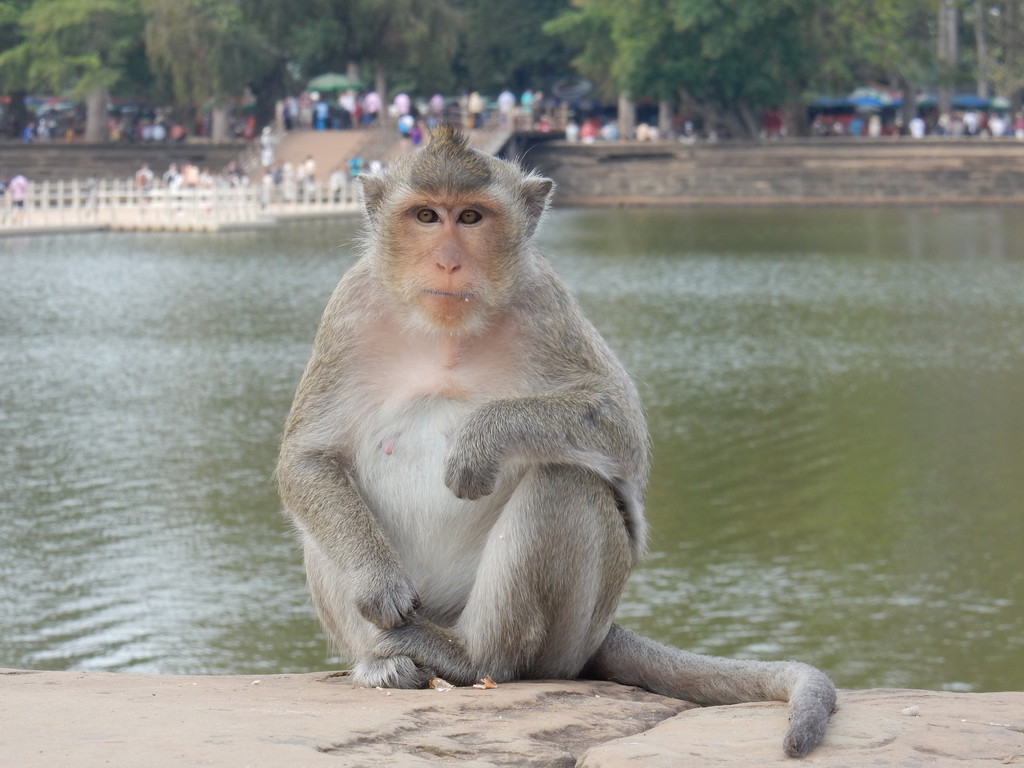
The Monkeys Were Always an Attraction

The Apsara, an Iconic Hindu Image, Adorned Every Temple

Images of Buddha Also Adorned the More Recent (but still old) Temples

An Hour Long Line (We Passed!)

The Entire Football Field-Sized Wall Was Carved with an Elaborate History of Battles


Just One of the Inner Temples in the Large Complex


A Naga (7-Headed Snake) Guarding the Causeway to Angkor Wat

My Favorite Temple (Bayon)

Another Temple with Elaborate Scenes Carved in the Walls


Trees Are A Major Problem in Restoring the Temples


Another Temple! This One Guarded by Lions


A Helpful Guide Pointed Out This Stegasaurus(Methinks a Joke by a Restorer?)

Thankfully, Our Last Temple (Preah Ko)

Templed Out
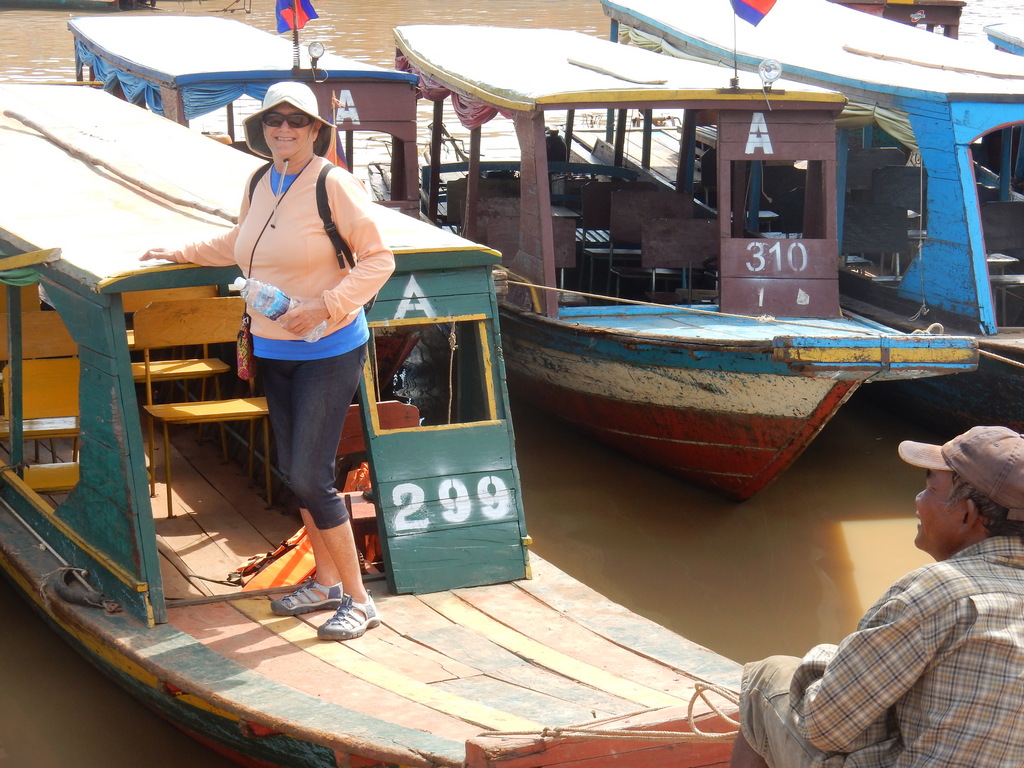
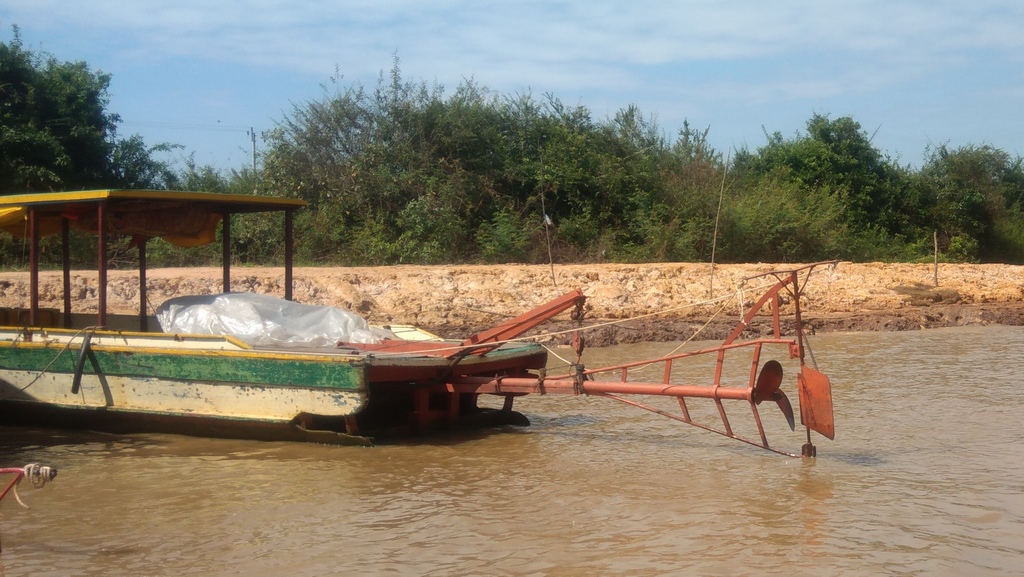
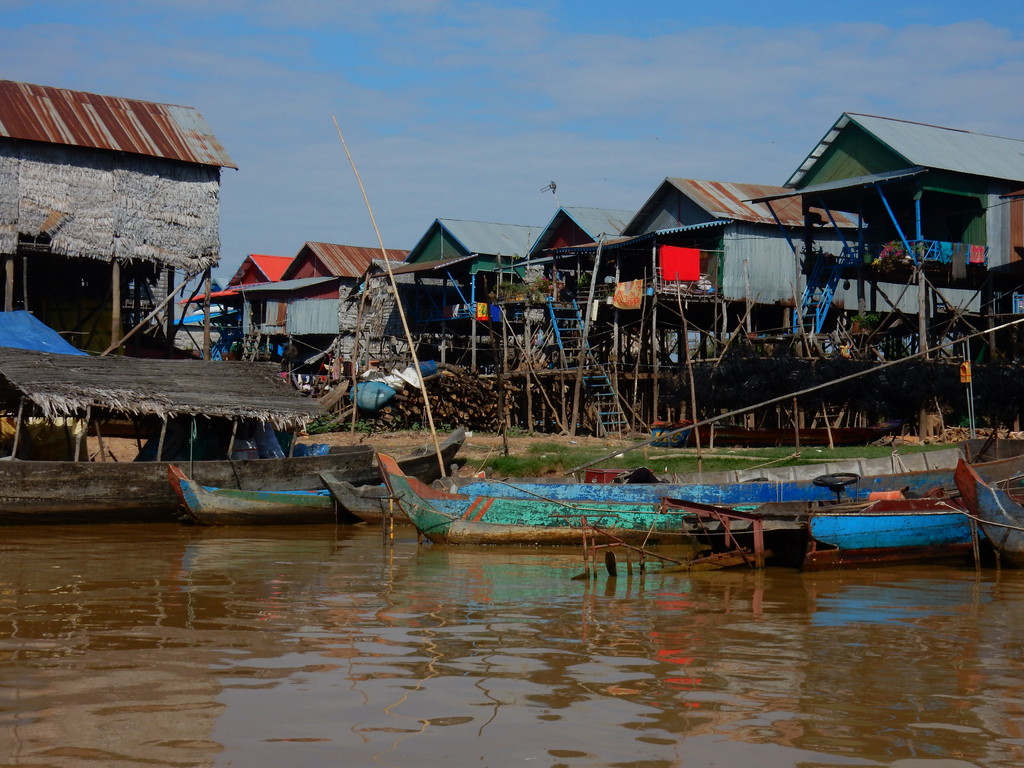
After two long days and touring 13 temples, on our last day in Cambodia, we went out to see Lake Tonle Sap. It is the largest fresh water body in South East Asia. Its dimension changes depending on the wet and dry season. During rainy season from June to October, the lake is filled by water flowing from the Mekong with 45 feet in depth and expands the surface of 10,000 square Kilometers. In dry season from November to May its size 3,000 square kilometers with 6 feet in depth and water flows backwards, from the Lake to the Mekong, in and out flowing is the natural phenomenon occurrences.

It Being Dry Season, It Was a Long and Dusty Ride to the Lake

Boarding Our Private Tour Boat

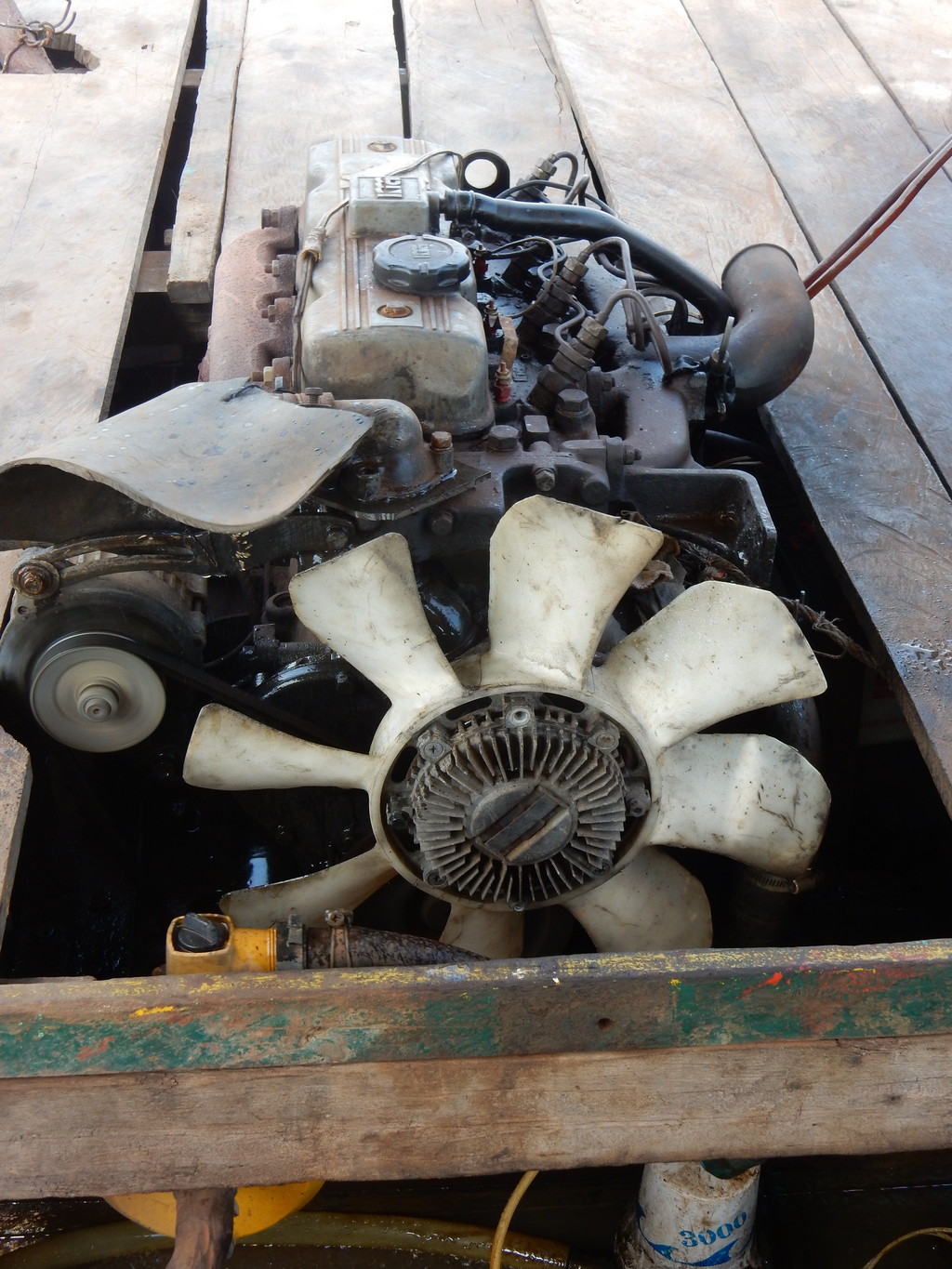
The Engine

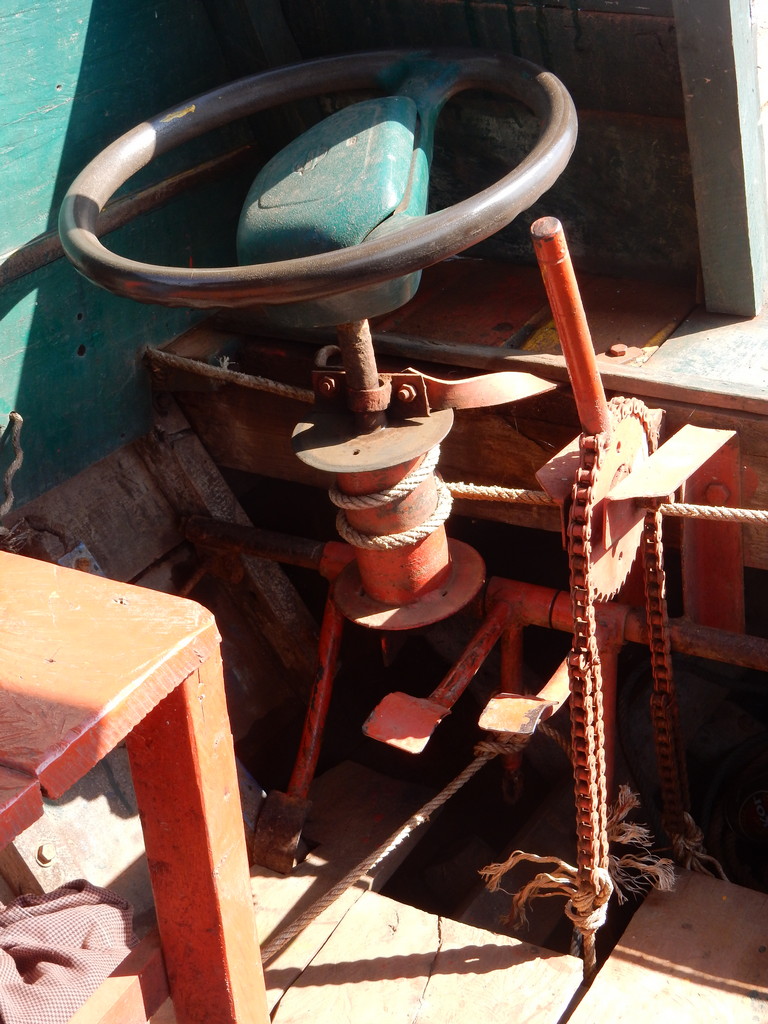
The Steering Wheel

The Drive Train and Propeller

Houses with Big Stilts

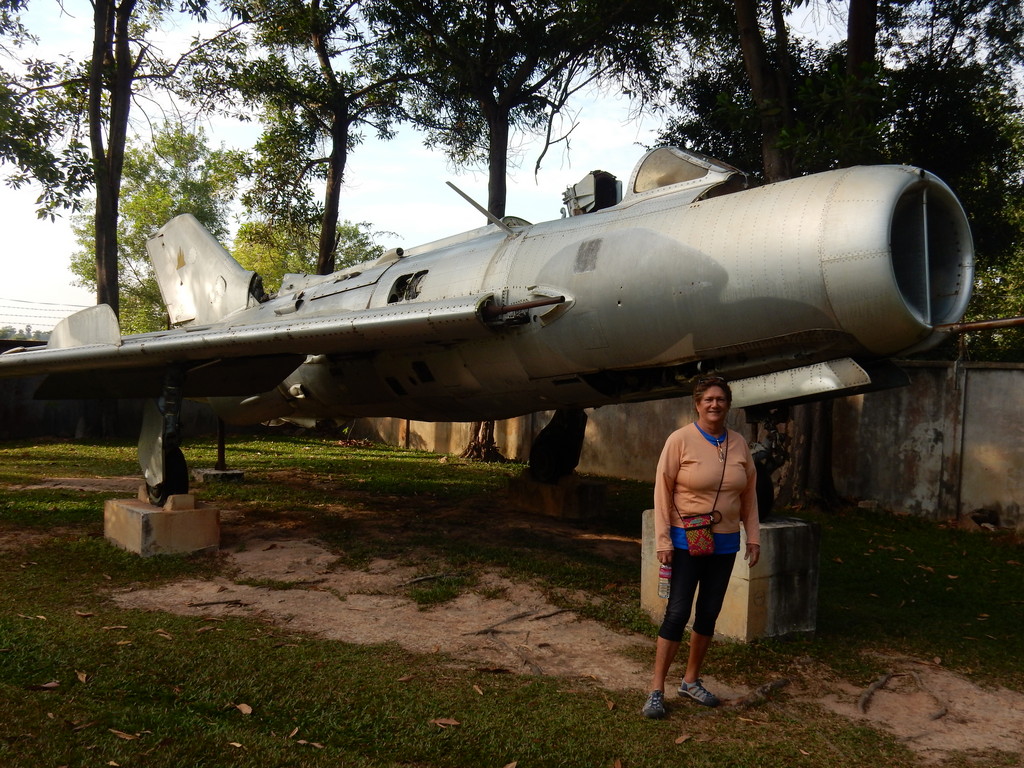
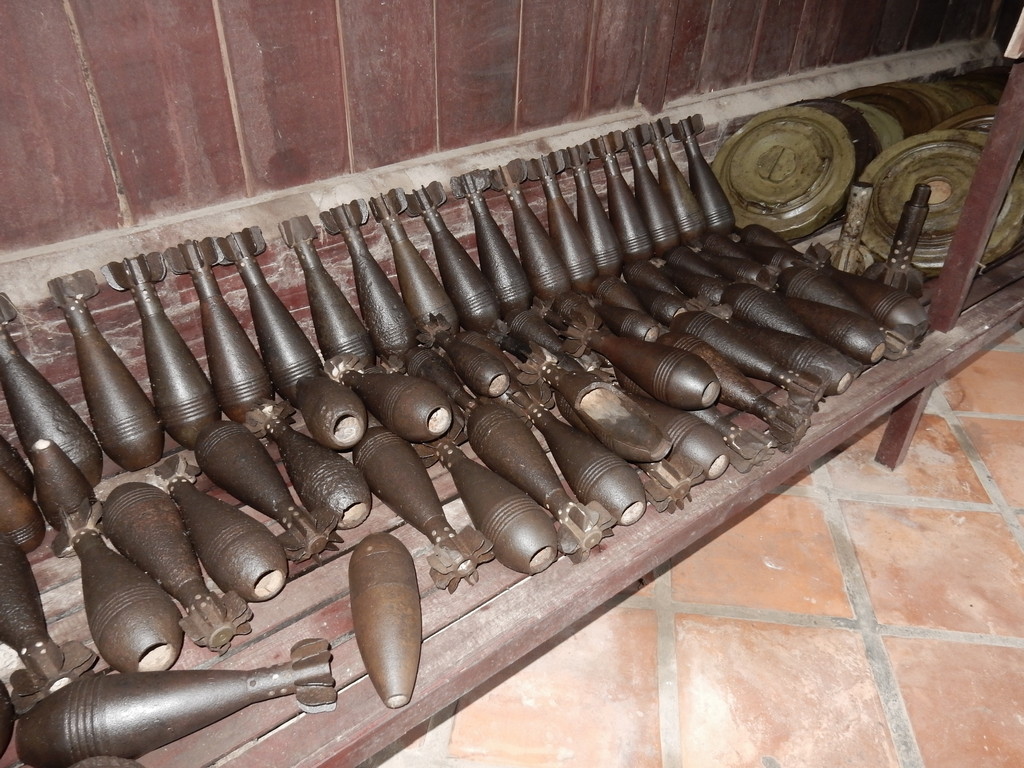
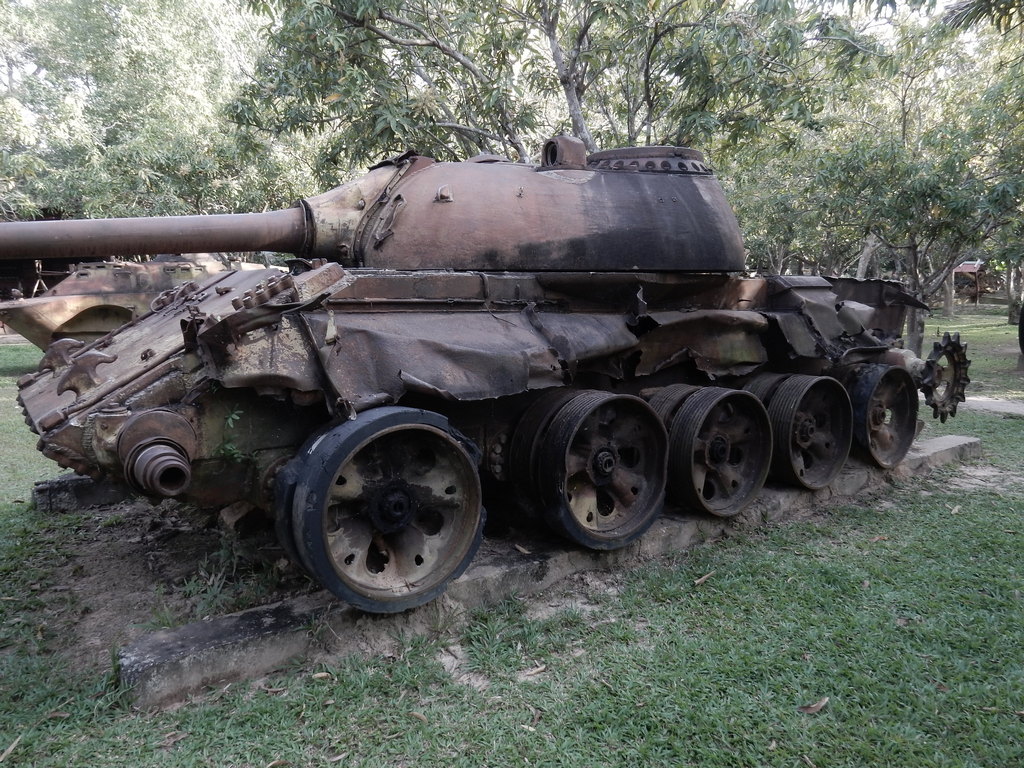
Was There Any World War II Action?
Dave can't pass up a war museum, especially one that promises World War II memorabilia. It turns out this one had much more modern stuff. But we still enjoyed poking around.


And we did all that in 3 days!! Then it was on to Thailand!
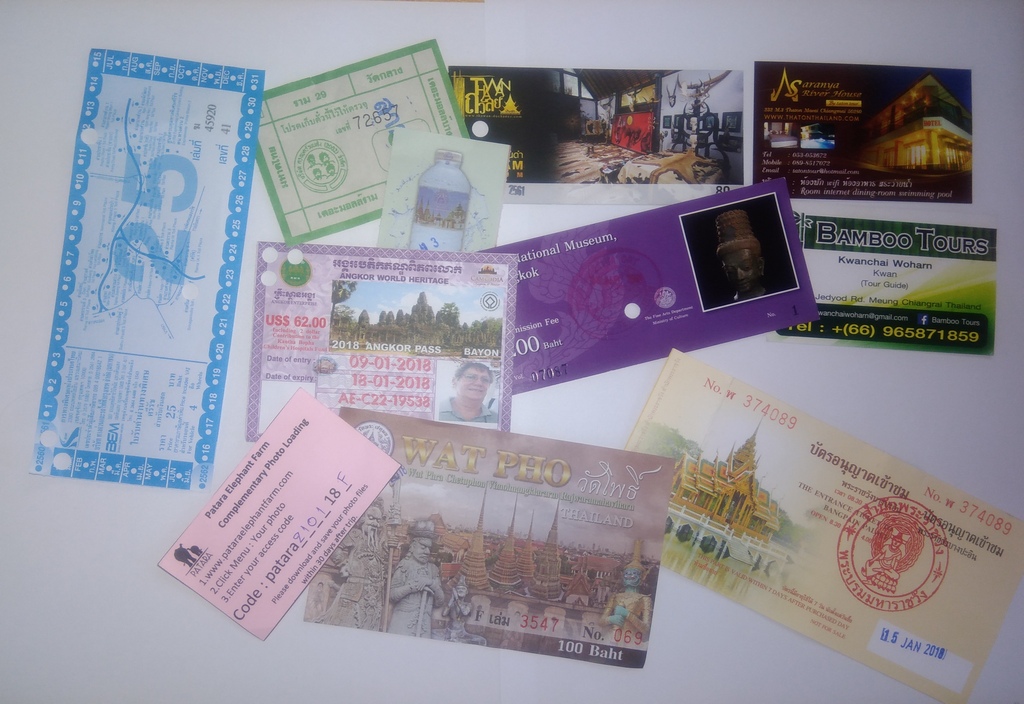
Before we left the US, we booked a round trip flight on Air Asia from Davao to Kuala Lumpur, Malaysia. Having an outbound ticket from the Philippines when we flew in from the US also maded airport check-in and arrival, on a one-way ticket from the U.S., much easier. Because SE Asia is used to backpackers and yachties traveling through on a one-way ticket, going from country to country, it's much easier to talk your way on the plane from Kuala Lumpur than it is from LAX.
I spent a week in December making up a rough plan for our trip. I emailed the plan to several friends who had been to both places and asked for input. The major addition to our initial plan was to plan to go to Chiang Rai (a 3 hour bus ride from Chiang Mai) and spend at least a few days there. So, here is what we planned, and we were pretty much able to execute this plan. January is peak tourist season, so I felt like I had to pre-book the major things, to make sure we got to where we wanted to go, and had a place to stay when we got there.
Jan 8 - Fly Davao to Kuala Lumpur
Jan 8 - Overnight at Tune Hotel KL Airport
Jan 9 - Fly KL to Siem Reip (v early morning flight)
Jan 9-11 Explore Siem Reip / Angkor Wat
Jan 12 Siem Reip to Bangkok ($30/8hrs by bus $60/2hrs fly)
Jan 13-14 Bangkok
Jan 15 Daytrip by van to Ayutthaya
Jan 16 Bangkok to Chang Mai day train (all day) or 1 hr flight
Jan 17 Rest/get oriented in Chang Mai
Jan 18-26 Chang Mai and vicinity / touring, etc
Jan 27 Chang Mai to KL, overnight at Tune Hotel KL Airport
Jan 28 Fly KL to Davao

We should have planned for more time (or fewer bucket list checks), but we had other considerations... one was getting all the work done on Soggy Paws, and the other was the schedule for visa renewals in the Philippines when we returned. For the first two months of your time in the PI on a tourist visa, you can only do monthly renewals. After 2 months, you can apply for a longer extension (2 months at a time, presently). We wanted to be in the Philippines for the first 2 months, and apply for a 2 month extension, before we left Davao at the end of March. So January 28th was about the last we could fly back in from Thailand that wouldn't hold us up in March.
So after 29 days aboard in the marina in the Philippines, working feverishly on boat projects, we took off on Jan 8 for a little R & R in Cambodia and Thailand.
After an uneventful flight direct from Davao, we spent a short overnight at the The Tune Hotel at the Kuala Lumpur (Malaysia) International Airport, and were off early in the morning for our flight to Siem Reap in Cambodia. The Tune Hotel at KLIA is a great spot for an overnight stopover. You can walk to it from the International terminal. All the other hotels require a taxi or bus ride into downtown KL.
Cambodia (Siem Reap & the temples of Angkor)
Since we were on a fairly tight schedule, I had pre-booked a Tuktuk (motor tricycle) driver/tour guide via the internet, using a recommendation from a TripAdvisor blog. Mr. Sulu TukTuk Tours turned out to be a fantastic choice. Sulu met us at the airport, took us to the hotel, and then off for the first day's touring, starting with a stop to get our permit. He spoke good English, and was polite and not pushy. He knew where to go to minimize crowds, yet still get us to all the major attractions in our 3 day visit. He picked us up at the airport, took us through 3 days of touring, and took us back to the airport on the 4th day, all for the pre-arranged fee of $80 USD. We have since recommended 2 other travelers to him and both felt the same way we did. Click the picture below for a link to his facebook page, and contact him there, or email him at mengleaplim@gmail.com
We bought a cell phone sim card in the airport, even though we were only going to stay 3 days--to be able to contact our driver, the hotel, use the internet, etc. It only cost $10 (text, voice, and data already on it), and was well worth having.
Our Siem Reap hotel I'd booked off Booking.com and it was a fairly new establishment, and located on a back street, but not far from the main tourist part of town. A guy who was teaching hospitality at the local college, bought a 5 room "hotel" to reap some of the tourist dollars, and also help train his students in hospitality in the real world. The hotel room for 2 people, a queen sized bed, with private bath, air conditioning, and breakfast, cost $36 USD TOTAL for 3 nights (Siem Reap Phan Villa). As an exploding tourist destination, there are plenty of $100 per night hotels in Siem Reap, but we didn't need to spend that kind of money on a place to sleep!!
It was only a short walk to the tourist center of Siem Reap.
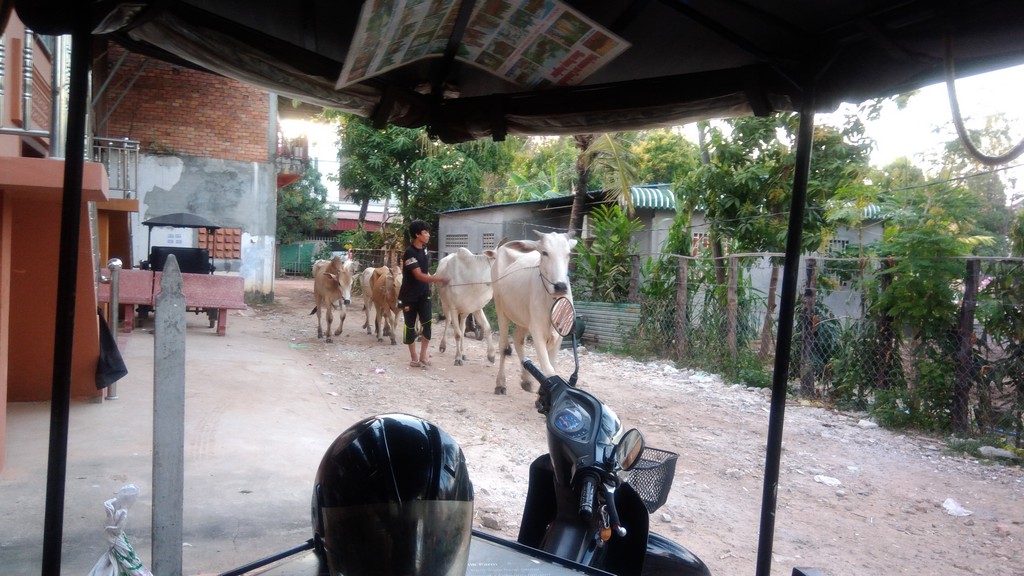
Ankor Wat was amazing--similar to the Pyramids of Egypt; the Mayan structures we'd visited in Guatemala, Mexico, and Honduras; and the Inca structures in Peru, we just couldn't believe that such fantastic structures could have been built so extensively back in the day before big cranes and modern building techniques.

Dave and I together took 630 pictures in 3 days. This is one of the reasons it has taken so long to produce this blog! (sorting through the pictures, trying to remember what we were taking pictures of) But below are few pictures to give you the gist of the magnitude of the Khmer empire at one time. We did 2 days of touring temples, and then spent our last day on a trip to the lake, and somehow also squeezed in a couple of hours at a small "World War II" museum. We kind of lost track of which temple was which, so I'm not going to try to name them below, but just show you some pretty pictures.
Unfortunately, we hadn't done any studying at all about Cambodia, the Khmer Empire, or the history or culture, so we felt pretty stupid at times. We did buy a $10 book from a vendor at the first site we stopped at, but then never had time to read it carefully. So for those of you starting out where we were, here's a very brief recap.
Between the 8th and 13th centuries, a succession of first Hindu, and later Buddhist kings created magnificent temples in stone. Each temple was bigger then the next, but all had elaborate carvings, honoring Hindu gods, detailing victories in battle, and honoring Buddhist principles. The final two temples, and the biggest, were Angkor Thom in about 1200 AD, and Angkor Wat, around 1250 AD. After about 1300 AD, the Buddhist temples were built out of wood, and few survived. There are about 100 temples scattered around in Cambodia. In our 2 days of temple touring, we were able to briefly visit 13 of them. I'd love to educate you more about each temple, but honestly, it kind of all blurred together. Knowing a bit of Hindu lore would be useful before visiting, as most of the symbology at the temples were Hindu. Here are a few of the pictures we took:
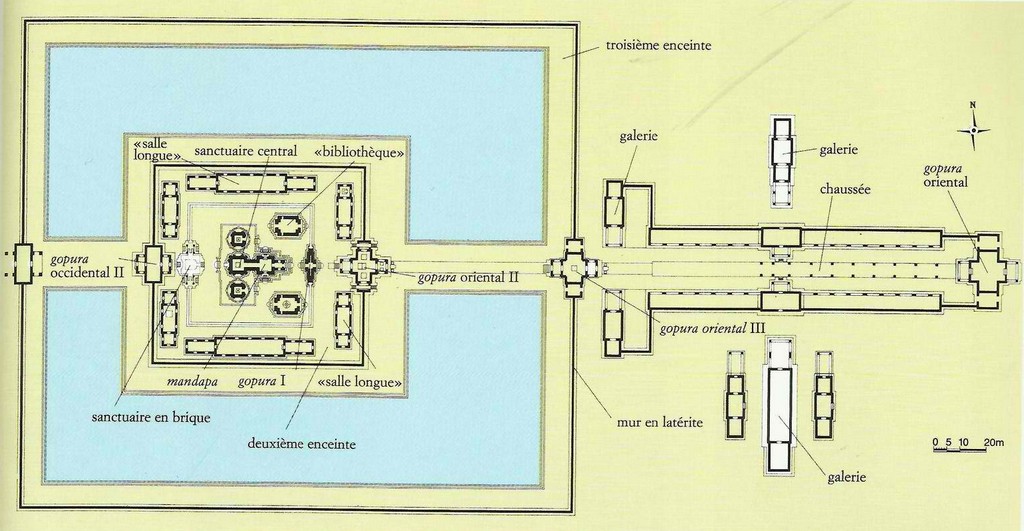
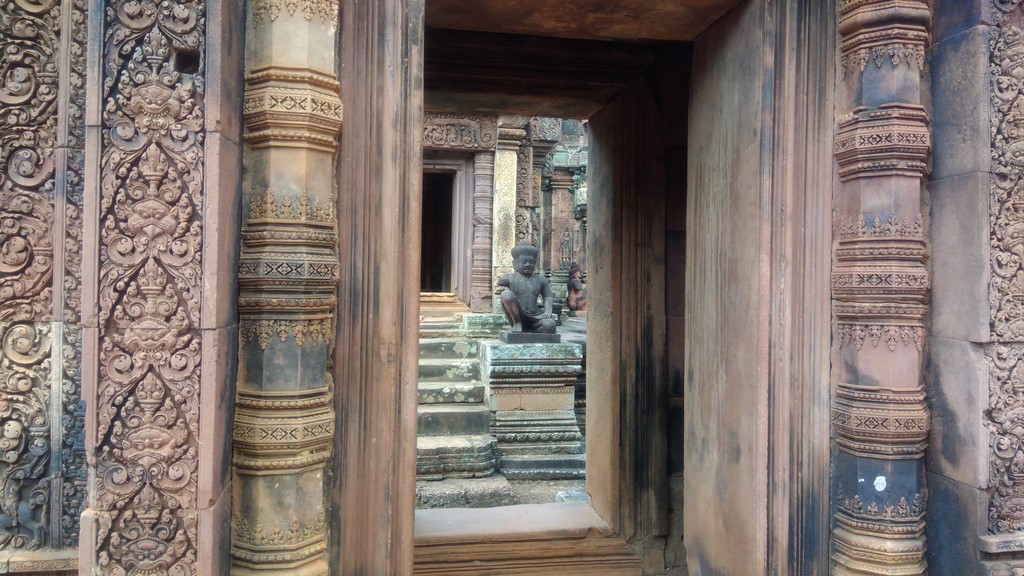

Unfortunately, the heads on the men holding the (very large) tail of the snake have all been "looted".
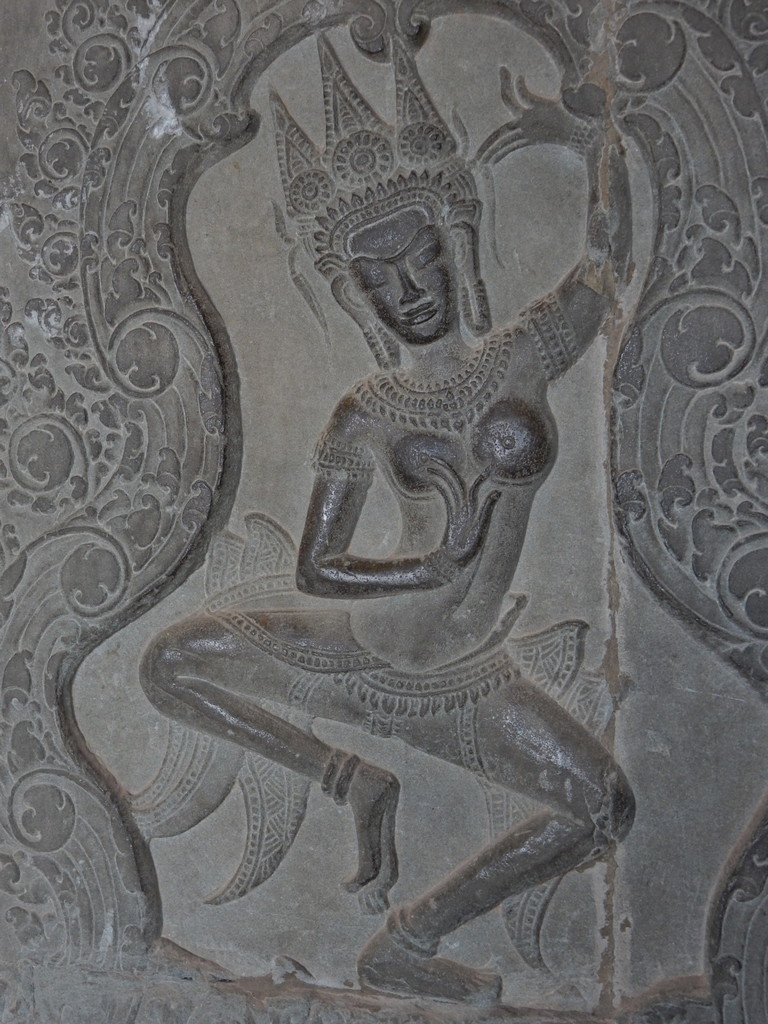
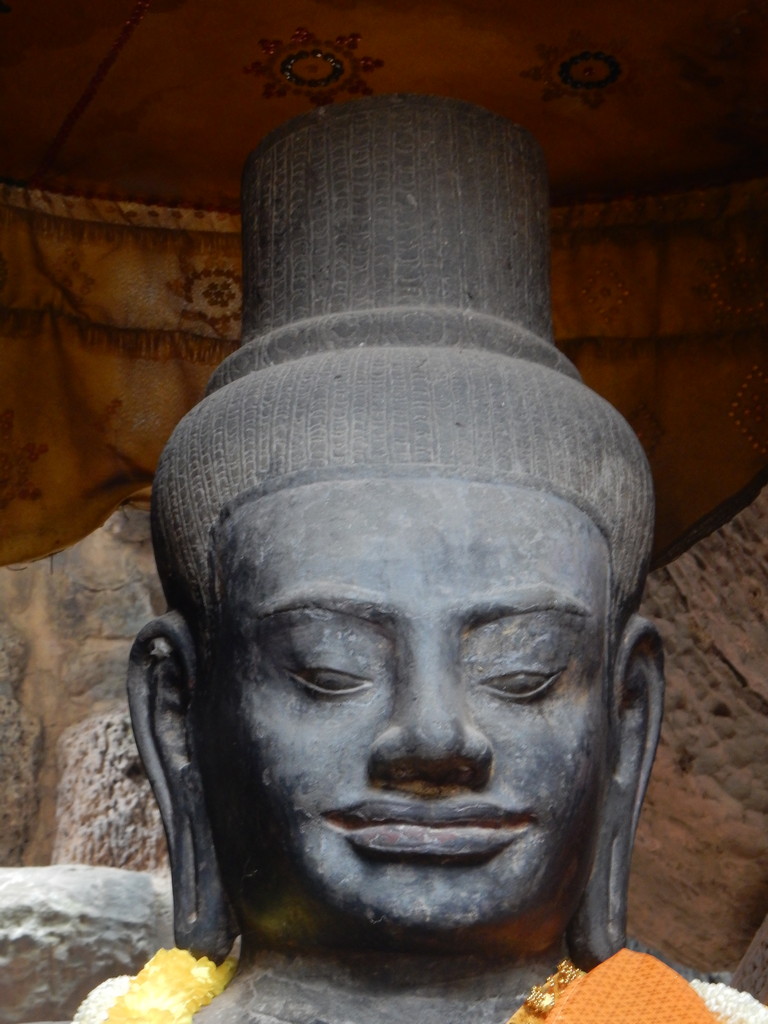

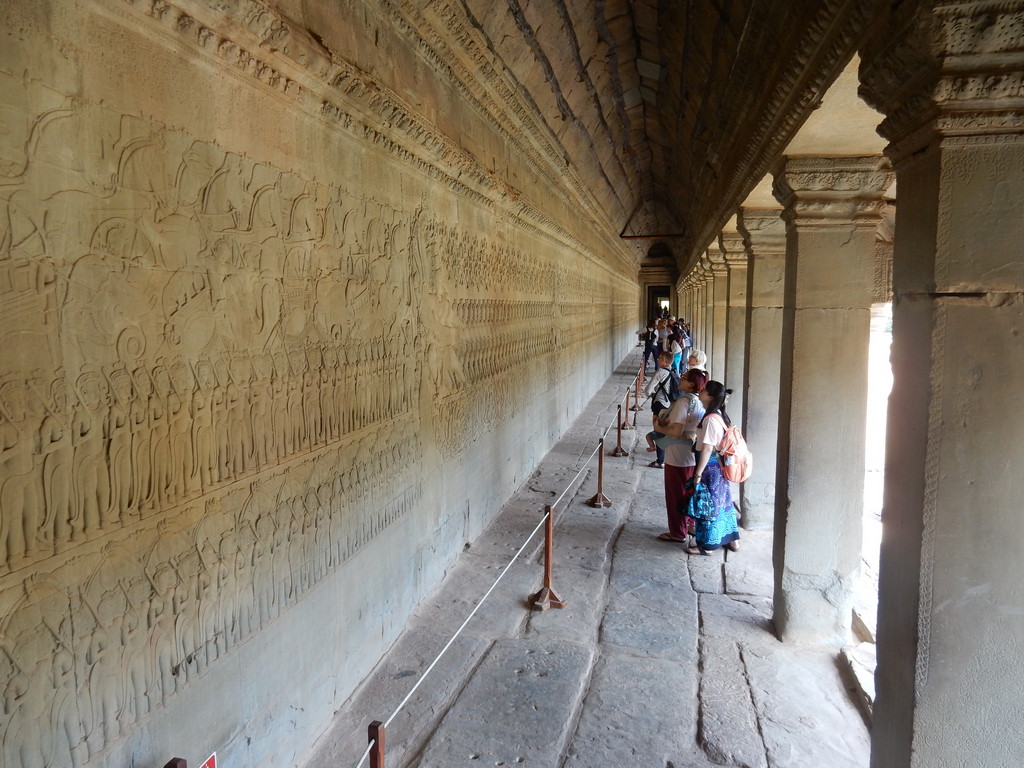
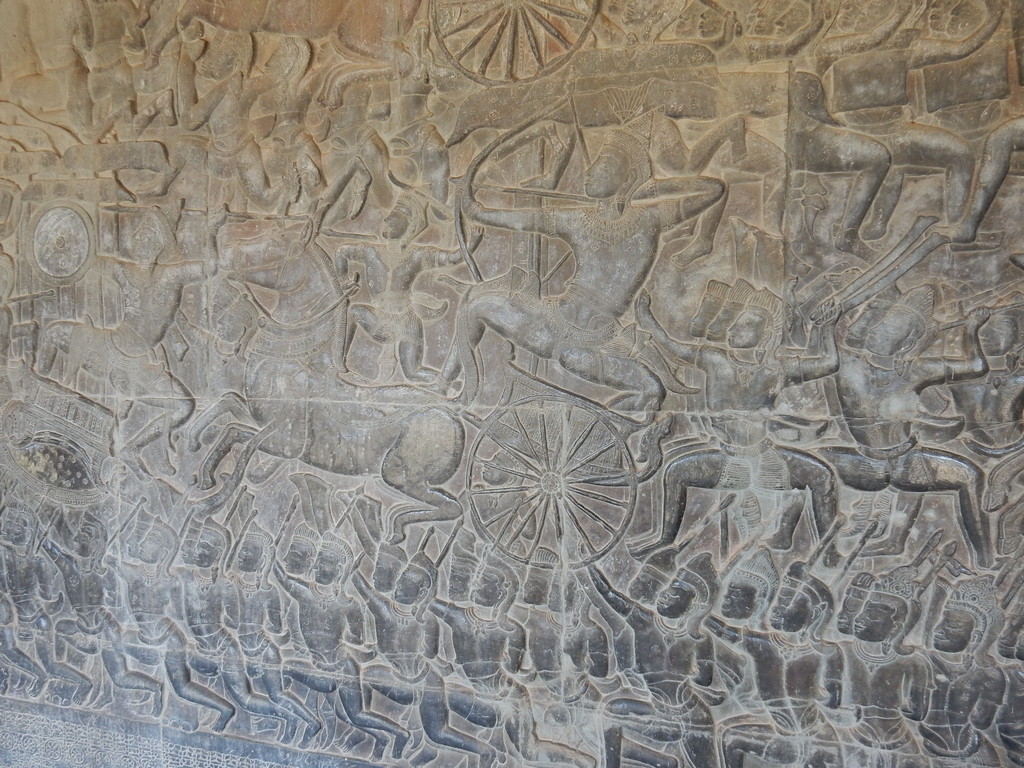
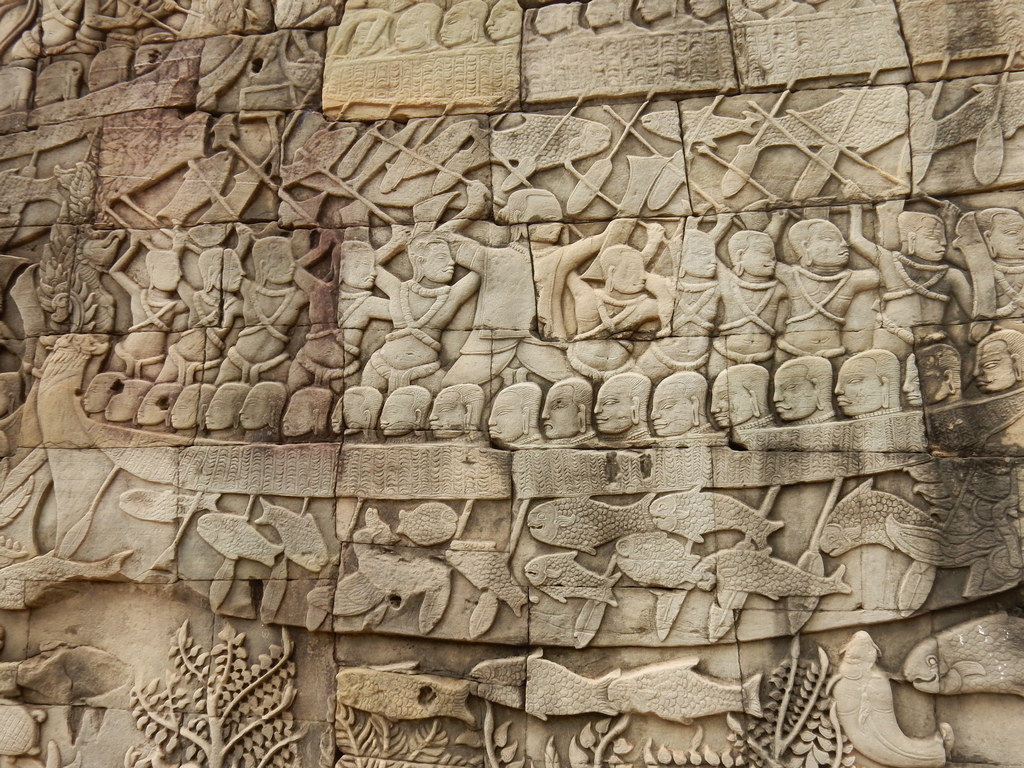
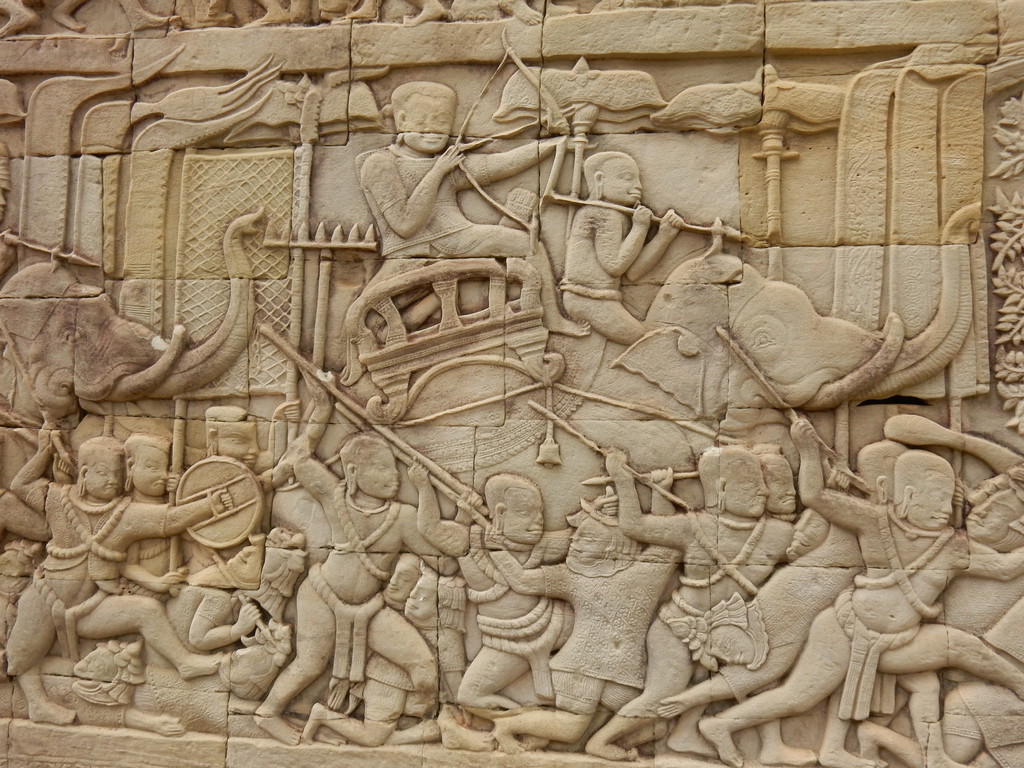
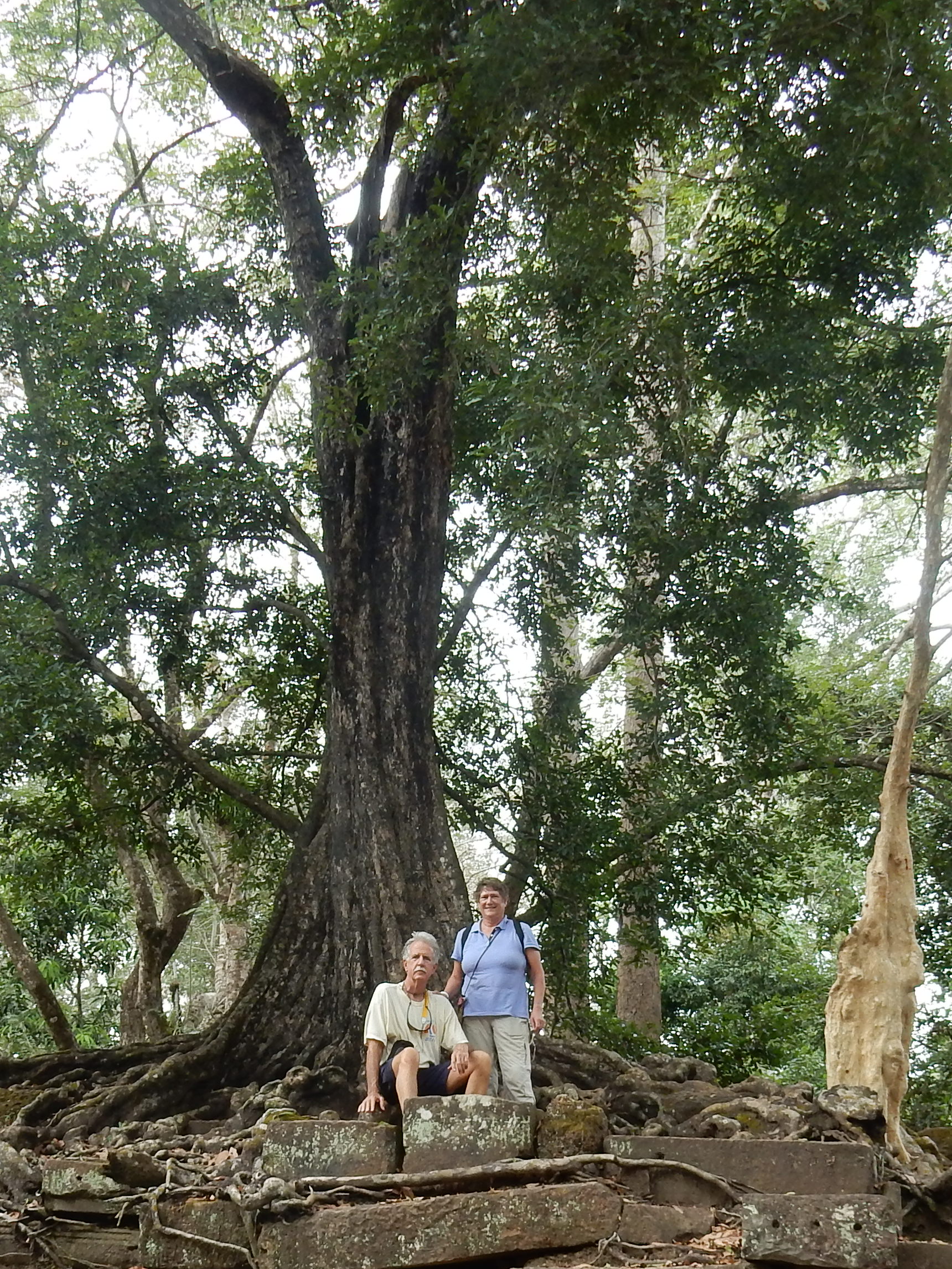
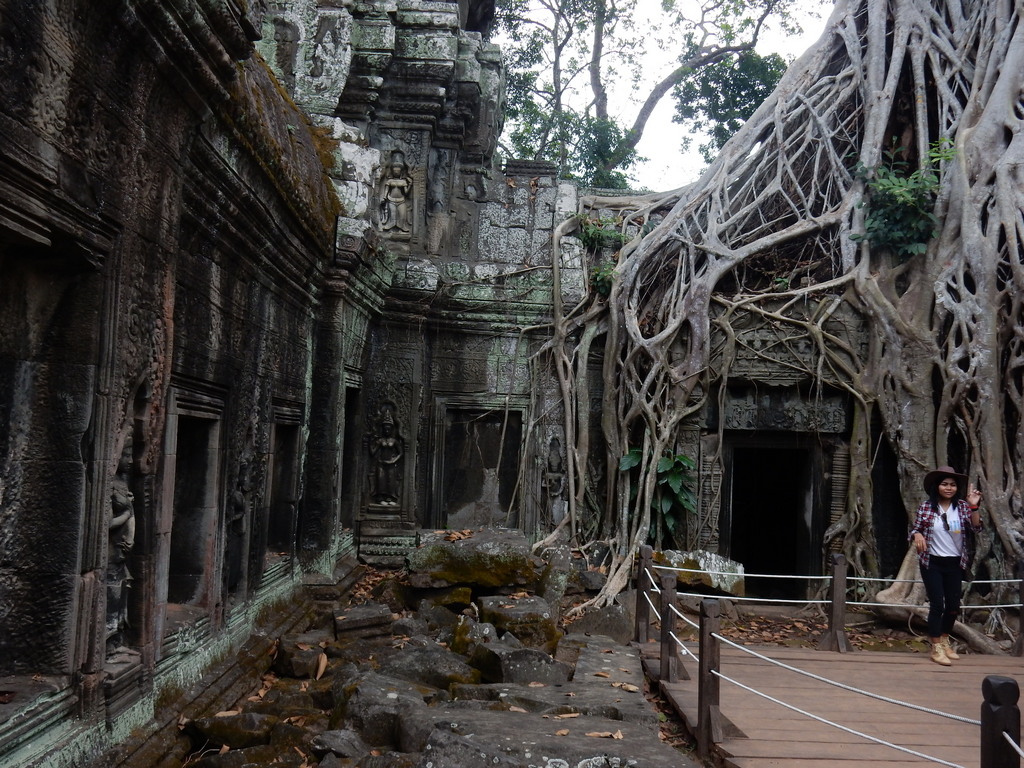
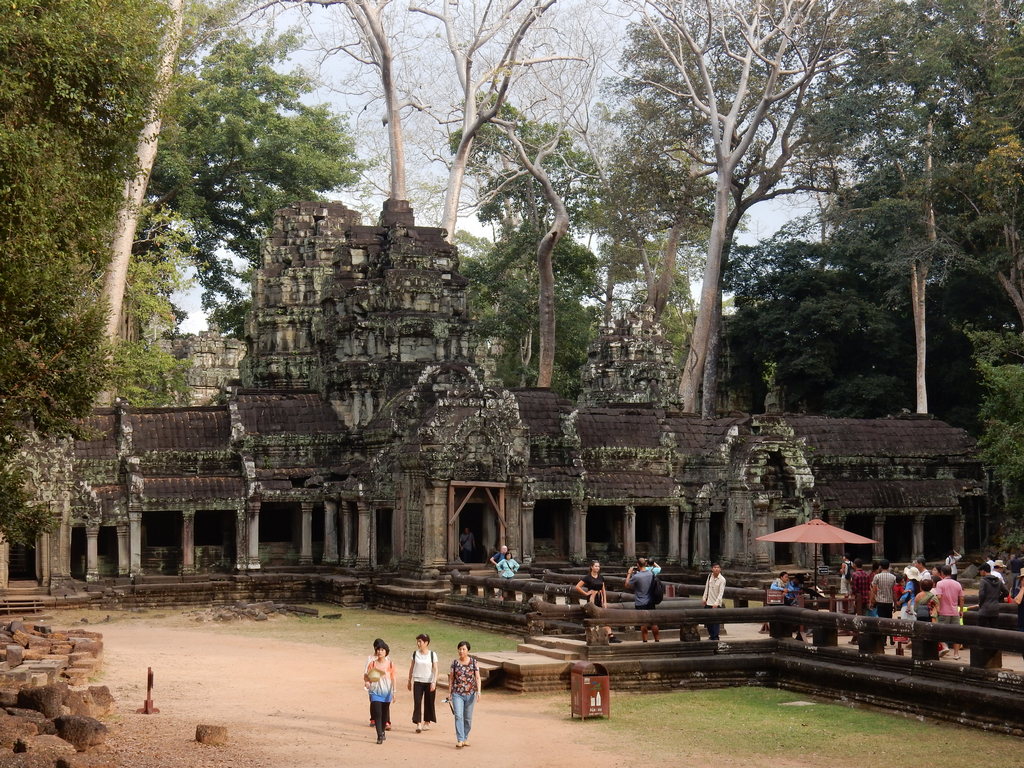
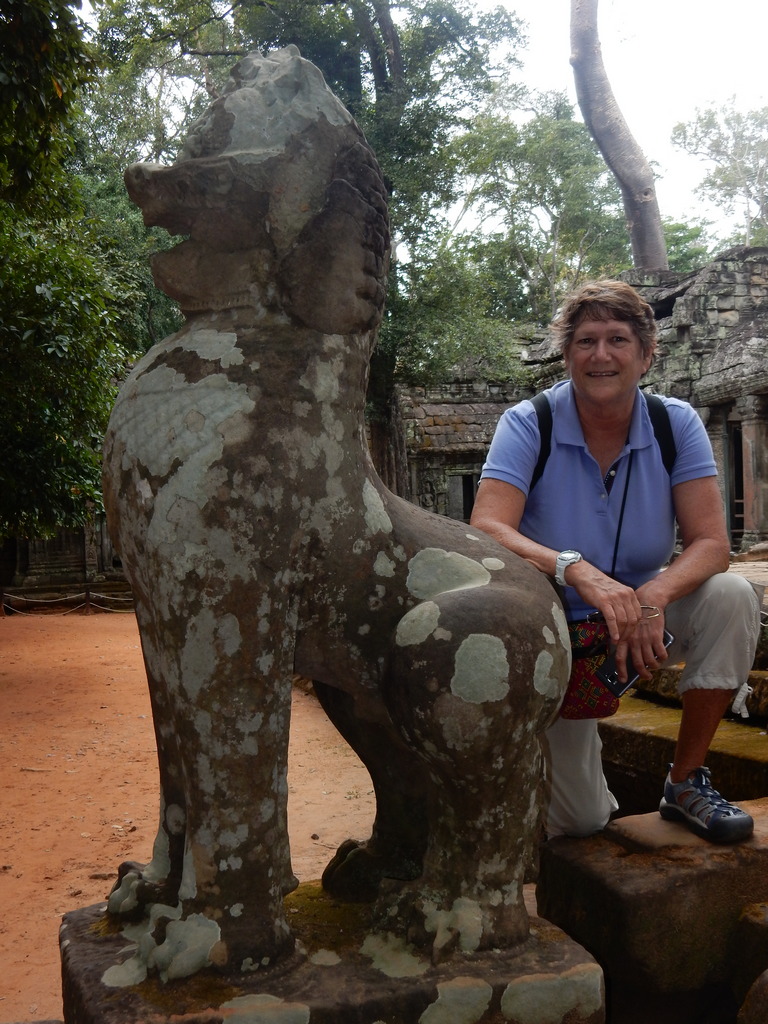
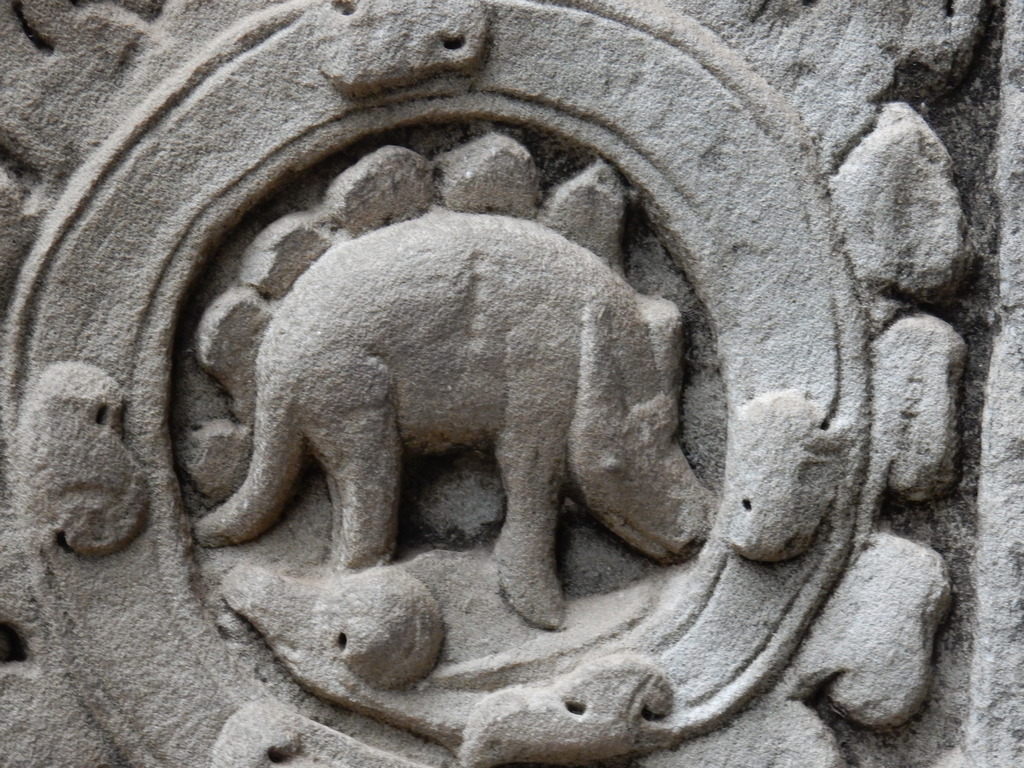
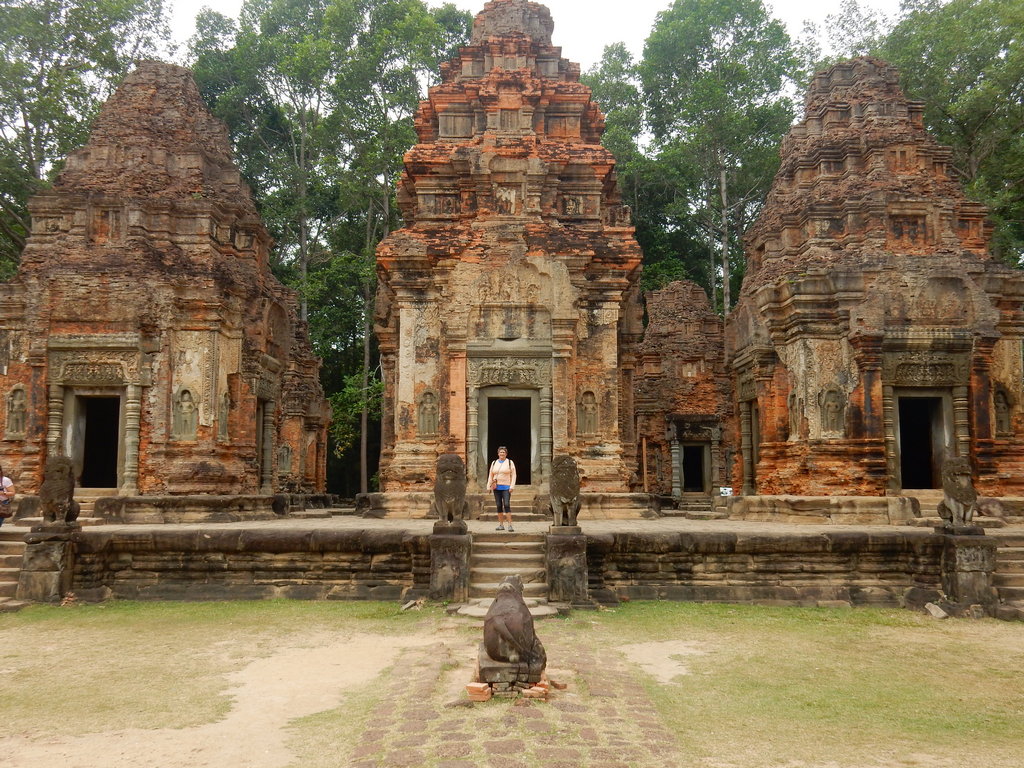
Templed Out
After two long days and touring 13 temples, on our last day in Cambodia, we went out to see Lake Tonle Sap. It is the largest fresh water body in South East Asia. Its dimension changes depending on the wet and dry season. During rainy season from June to October, the lake is filled by water flowing from the Mekong with 45 feet in depth and expands the surface of 10,000 square Kilometers. In dry season from November to May its size 3,000 square kilometers with 6 feet in depth and water flows backwards, from the Lake to the Mekong, in and out flowing is the natural phenomenon occurrences.


Was There Any World War II Action?
Dave can't pass up a war museum, especially one that promises World War II memorabilia. It turns out this one had much more modern stuff. But we still enjoyed poking around.
And we did all that in 3 days!! Then it was on to Thailand!
Sunday, November 5, 2017
Submitted!

In addition to the 5-page application and the sea time documentation, I needed to get a physical and a drug test, pay the US Government $140, and explain why I didn't need a Transportation Worker ID Card. Quite a process. Anyway, today I emailed the whole package as a PDF file to one of the USCG's Regional Exam Centers. This starts the process.
Last time I renewed, my package was rejected for several reasons and it took me nearly a year and several submissions to get my license renewed. Hoping I did a better job of preparing the package this time.
Friday, August 25, 2017
Doing Fine - Back in the Philippines
I keep meaning to get on with the remaining blog posts on our time in SE Indonesia, but we are back in the boatyard in the Philippines with a long list of projects, so I haven't got around to it yet. Hopefully I will soon.
Our current location is Holiday Oceanview Marina, Samal Island, Davao del Norte, Mindanao, Philippines, and we are fine and healthy. We had a great time cruising Indonesia--they have made amazing progess in making it easier for small private yachts to cruise their beautiful islands. The new boat performed exceptionally, well even in the leg from Halmahera to Bitung, N Sulawesi, where we were close-hauled in 40 knots of wind with opposing current. The new Soggy Paws is a dream to sail, though much less rugged than our CSY.
Blog Posts I'm missing so far:
- Coast hopping from Triton Bay to Misool
- Misool back to Bitung
- Bitung to Samal Island, Philippines
Our original plan was to spend the summer in Raja Ampat again, but in June we discovered that the new seals that Dave put in the saildrives were leaking, and the leak got progressively worse. To fix the problem, we'd need to haul out somewhere, and there isn't a reasonably-priced haulout yard in Eastern Indonesia. And Samal was only about 800 miles downwind, plus we could get much better provisions in the Philippines than in Indonesia. So we spent late June and July coast-hopping back to Samal.
We emailed the Oceanview Marina yard in early June and requested a haulout as soon as they could accommodate us near the end of July. The yard is chock-a-block (though the marina is not), but they managed to juggle spots in the yard to haul us out a few days after we arrived. We have pulled the saildrives apart and are now trying to source parts.
There is a Yanmar dealer in the Philippines, but they mainly sell tractors and not small yacht engines/saildrives. So after 3 weeks of trying to get some technical questions answered, and get a quote and availability for our saildrive lower units, we gave up.
We got the quote with "If the parts ship from Singapore, they will take 10-12 working days to arrive, if they ship from Japan, they will take 15-20 days to arrive, but there are none in either Singapore or Japan." WTF? After finding they'd have to ship the parts we needed from the US, we have decided to buy the parts from a US dealer. Due to the fact that the Philippines don't acknowledge "yacht in transit" status for duty, they may well come back with us in a suitcase! Note: Primary reason we are contemplating replacing the whole Lower Housing Assembly (aka Lower Unit) is that the aluminum housings are pitted from galvanic corrosion. We tried to repair them on our last haulout, but the pitting is bad enough that the seals weren't sealing well. Since we like to do the "far from everywhere" cruising, we feel it's best to replace rather than keep dealing with the issue, and risk a major problem somewhere where we can't deal with it.
While back in the marina and hauled out, Dave also decided to get the excellent fiberglass workers in the yard to make a 1 ft extension on our sterns. This is primarily to raise the bottom step. With a little too much weight aboard, our bottom step on the sterns were always wet, and grew slippery green slime at an amazing rate, making the step very dangerous. We are raising the bottom step to the level of the next step up, plus adding a foot, which will hopefully add some buoyancy back there. And it will make large flat landing area--good for a dive platform. The yard guys are nearly done with the project. Pictures soon!
I am meanwhile working down the fairly extensive list of canvas repair items and upgrades (bleah! I hate patching old canvas) Plus sourcing parts, googling for troubleshooting tips (Raymarine Wind Inst and Seatalk / PC connector), making travel reservations, updating Compendiums, and keeping in touch with our wide world of friends at home and in the cruising community. It's a full time job!!
We head home to the US in mid-September for a 2 month visit, with plans to try to see all our family, and catch the SSCA Annapolis Gam, Annapolis Sailboat Show, and Melbourne SSCA Gam (by car).
For several reasons, we have also decided to alter our 2018 plans. We will put our PNG/Solomons trip off for another year, waiting for a compatible buddy boat to make their way east from Malaysia to go with us. And it seems a shame to blast away from the Philippines without having actually cruised here. After watching our friends on Mokisha work their way through the central Philippines (on Facebook), it rekindled our interest in cruising and diving there. Plus there is a lot of "inland touring" in SE Asia we still haven't done. So our loose plan is to try to see maybe a little of Australia, and some of Thailand, Laos, Cambodia, and Vietnam by land, and cruise central Philippines by sea.
Our current location is Holiday Oceanview Marina, Samal Island, Davao del Norte, Mindanao, Philippines, and we are fine and healthy. We had a great time cruising Indonesia--they have made amazing progess in making it easier for small private yachts to cruise their beautiful islands. The new boat performed exceptionally, well even in the leg from Halmahera to Bitung, N Sulawesi, where we were close-hauled in 40 knots of wind with opposing current. The new Soggy Paws is a dream to sail, though much less rugged than our CSY.
Blog Posts I'm missing so far:
- Coast hopping from Triton Bay to Misool
- Misool back to Bitung
- Bitung to Samal Island, Philippines
Our original plan was to spend the summer in Raja Ampat again, but in June we discovered that the new seals that Dave put in the saildrives were leaking, and the leak got progressively worse. To fix the problem, we'd need to haul out somewhere, and there isn't a reasonably-priced haulout yard in Eastern Indonesia. And Samal was only about 800 miles downwind, plus we could get much better provisions in the Philippines than in Indonesia. So we spent late June and July coast-hopping back to Samal.
We emailed the Oceanview Marina yard in early June and requested a haulout as soon as they could accommodate us near the end of July. The yard is chock-a-block (though the marina is not), but they managed to juggle spots in the yard to haul us out a few days after we arrived. We have pulled the saildrives apart and are now trying to source parts.
There is a Yanmar dealer in the Philippines, but they mainly sell tractors and not small yacht engines/saildrives. So after 3 weeks of trying to get some technical questions answered, and get a quote and availability for our saildrive lower units, we gave up.
We got the quote with "If the parts ship from Singapore, they will take 10-12 working days to arrive, if they ship from Japan, they will take 15-20 days to arrive, but there are none in either Singapore or Japan." WTF? After finding they'd have to ship the parts we needed from the US, we have decided to buy the parts from a US dealer. Due to the fact that the Philippines don't acknowledge "yacht in transit" status for duty, they may well come back with us in a suitcase! Note: Primary reason we are contemplating replacing the whole Lower Housing Assembly (aka Lower Unit) is that the aluminum housings are pitted from galvanic corrosion. We tried to repair them on our last haulout, but the pitting is bad enough that the seals weren't sealing well. Since we like to do the "far from everywhere" cruising, we feel it's best to replace rather than keep dealing with the issue, and risk a major problem somewhere where we can't deal with it.
While back in the marina and hauled out, Dave also decided to get the excellent fiberglass workers in the yard to make a 1 ft extension on our sterns. This is primarily to raise the bottom step. With a little too much weight aboard, our bottom step on the sterns were always wet, and grew slippery green slime at an amazing rate, making the step very dangerous. We are raising the bottom step to the level of the next step up, plus adding a foot, which will hopefully add some buoyancy back there. And it will make large flat landing area--good for a dive platform. The yard guys are nearly done with the project. Pictures soon!
I am meanwhile working down the fairly extensive list of canvas repair items and upgrades (bleah! I hate patching old canvas) Plus sourcing parts, googling for troubleshooting tips (Raymarine Wind Inst and Seatalk / PC connector), making travel reservations, updating Compendiums, and keeping in touch with our wide world of friends at home and in the cruising community. It's a full time job!!
We head home to the US in mid-September for a 2 month visit, with plans to try to see all our family, and catch the SSCA Annapolis Gam, Annapolis Sailboat Show, and Melbourne SSCA Gam (by car).
For several reasons, we have also decided to alter our 2018 plans. We will put our PNG/Solomons trip off for another year, waiting for a compatible buddy boat to make their way east from Malaysia to go with us. And it seems a shame to blast away from the Philippines without having actually cruised here. After watching our friends on Mokisha work their way through the central Philippines (on Facebook), it rekindled our interest in cruising and diving there. Plus there is a lot of "inland touring" in SE Asia we still haven't done. So our loose plan is to try to see maybe a little of Australia, and some of Thailand, Laos, Cambodia, and Vietnam by land, and cruise central Philippines by sea.
Monday, July 17, 2017
Website Back Up!
Sorry everyone, my web host upgraded their servers and broke the web server that served the svsoggypaws.com website. The site was down for several days. It seems to be back up now. Thanks for those who let me know.
I am still trying to update the backlogged posts and organize pictures to add to the posts Ive already posted on our eastern Indonesian adventures in the past 5 months. We are currently in Ternate (actually anchored in the neighboring island of Tidore), and leaving this morning for an overnight passage to Bitung. We plan to check out of Bitung in a few days and head north back to the Philippines, where we'll leave Soggy Paws for a trip home this fall.
Sherry
Tidore, Halmahera, Indonesia
I am still trying to update the backlogged posts and organize pictures to add to the posts Ive already posted on our eastern Indonesian adventures in the past 5 months. We are currently in Ternate (actually anchored in the neighboring island of Tidore), and leaving this morning for an overnight passage to Bitung. We plan to check out of Bitung in a few days and head north back to the Philippines, where we'll leave Soggy Paws for a trip home this fall.
Sherry
Tidore, Halmahera, Indonesia
Saturday, July 15, 2017
Waterfall Bay, West Papua
We finally left Triton Bay, headed north, on June 29.

Waterfall by the Sea
Our first stop was "Waterfall Bay", 45 nm northwest of our jumping off point of Blumpot Bay in NW Adi Island. Friends had told us this was a very cool stop, because you can anchor right next to the waterfall that falls down into the ocean. Because it was SW monsoon season, this "off the waterfall" stop was probably not a viable overnight anchorage. But we had a potential anchor spot scouted by Ocelot, tucked up in the point near the waterfall.
We left early and made good time for about 3/4 of the way, but finally the wind died and we had to motor in. Fortunately, we arrived mid-afternoon and had plenty of time to look around. The potential anchor spot recommended by Ocelot was too constricted in our opinion--in a cut with fast flowing current in fairly shallow water. We backed out and started looking around. We ended up spending about 2 hours poking around. Everything we found was (typical in Indonesia), either too shallow or too deep, or too constricted by rocks/reefs. To complicate matters, there were a couple of fishing boats anchored around, and being by ourselves, we were a little leery of anchoring too close to them (security issues).

Indonesian Fishing Boats
We ended up anchoring at 03 55.27 S / 132 48.91 E in about 65 ft of water. There was some current here, but not too intimidating, and usually flowing out the cut, so we hung toward the west. We backed down hard because our stern was in about 10 ft, and there were a few coral heads nearby. But we had pretty good swinging room. The wind was pretty calm, so we felt pretty safe in these tight quarters. In NE wind season, anchoring outside, to the west of this spot, would be a better anchorage, as there's a big sand spot there. There is no cell phone signal in this bay. And the fishermen never bothered us--they seemed to anchor and sleep during the day and leave to go fishing at night.

All the Fish Around Our Boat, Teasing Me
There were tons of small fish swimming around our boat. I tried fishing for them with some shrimp on a small hook, but they always managed to steal the shrimp and not get hooked. But kept me entertained for awhile.
We spent the next two days enjoying the clear water and exploring around the bay. While Dave did maintenance, I scrubbed the bottom of the boat (something we didn't want to do in the potentially crocky river waters). We took Soggy Paws over to the waterfall and anchored in a beautiful sand spot just off the waterfall (03-53.45 S / 132-29.30 E), and then dinghied over to the waterfall and snorkeled around.

Waterfall Anchorage

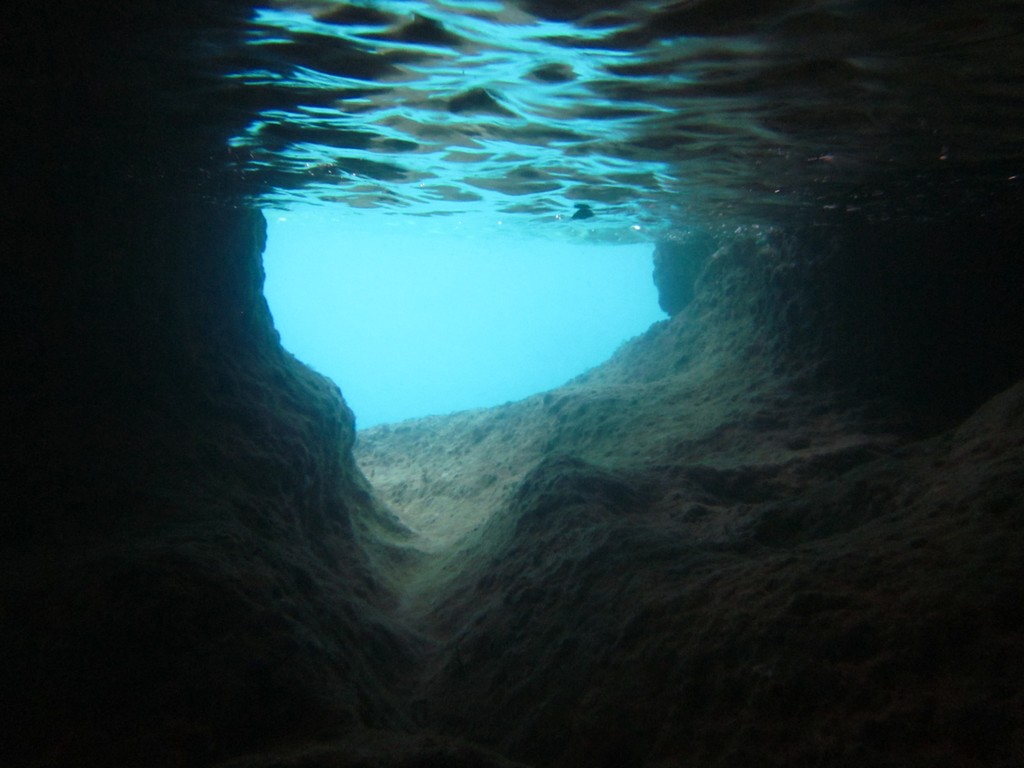
We also explored in the dinghy along the wall SE of the waterfall, and found some nice snorkeling and some caves.

Exploring Caves


Then we picked up anchor and went looking for the "World War II Gun Emplacement" waypoint that someone had given us. We needed to make water, so slowly motored around the rim of the bay. Dave even took off in the dinghy for a half an hour while I motored around in racetrack mode waiting for him.
Alas, when we arrived at the bottom end of the bay, there was no gun emplacement there. We later discovered that this whole set of waypoints for the Misool area that a friend had given us was mostly inaccurate (whether deliberately, just sloppily done, or whether taken off an inaccurate chart, we don't know). After an hour of slowly poking around in Soggy Paws, we finally anchored the big boat and set out in the dinghy.

Bushwhacking Around, Looking for Gun Emplacements
After carefully combing the shoreline, and doing some bush-whacking, we finally found some remnants of a WWII gun, but only the carriages--looks like someone had carried off the barrels of the guns.

The Gun We Found

The Other Gun Carriage
This anchorage (03 57.32 S / 132 50.65 E) is in fairly shallow mud/sand and well protected from the E, S, and W. If you were expecting a big blow from the south, this would be a good hidey-hole.

Nice Protected Anchorage
But go in slowly, and not too far, as there is a very shallow hard-to-see reef in the very bottom of the bay. I think we were in about 10-15 feet. Even for a WWII buff, these "gun emplacements" were not very exciting. We almost spent the night here, but were a little worried about bugs and no wind, so we scurried back to our original anchorage.
The next morning, we headed further north.
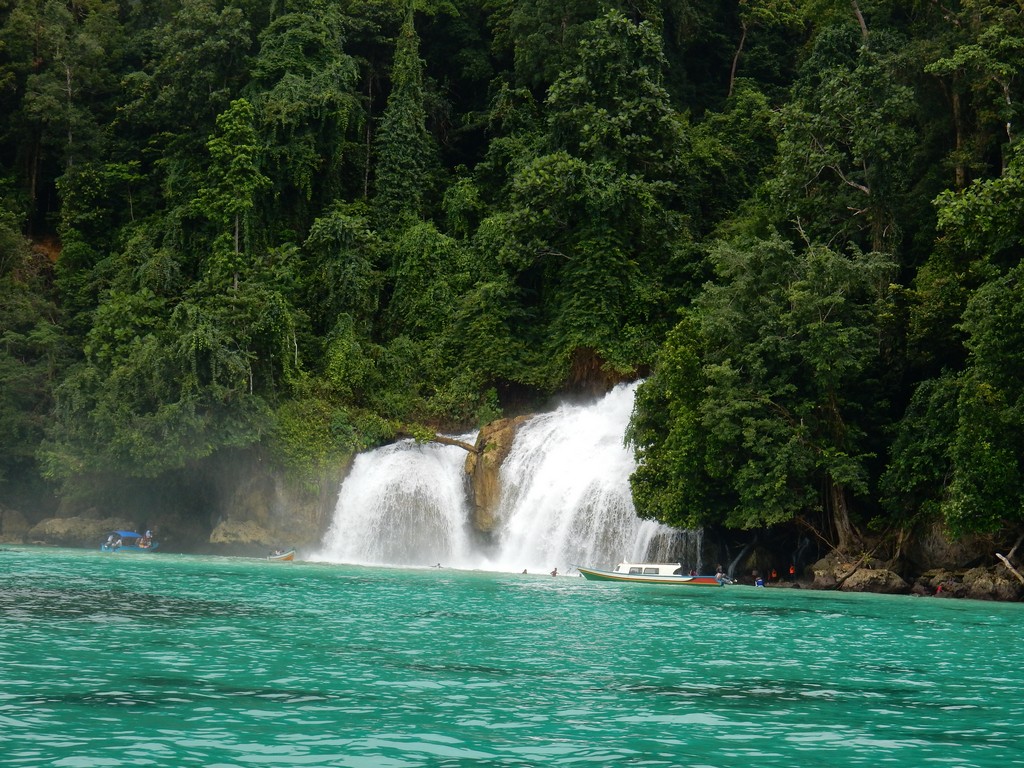
Our first stop was "Waterfall Bay", 45 nm northwest of our jumping off point of Blumpot Bay in NW Adi Island. Friends had told us this was a very cool stop, because you can anchor right next to the waterfall that falls down into the ocean. Because it was SW monsoon season, this "off the waterfall" stop was probably not a viable overnight anchorage. But we had a potential anchor spot scouted by Ocelot, tucked up in the point near the waterfall.
We left early and made good time for about 3/4 of the way, but finally the wind died and we had to motor in. Fortunately, we arrived mid-afternoon and had plenty of time to look around. The potential anchor spot recommended by Ocelot was too constricted in our opinion--in a cut with fast flowing current in fairly shallow water. We backed out and started looking around. We ended up spending about 2 hours poking around. Everything we found was (typical in Indonesia), either too shallow or too deep, or too constricted by rocks/reefs. To complicate matters, there were a couple of fishing boats anchored around, and being by ourselves, we were a little leery of anchoring too close to them (security issues).
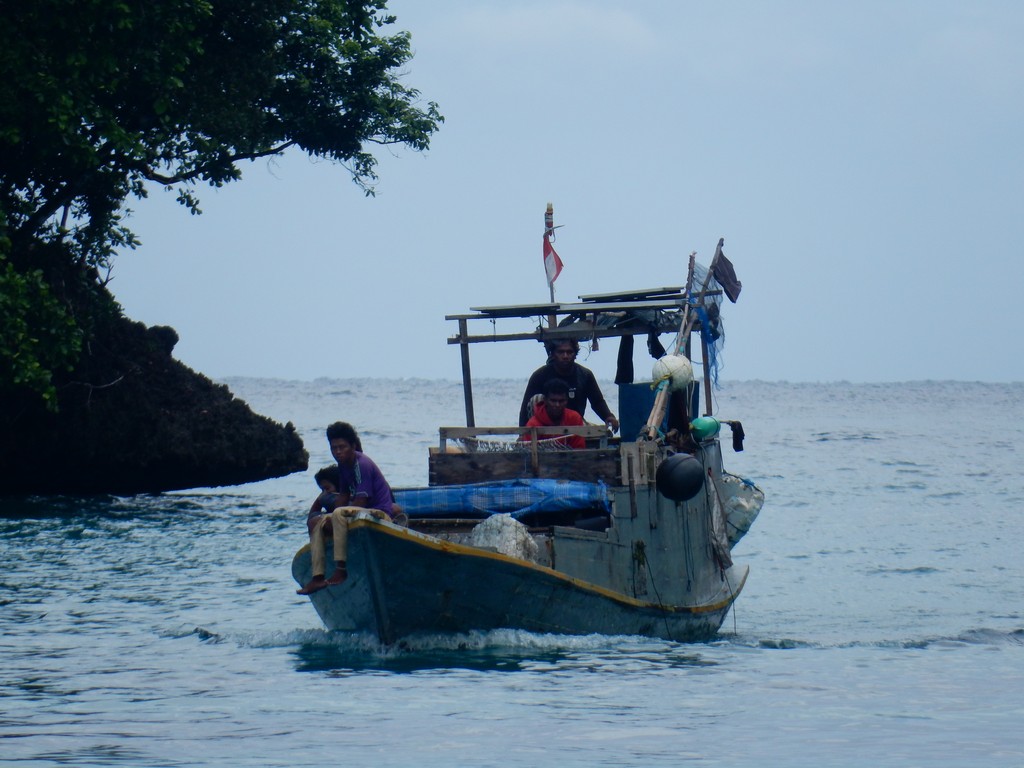
We ended up anchoring at 03 55.27 S / 132 48.91 E in about 65 ft of water. There was some current here, but not too intimidating, and usually flowing out the cut, so we hung toward the west. We backed down hard because our stern was in about 10 ft, and there were a few coral heads nearby. But we had pretty good swinging room. The wind was pretty calm, so we felt pretty safe in these tight quarters. In NE wind season, anchoring outside, to the west of this spot, would be a better anchorage, as there's a big sand spot there. There is no cell phone signal in this bay. And the fishermen never bothered us--they seemed to anchor and sleep during the day and leave to go fishing at night.
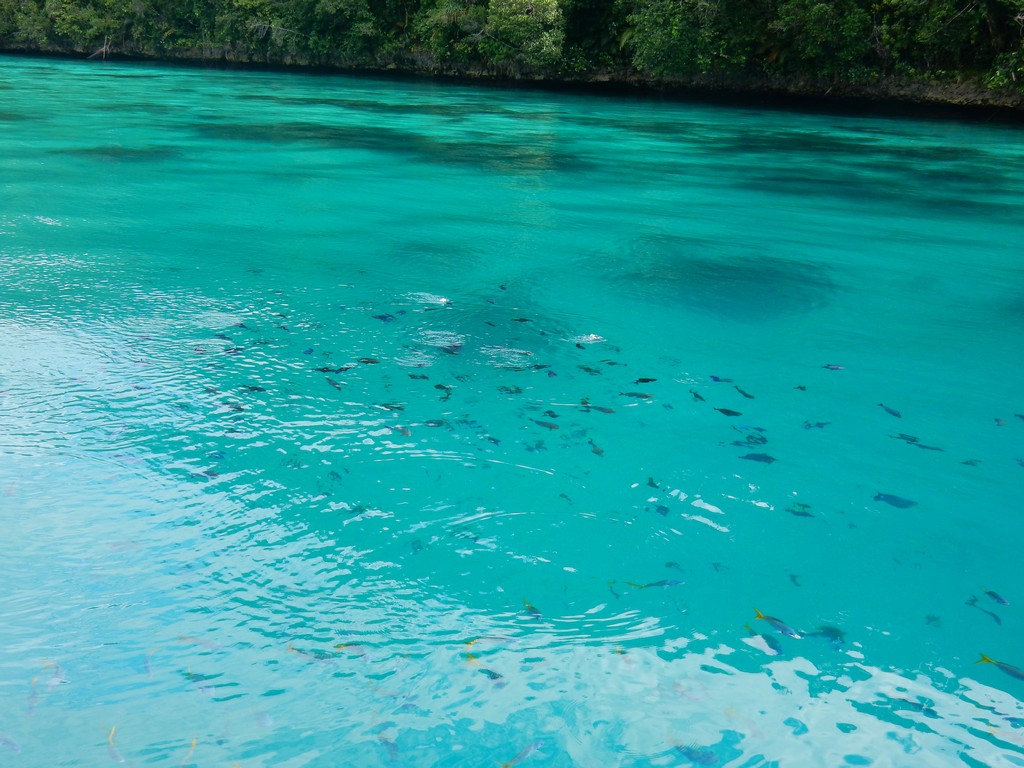
There were tons of small fish swimming around our boat. I tried fishing for them with some shrimp on a small hook, but they always managed to steal the shrimp and not get hooked. But kept me entertained for awhile.
We spent the next two days enjoying the clear water and exploring around the bay. While Dave did maintenance, I scrubbed the bottom of the boat (something we didn't want to do in the potentially crocky river waters). We took Soggy Paws over to the waterfall and anchored in a beautiful sand spot just off the waterfall (03-53.45 S / 132-29.30 E), and then dinghied over to the waterfall and snorkeled around.
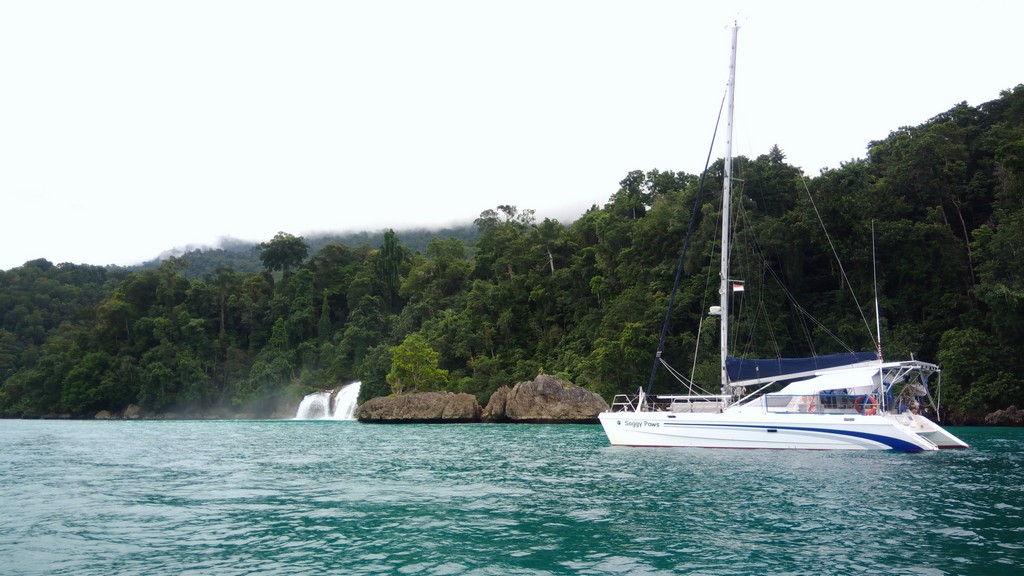
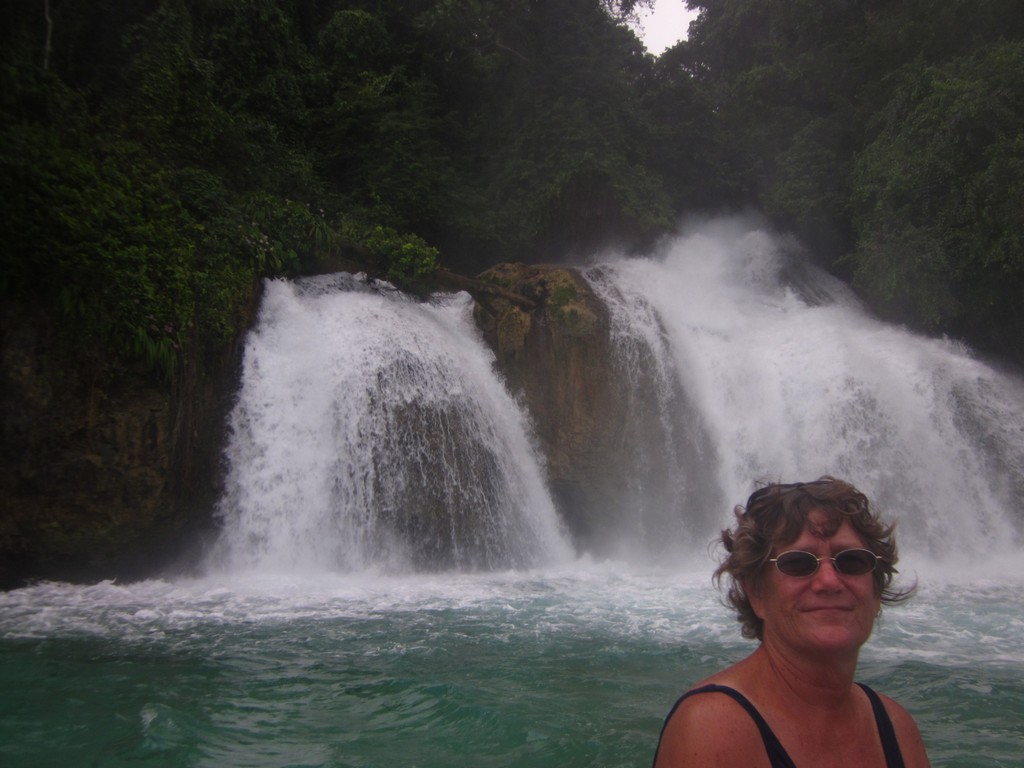
We also explored in the dinghy along the wall SE of the waterfall, and found some nice snorkeling and some caves.
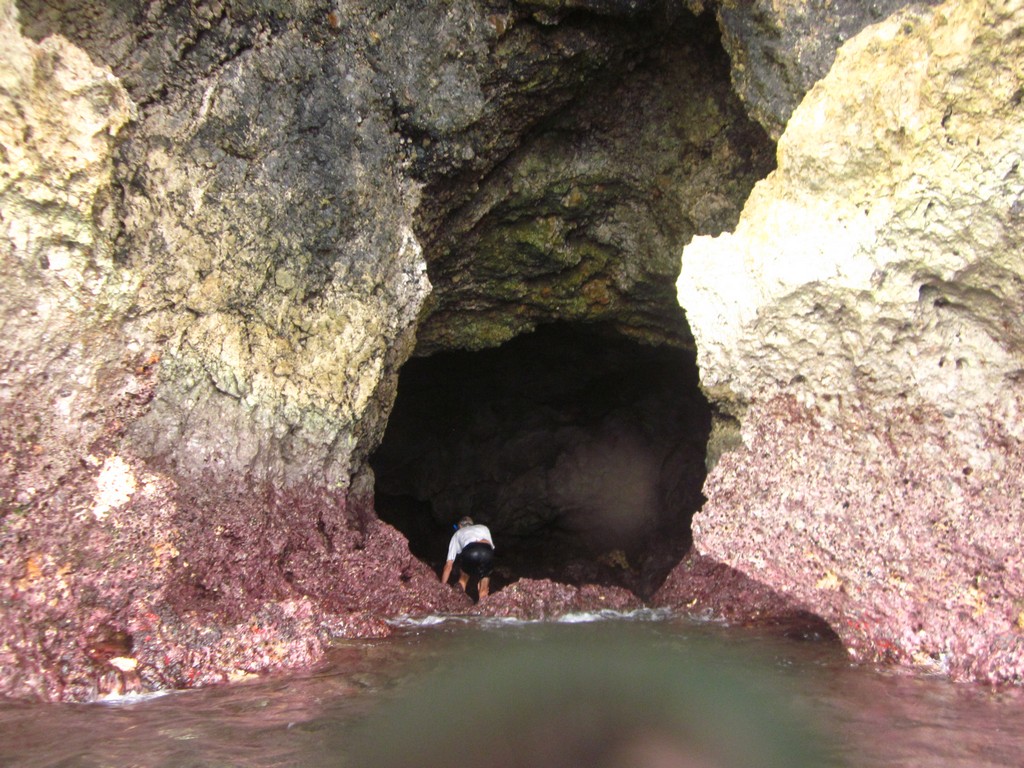
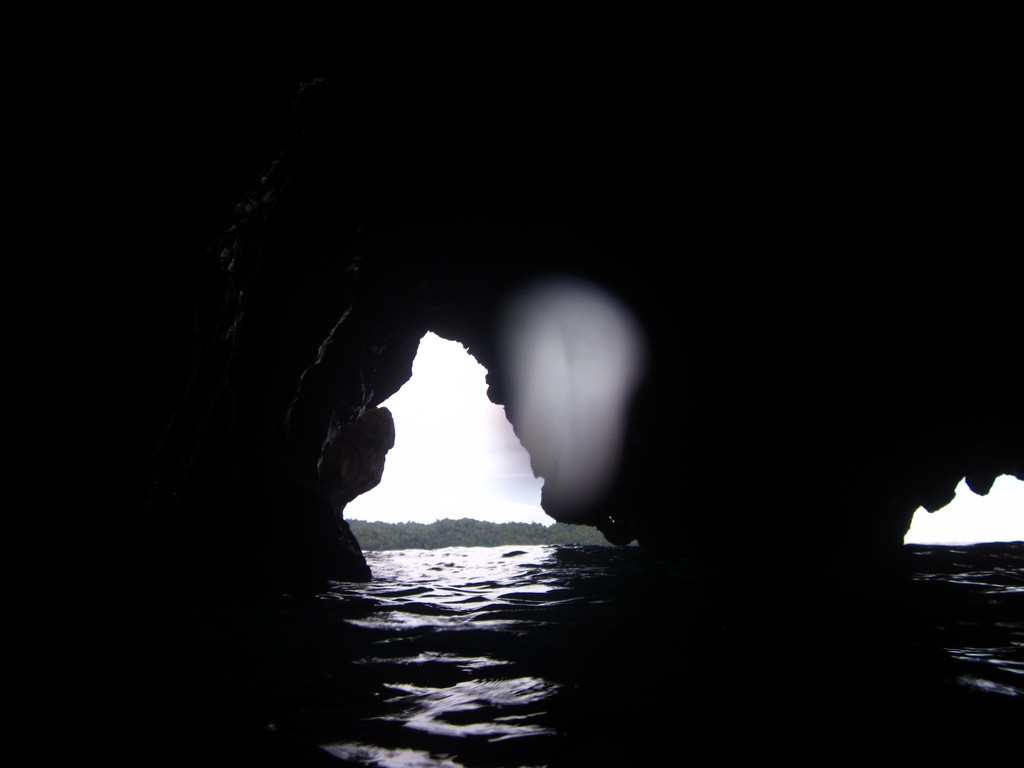
Then we picked up anchor and went looking for the "World War II Gun Emplacement" waypoint that someone had given us. We needed to make water, so slowly motored around the rim of the bay. Dave even took off in the dinghy for a half an hour while I motored around in racetrack mode waiting for him.
Alas, when we arrived at the bottom end of the bay, there was no gun emplacement there. We later discovered that this whole set of waypoints for the Misool area that a friend had given us was mostly inaccurate (whether deliberately, just sloppily done, or whether taken off an inaccurate chart, we don't know). After an hour of slowly poking around in Soggy Paws, we finally anchored the big boat and set out in the dinghy.
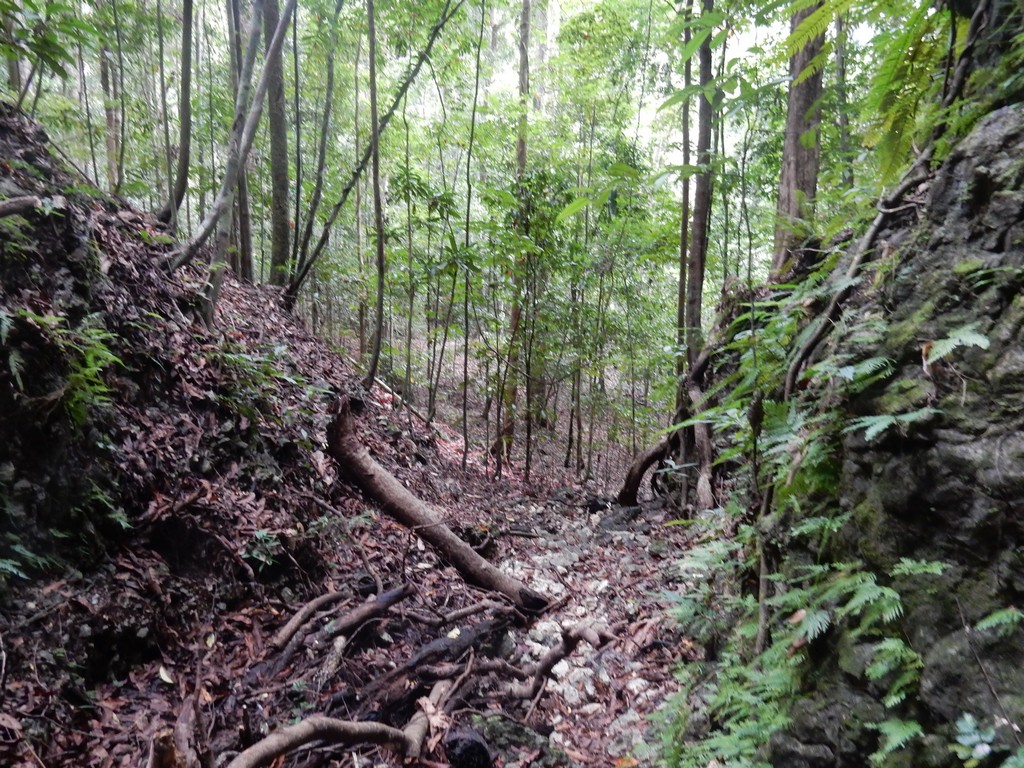
After carefully combing the shoreline, and doing some bush-whacking, we finally found some remnants of a WWII gun, but only the carriages--looks like someone had carried off the barrels of the guns.
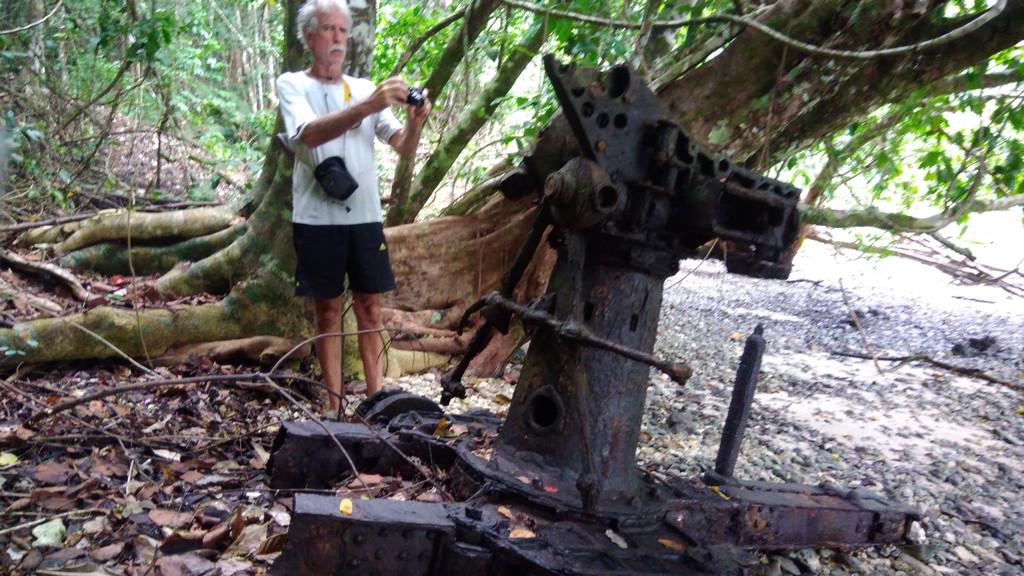
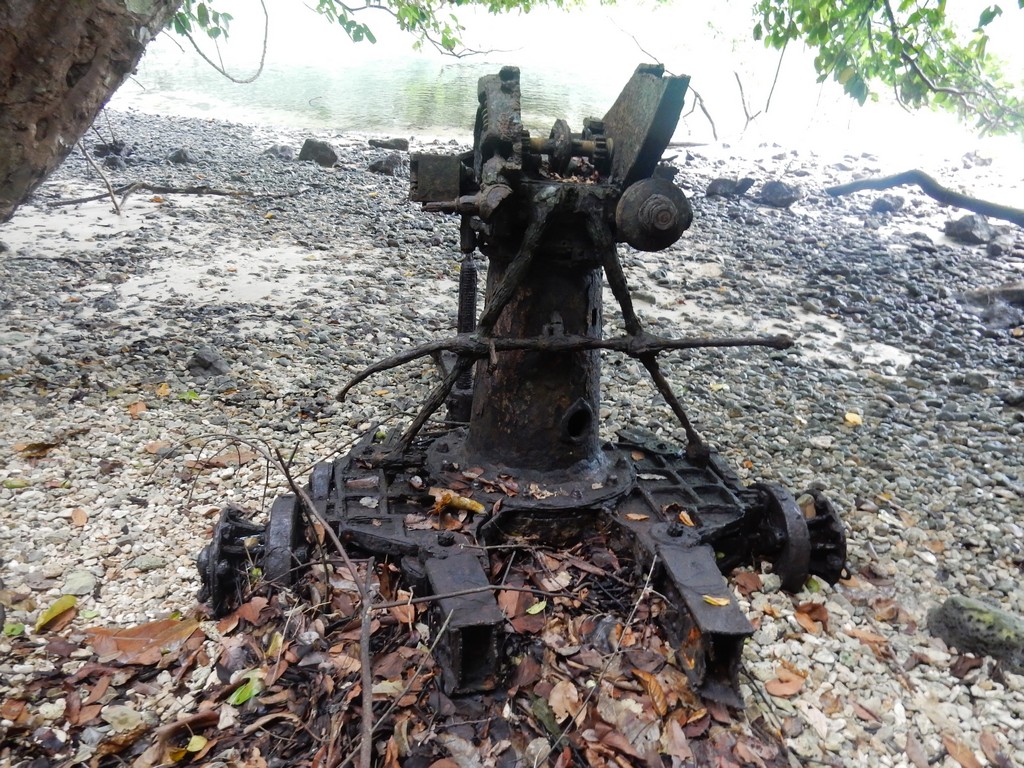
This anchorage (03 57.32 S / 132 50.65 E) is in fairly shallow mud/sand and well protected from the E, S, and W. If you were expecting a big blow from the south, this would be a good hidey-hole.
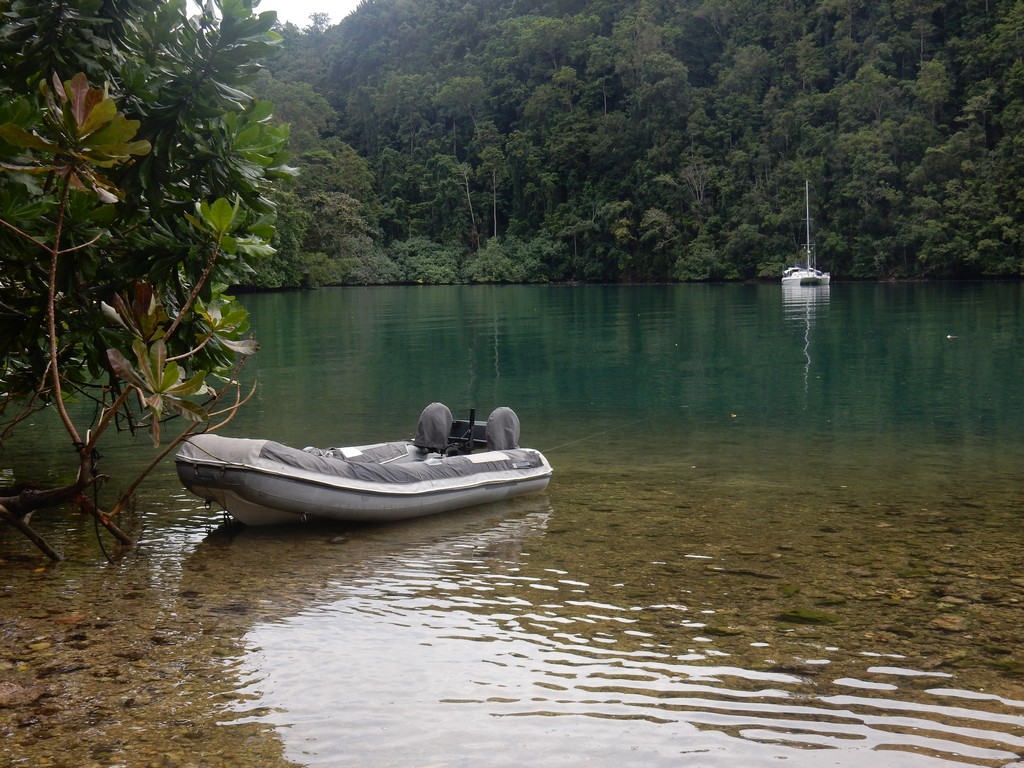
But go in slowly, and not too far, as there is a very shallow hard-to-see reef in the very bottom of the bay. I think we were in about 10-15 feet. Even for a WWII buff, these "gun emplacements" were not very exciting. We almost spent the night here, but were a little worried about bugs and no wind, so we scurried back to our original anchorage.
The next morning, we headed further north.
Subscribe to:
Posts (Atom)